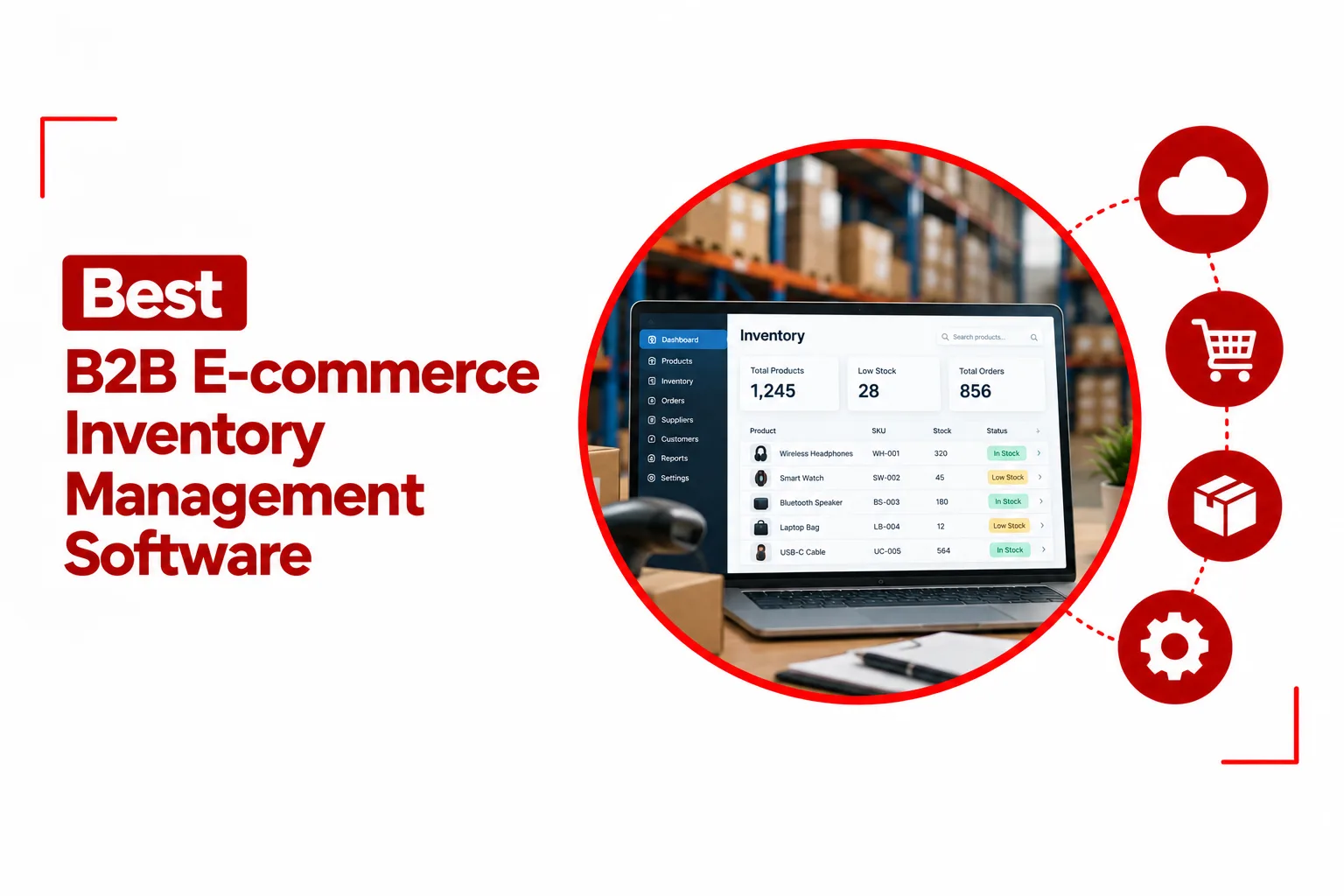

Wholesale inventory gets complicated fast. Customer specific pricing, bulk orders, multiple warehouses, purchase orders, and separate fulfillment locations can create plenty of extra work for growing B2B businesses. The best B2B E-commerce inventory management software gives wholesalers, distributors, and manufacturers a way to keep inventory, orders, pricing, and customer information connected across their sales channels.
The right system can also connect your online store with your ERP (Enterprise Resource Planning), accounting software, warehouses, and other tools, giving your team a clearer view of stock from the moment an order comes in to the moment it ships.
Table of Contents
Best B2B Inventory Software at a Glance
| Software | Starting Price | Best Fit | Multi Location | B2B Portal | Manufacturing |
|---|---|---|---|---|---|
| Cin7 | $349/month | Wholesalers and distributors | Yes | Yes | Yes |
| NetSuite | Custom | Large and growing B2B operations | Yes | Through SuiteCommerce and integrations | Yes |
| Katana | $299/month | B2B manufacturers | Yes | Through integrations | Yes |
| inFlow Inventory | $129/month annually | Small and midsize wholesalers | Yes | Yes | Yes |
| Zoho Inventory | $29/month annually | Small businesses | Yes | Customer portal | Limited |
Pricing is based on current published starting prices and can change with users, order volume, locations, add ons, and billing terms. Cin7’s Standard plan starts at $349 per month, Katana’s Core plan starts at $299, inFlow starts at $129 per month when billed annually, and Zoho Inventory has a free plan with paid plans starting at $29 per month in the US.
Quick Picks
- Cin7: A good fit for wholesalers and distributors selling through several channels.
- NetSuite: Suited to larger companies that need inventory, financials, purchasing, and supply planning in one business system.
- Katana: Built around manufacturers that need inventory and production control together.
- inFlow Inventory: A straightforward option for smaller wholesale and distribution teams.
- Zoho Inventory: A lower cost choice for smaller companies that want inventory, orders, purchasing, and integrations without moving to a large ERP.
B2B E-commerce Inventory Software Features
B2B inventory management has more moving parts than simply knowing how many products are sitting in a warehouse. Your software needs to handle the way your customers buy, how your warehouses fulfill orders, and how information moves between your sales and accounting systems.
Customer Specific Pricing
Wholesale customers rarely pay the same price for every product. A distributor may have one price for a long term customer, another for a smaller account, and a special rate for large orders. Your inventory system should support customer price levels, quantity discounts, product specific pricing, and negotiated terms. This saves sales staff from calculating prices manually and reduces pricing mistakes when customers place repeat orders.
Multi Warehouse and 3PL (Third Party Logistics ) Routing
Multiple warehouses create another challenge. An order from California may make more sense to ship from a western warehouse, while an order from New York can go from an eastern facility. Multi warehouse stock control gives your team a live view of available units across locations. Order routing can then take stock levels, warehouse location, and fulfillment rules into account. This can reduce unnecessary transfers and help keep popular products available where demand is highest.
Wholesale Portals and Self Service Ordering
A B2B portal gives customers a place to browse products, see their prices, place orders, review invoices, and check previous purchases. Cin7 supports B2B portals for wholesale customers and sales representatives. Its platform also connects inventory with e-commerce channels such as Shopify, Amazon, WooCommerce, and BigCommerce. inFlow also includes Showroom, its B2B portal, with options for public or private customer showrooms. This can cut down on email based ordering and make repeat purchases much easier for wholesale buyers.
BOM and Assembly Tracking
Manufacturers and businesses that sell kits need more than finished product counts. Bill of materials tracking lets you connect finished products with the components needed to build them. The system can then show how much finished stock can be produced from the materials you have on hand. Cin7 supports BOM tracking, kits and bundles, batch tracking, and assembly manufacturing. Katana also combines inventory management with production, purchasing, and warehouse workflows.
EDI and ERP Integrations
Large B2B customers may require electronic purchase orders, invoices, shipping notices, and other documents through EDI. An inventory platform should also connect with your accounting system, ERP, e-commerce stores, CRM, shipping tools, and 3PL providers. Without those connections, employees may have to enter the same order or stock information several times. Cin7 supports EDI and 3PL connections through APIs and partner solutions, while Zoho Inventory provides integrations across e-commerce, accounting, CRM, EDI, and other business categories.
Related Article: Best Cloud Call Center Software
Best B2B E-commerce Inventory Software Platforms
Cin7
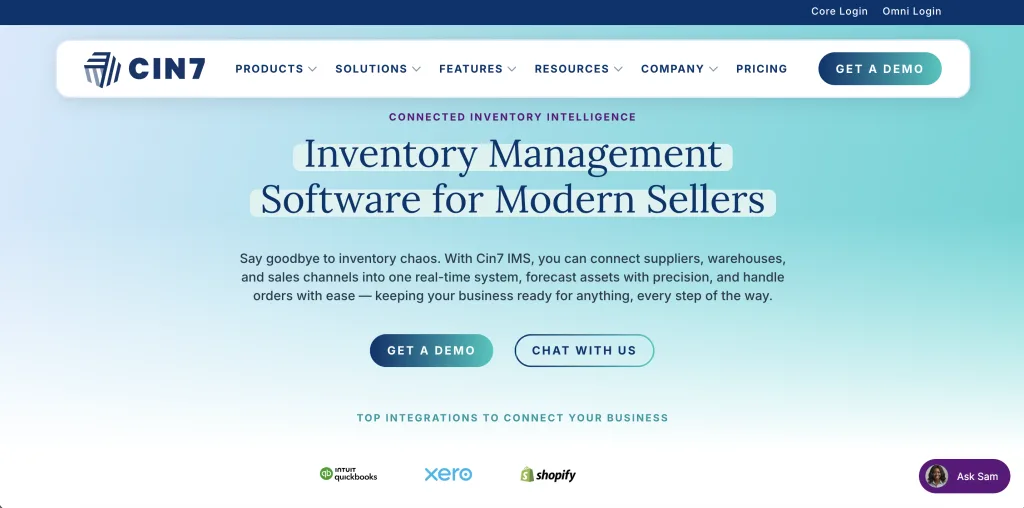
Cin7 is built for wholesalers, distributors, and multichannel businesses that need inventory, order management, warehouse operations, and B2B selling in the same system. Its Standard plan starts at $349 per month and includes five users, up to 6,000 sales orders per year, unlimited inventory locations, and two e-commerce or app integrations.
Cin7 also supports wholesale inventory management and B2B portals. EDI and 3PL connections are available through API and partner solutions. The platform supports batch and expiration tracking, BOMs, kits, warehouse management, and integrations with major commerce platforms.
Best for: Mid market wholesalers, distributors, and multichannel brands.
Pricing: Starts at $349 per month for Standard.
NetSuite Inventory Management
NetSuite is a much larger business system than a standalone inventory application. Inventory sits alongside financial management, purchasing, order management, supply planning, warehouse functions, and other ERP capabilities. Its inventory tools support multiple locations, demand planning, supply planning, inventory allocation, available to promise, and warehouse management. Supply planning can use demand, lead times, safety stock, and other inventory data to create purchasing or production recommendations.
NetSuite can also prioritize inventory commitments for selected customers when stock is limited, which can be useful for businesses managing large wholesale accounts.
Best for: Growing and enterprise B2B businesses with complex supply chains and broader ERP requirements.
Pricing: Custom pricing.
Katana
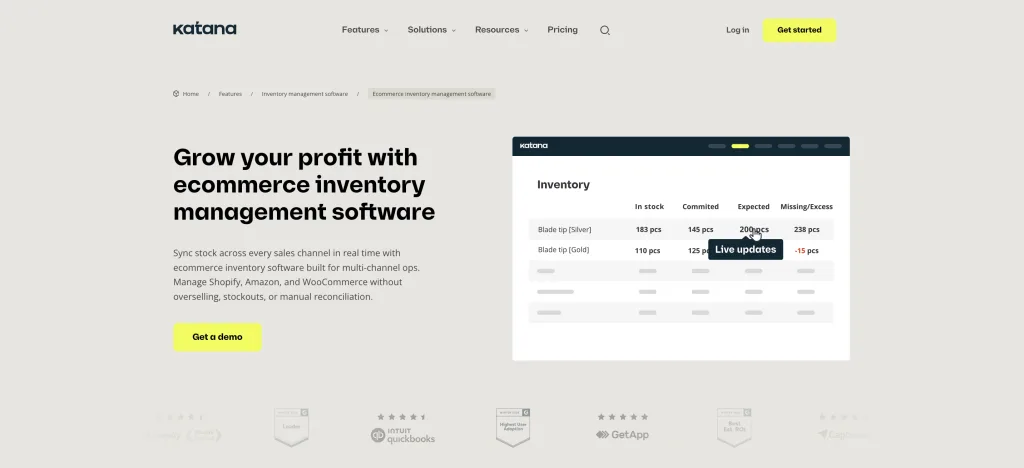
Katana is designed with manufacturers in mind. It combines inventory, production, purchasing, sales orders, and warehouse activity, making it a natural fit for businesses that turn raw materials or components into finished products. The Core plan starts at $299 per month and includes unlimited SKUs, unlimited users, unlimited integrations, one inventory location, and real time inventory management. Additional locations and add ons can increase the price.
Its manufacturing tools cover production planning, materials, purchasing, and finished goods. Katana also connects with external systems through integrations and its API.
Best for: B2B manufacturers, assemblers, and brands producing finished goods.
Pricing: Core starts at $299 per month.
inFlow Inventory
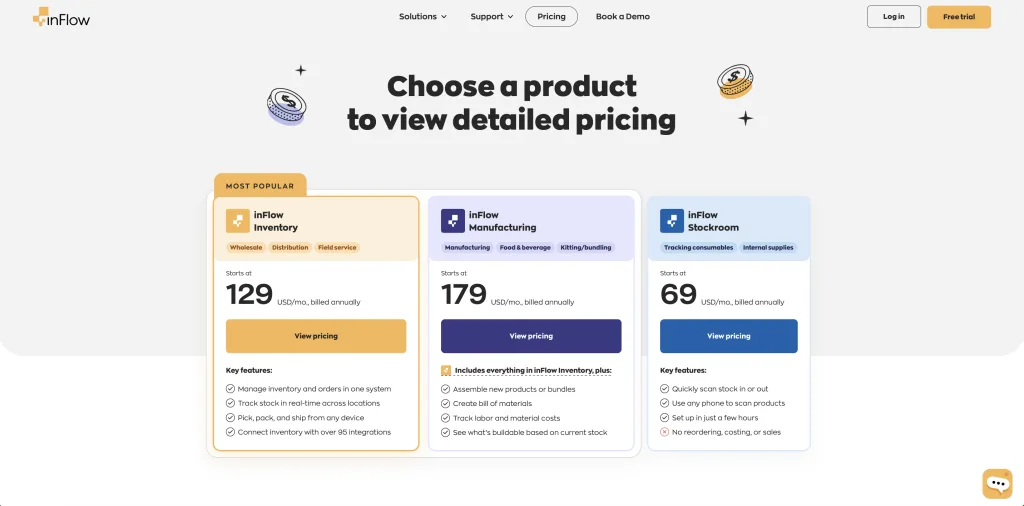
inFlow Inventory focuses on inventory, purchasing, sales orders, fulfillment, and warehouse operations. It serves smaller and midsize businesses requiring more control than a basic e-commerce stock tool provides. The Entrepreneur plan starts at $129 per month when billed annually, with 1,200 sales orders per year and two team members. Monthly billing is $161. The platform supports unlimited products and locations, purchase orders, several e-commerce integrations, lot tracking, serial numbers, and API access.
Its Showroom feature provides a B2B portal where businesses can create public or private product areas for customers. inFlow also has a separate manufacturing product starting at $179 per month when billed annually, with tools for assemblies and bills of materials.
Best for: Small and midsize wholesalers, distributors, and suppliers.
Pricing: Starts at $129 per month when billed annually.
Zoho Inventory
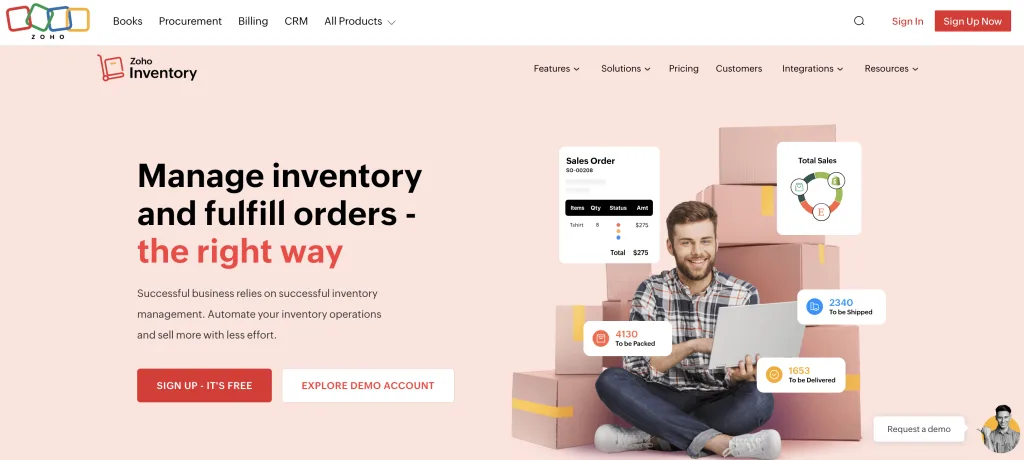
Zoho Inventory gives smaller businesses a lower cost route into inventory management. It handles sales orders, purchase orders, backorders, multi location stock, shipping, customer portals, and integrations with e-commerce and accounting systems.
Zoho Inventory offers a free entry tier supporting up to 50 orders monthly. Paid tiers start at $29 per organization monthly (billed annually) for the Standard plan, which covers 500 orders, three user seats, and two warehouse locations. Larger plans scale up order limits, seat counts, locations, and advanced warehouse workflows. Zoho Inventory also connects with Shopify and other e-commerce services, and its integration directory includes EDI, accounting, CRM, payment, and shipping connections.
Best for: Small businesses that want affordable inventory management and connections to a broader business software ecosystem.
Pricing: Free plan available, with paid plans starting at $29 per month when billed annually in the US.
How to Choose the Right Inventory Platform
The best software for your business depends on the number of orders you process, how many products you sell, where your stock is stored, and how customers place orders.
Order Volume and SKU Complexity
A business with 500 SKUs (Stock Keeping Units) and one warehouse does not need the same setup as a distributor carrying 50,000 products across six facilities. Look at your current SKU count, monthly orders, batch requirements, serial tracking, expiration dates, and expected growth. Also check the limits attached to each plan.
Sales Channel Mix
Your sales may come through a wholesale portal, sales representatives, Shopify, marketplaces, retail stores, or direct orders from customers. A platform that connects those channels can keep stock levels synchronized and reduce overselling. Cin7, for example, supports several commerce integrations and B2B selling from the same inventory environment.
Technology Compatibility
Inventory software becomes much more useful when it fits the rest of your business software. Check the available connections for your ERP, accounting system, CRM, e-commerce store, shipping provider, EDI service, and 3PL. API access can also be useful for custom connections that are not covered by native integrations.
Setup Time
A lightweight inventory platform can be much quicker to launch than a full ERP. Zoho Inventory or inFlow serves businesses looking to launch inventory and order management without deploying a complex ERP system. NetSuite requires more planning because inventory sits within a much broader business system.
Give your team enough time to clean product data, set warehouse locations, configure pricing, connect sales channels, and test order flows before going live.
Frequently Asked Questions
What is B2B e-commerce inventory management software?
B2B e-commerce inventory management software helps wholesalers, distributors, and manufacturers track stock while handling business orders, customer pricing, purchasing, fulfillment, and online sales. It can also connect inventory with e-commerce stores, ERPs, accounting software, EDI services, warehouses, and 3PL providers.
What features should B2B inventory software have?
Look for customer specific pricing, multi warehouse stock tracking, purchase orders, bulk ordering, barcode scanning, order routing, inventory forecasting, EDI connections, ERP integrations, and customer portals. Manufacturers may also need BOM tracking, assembly management, production planning, and raw material control.
Can B2B inventory software integrate with Shopify and other e-commerce platforms?
Yes. Many platforms connect with Shopify and other commerce systems through native integrations or APIs. Cin7 connects with Shopify, Amazon, WooCommerce, BigCommerce, and other sales channels. Zoho Inventory also supports Shopify and a broad range of e-commerce, accounting, shipping, CRM, and EDI connections.
How does multi warehouse tracking improve B2B fulfillment?
Multi warehouse tracking gives your team a current view of stock across facilities. Orders can then be assigned based on available inventory, warehouse location, fulfillment rules, and customer requirements. This can reduce unnecessary transfers, shorten delivery distances, and give sales teams a clearer view of available stock.
Is an ERP better than standalone inventory software?
An ERP can make sense for a business that needs inventory alongside accounting, purchasing, manufacturing, supply planning, and financial reporting. NetSuite is an example of this broader approach. A standalone inventory platform can be a better fit for a smaller operation that mainly needs stock, orders, purchasing, warehouse control, and e-commerce connections.
The right platform depends on how your business sells and fulfills orders. Cin7 fits wholesalers and distributors that need B2B selling, inventory control, warehouse tools, and multichannel connections. NetSuite powers larger enterprises integrating inventory into a full ERP stack. Katana addresses the needs of manufacturers managing raw materials and production workflows alongside stock.
For smaller wholesale teams, inFlow provides inventory, purchasing, fulfillment, and a B2B showroom without the scale of a large ERP. Zoho Inventory gives smaller businesses a lower entry price, plus connections to e-commerce, accounting, shipping, and other business tools.
Start with your order volume, SKU count, warehouse setup, sales channels, and existing software. Then compare the features and plan limits that match your actual workflow. Evaluating your workflow against these criteria points you straight to the software that keeps your order fulfillment moving.