

Portable power stations have become useful tools for more than emergency charging. They can keep laptops, cameras, networking equipment, appliances, and power tools running away from a wall outlet, while compatible models can also recharge DJI drone batteries through the company’s SDC (Smart Digital Control) system.
The DJI Power Stations lineup now covers several classes of portable power, starting with the 512Wh Power 500 and extending to the 2,048Wh Power 2000. The range also includes the 1,008Wh Power 1000 Mini, the 1,024Wh Power 1000, and the 1,024Wh Power 1000 V2.
All five models use LFP battery chemistry, but vary across output levels, charging methods, port configurations, portability, UPS performance, and expansion options. Those differences become important once you know what equipment you plan to run and how long you need power away from the grid.
Table of Contents
What Distinguishes Each DJI Power Station Model
DJI designed its Power range around more than stored battery capacity. Depending on the model, you get AC outlets, USB charging, SDC connections, solar charging support, vehicle charging, UPS operation, and fast charging for selected DJI drone batteries. The SDC system is particularly useful for drone operators. Compatible DJI fast charging cables can connect supported flight batteries directly to a Power station, reducing the number of separate charging devices needed at a shooting location.
Charging speed depends on the drone battery, cable, Power station, temperature, and supported charging method. Compatible DJI SDC charging cables can charge selected drone batteries to 95% in around 30 minutes under specified conditions.
LFP, or lithium iron phosphate, cells are used throughout the main Power lineup. DJI rates the batteries for thousands of charge cycles under controlled laboratory conditions, although the stated capacity retention differs between models. UPS functionality is also available across the lineup. When supported equipment is connected to a Power station that is receiving grid power, the station can switch to battery power during an outage. The stated transition time varies by model.
Core Technology Across DJI Power Models
LFP Battery Chemistry
All five current DJI Power stations use LFP battery cells. The Power 500 maintains more than 70% capacity after 4,000 cycles under DJI’s specified test conditions. The Power 1000 carries the same more than 70% capacity rating after 4,000 cycles.
The Power 1000 Mini and Power 2000 are rated to maintain more than 80% capacity after 4,000 cycles under their respective test conditions. These are laboratory measurements. Actual battery performance can vary with temperature, charging patterns, output levels, storage conditions, and usage.
SDC and SDC Lite
SDC and SDC Lite ports form an important part of the DJI Power ecosystem. They support charging, power delivery, and accessory connections depending on the model. Compatible DJI drone fast charging cables can connect supported flight batteries directly to Power stations with SDC ports.
SDC connections can also work with DJI’s solar and vehicle charging accessories. The supported accessories differ between models, so compatibility needs to be checked before buying an accessory. The Power 1000 has one SDC port and one SDC Lite port. The Power 1000 V2 also has one SDC port and one SDC Lite port. The Power 2000 has two complete SDC ports.
Battery Management and Protection
DJI Power stations use battery management systems to monitor factors such as temperature, voltage, current, and charging conditions. The Power Expansion Battery 2000 also uses LFP cells and has a protective coating designed to improve resistance to conditions such as rain, condensation, and salt spray. DJI does not recommend operating the expansion battery in a rainy environment for more than three minutes or exposing it to condensation or salt fog for extended periods.
UPS Operation
UPS functionality allows a compatible Power station to supply connected equipment while the station remains connected to the electrical grid.
During a power outage, the Power 500 and Power 1000 can begin supplying connected devices within 0.02 seconds. The Power 1000 Mini and Power 2000 can begin supplying connected devices within 0.01 seconds. The Power 1000 V2 has a stated switching time of 10ms. This feature can help keep computers, networking equipment, storage devices, cameras, and other electronics powered during short interruptions.
DJI Power Stations
DJI Power 500
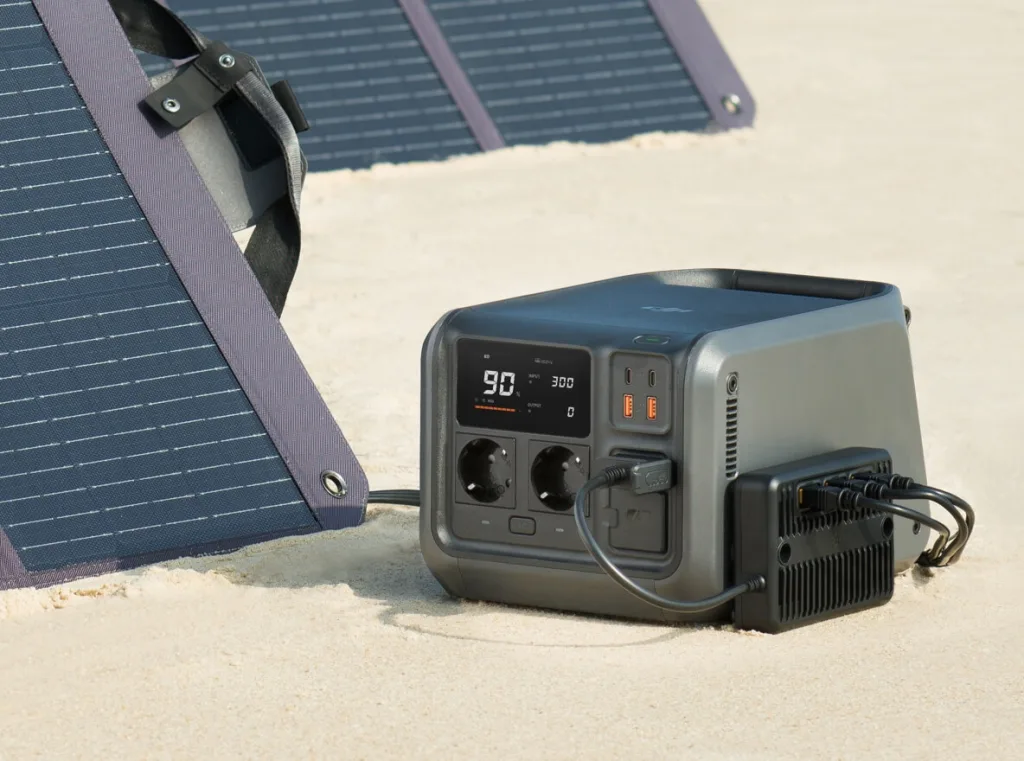
The DJI Power 500 is the smallest model in the current lineup. It combines a 512Wh battery with up to 1,000W of continuous AC output and weighs about 7.3kg. Its compact body includes two AC outlets, two USB C ports, two USB A ports, and one SDC Lite port. Each USB C port can provide up to 100W.
The Power 500 supports up to 540W AC recharging. Its two USB C ports can also accept up to 200W of combined charging input, while the SDC Lite input supports up to 300W. Solar charging is available through the DJI Power Solar Panel Adapter Module. The MPPT module can accept up to 300W of solar input with the Power 500.
The LFP battery maintains more than 70% capacity after 4,000 cycles under DJI’s specified laboratory conditions. The current US DJI Store price is $299, although regional pricing, taxes, accessories, and promotions can change the final cost.
Best Uses for the DJI Power 500
The Power 500 fits well with:
- Solo video creators
- Drone pilots
- Camera charging
- Laptop charging
- Weekend camping
- Mobile workstations
- Small appliances
- Short power outages
Its biggest advantage is portability. At about 7.3kg, it is much easier to move between locations than the larger models.
DJI Power 1000 Mini
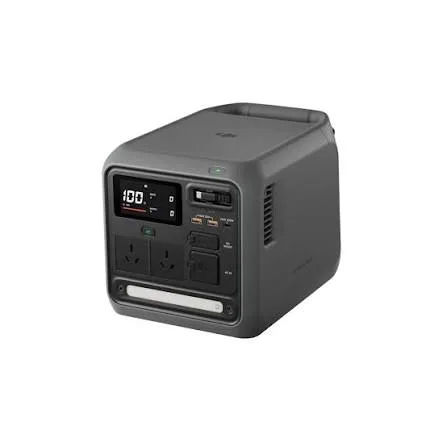
The DJI Power 1000 Mini brings 1,008Wh of energy storage into a compact body measuring 314 × 212 × 216mm. It weighs about 11.5kg. Its AC output is rated at 1,000W maximum, with 800W of continuous output. Bypass output depends on the regional voltage version and can reach up to 1,440W on low voltage versions or 2,200W on high voltage versions. The number of AC outlets also varies by region. Models using CN, EU, AU, and UK standards have two AC outlets, while US and Japanese versions have four.
The Power 1000 Mini includes one USB C port, a 100W retractable USB C cable, two USB A ports, and one SDC port. The USB C port can provide up to 100W. When the USB C port and retractable cable are used simultaneously, their combined output can reach 150W, with up to 100W available through the retractable cable and up to 50W through the USB C port.
The SDC port supports up to 400W of input and up to 300W of output. The Mini also has a built in 400W MPPT module for solar charging. The Mini can recharge through its AC input, USB C input, SDC connection, solar panels, and compatible vehicle charging accessories. It does not support the DJI Power 1kW Super Fast Car Charger or DJI Power 1.8kW Solar/Car Super Fast Charger.
It also cannot connect to the DJI Power Expansion Battery 2000. Its LFP battery maintains more than 80% capacity after 4,000 cycles under DJI’s specified test conditions.
Best Uses for the DJI Power 1000 Mini
The Mini is well suited to:
- Camping
- Road trips
- Mobile content production
- Camera charging
- Laptop charging
- Portable workstations
- Moderate appliance use
- Home backup for smaller loads
For anyone researching dji power station specs, the Mini offers around 1kWh of storage in a smaller body than the original Power 1000.
DJI Power 1000
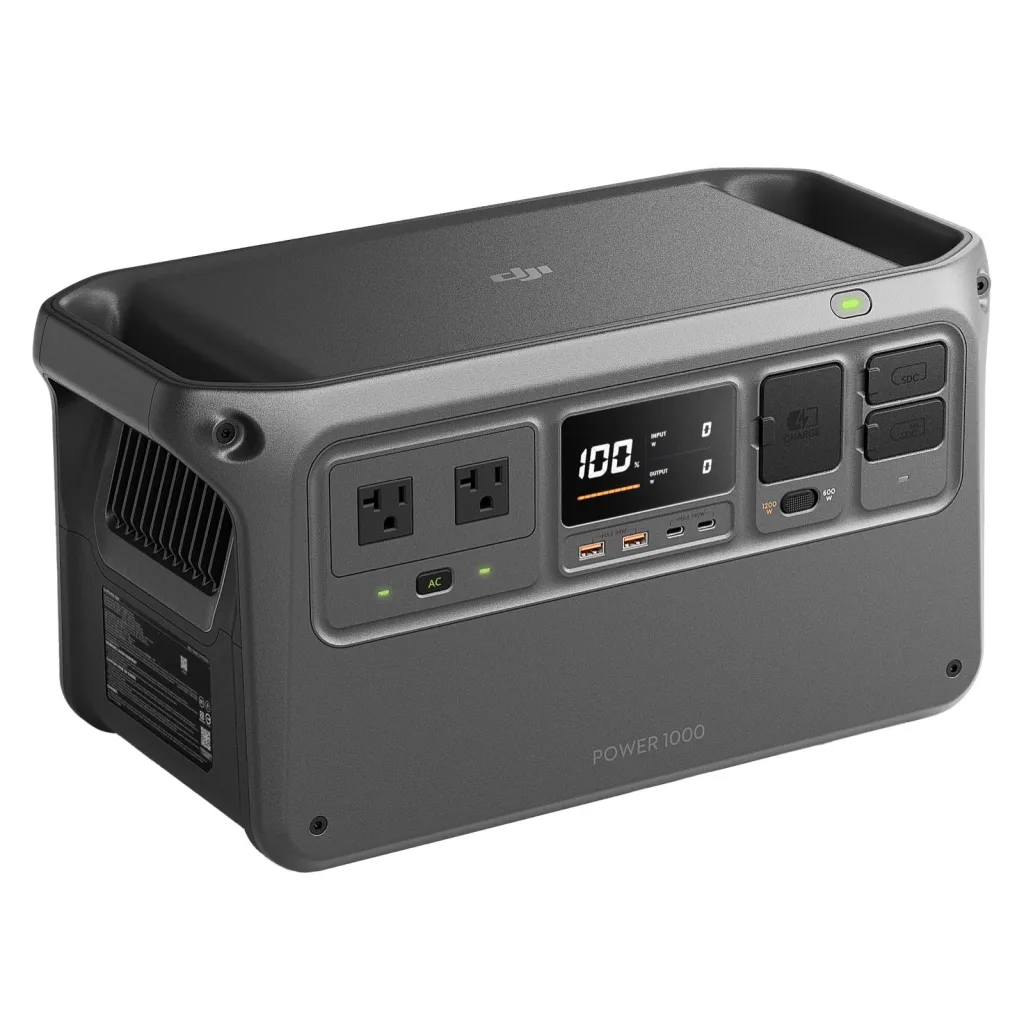
The DJI Power 1000 provides 1,024Wh of storage and up to 2,200W of continuous AC output. Maximum output can reach 2,600W, while peak output reaches 4,400W under DJI’s specified conditions. The unit weighs about 13kg and measures 448 × 225 × 230mm. Its ports include two AC outputs, two 140W USB C ports, two USB A ports, one SDC port, and one SDC Lite port.
Each USB C port can provide up to 140W when the connected device supports USB PD 3.1 and the required EPR cable is used. AC recharging can reach 1,200W under supported conditions. The Power 1000 supports solar charging through compatible DJI accessories. The DJI Power Solar Panel Adapter Module supports up to 400W of solar input.
With the DJI Power 1.8kW Solar/Car Super Fast Charger, the Power 1000 can receive up to 1,200W from solar panels. The same charger can also provide up to 600W from a compatible vehicle system at the same time. Reaching the charger’s full 1,800W recharging rate with the Power 1000 requires connecting a DJI Power Expansion Battery 2000.
The Power 1000 can maintain more than 70% battery capacity after 4,000 cycles under DJI’s specified testing conditions. The current US DJI Store price is $699.
Best Uses for the DJI Power 1000
The Power 1000 is suited to:
- Video production crews
- Multiple camera setups
- Drone operations
- Mini refrigerators
- Microwaves
- Power tools
- Laptops and monitors
- Home backup
- Camping and RV setups
The jump from 512Wh to 1,024Wh also gives you twice the stored battery capacity of the Power 500.
DJI Power 1000 V2
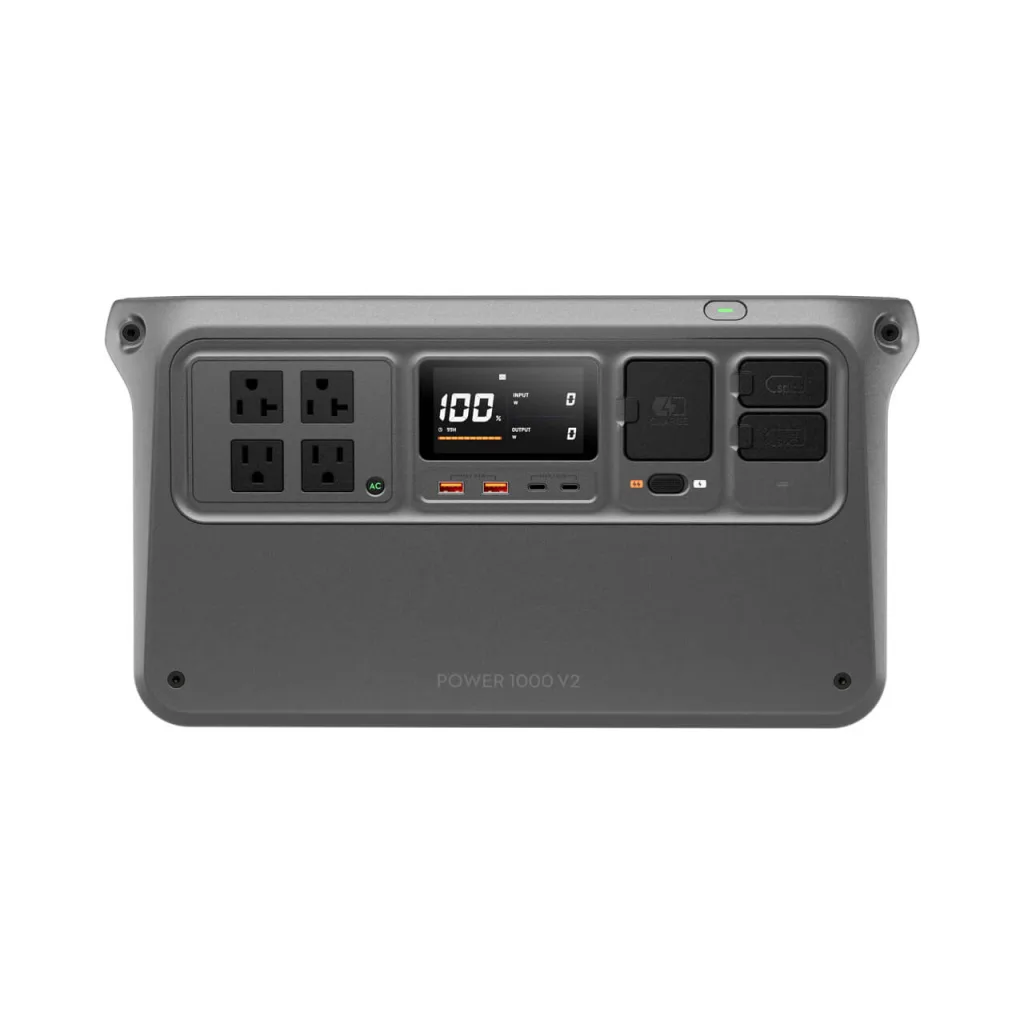
The DJI Power 1000 V2 keeps the 1,024Wh battery capacity of the original Power 1000 while raising continuous AC output to 2,600W. It weighs about 14.2kg. The V2 has four AC output ports, two 140W USB C ports, two USB A ports, one SDC port, and one SDC Lite port. It also has two 1/4 inch threaded ports.
The two USB C ports can provide up to 140W each, with a combined output of up to 280W. The V2 supports grid, solar, and car charging. Its SDC port works with compatible DJI charging accessories, including the 1kW Super Fast Car Charger and 1.8kW Solar/Car Super Fast Charger.
With the 1.8kW Solar/Car Super Fast Charger, the Power 1000 V2 supports up to 1,800W of solar recharging. The same charger can also provide up to 1,200W from solar plus up to 600W from a compatible vehicle system under supported conditions.
The separate DJI Solar Panel Adapter Module supports up to 400W of solar input. The V2 can connect to up to five DJI Power Expansion Battery 2000 units, producing up to 11,264Wh of total stored energy. Its UPS switching time is rated at 10ms under supported conditions.
The Power 1000 V2 can provide 2,600W of continuous output on its own. With a compatible Power Expansion Battery 2000 connected, system continuous output can reach 3,000W under DJI’s specified conditions. The current US DJI Store price is $699, although regional pricing and promotions can differ.
Best Uses for the DJI Power 1000 V2
The V2 suits:
- Home backup
- Desktop computers
- Networking equipment
- Video production
- Power tools
- High power appliances
- Off grid work
- Drone operations
- Expandable backup systems
Its higher continuous output and expansion support give it more capacity for demanding setups than the original Power 1000.
DJI Power 2000
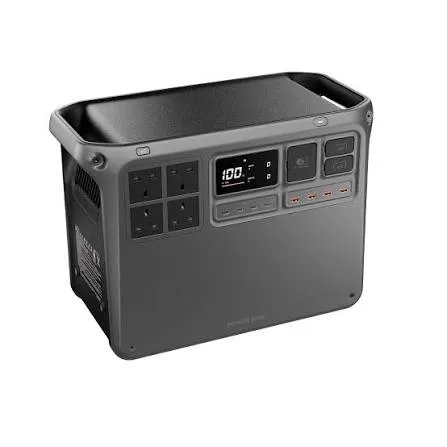
The DJI Power 2000 moves into the 2kWh class with a 2,048Wh LFP battery and up to 3,000W of continuous AC output. It weighs about 22kg and measures 448 × 225 × 324mm. The port selection includes four AC outlets, four USB C ports, four USB A ports, and two SDC ports. The first two USB C ports can provide up to 140W each, while the other two support up to 65W each. The SDC ports provide up to 12A of output and support up to 60A input.
The Power 2000 supports simultaneous AC and DC recharging with up to 2,200W of charging power for the power station itself. With a compatible expansion battery and supported charging setup, combined charging power can reach up to 3,000W. Solar charging can reach up to 1,800W with DJI’s 1.8kW Solar/Car Super Fast Charger. The separate Solar Panel Adapter Module supports up to 400W.
The Power 2000 can also use the 1.8kW charger for combined solar and car charging, with up to 1,200W from solar plus up to 600W from a compatible vehicle system. Its LFP battery maintains more than 80% capacity after 4,000 cycles under DJI’s specified test conditions. The current US DJI Store price is $1,299.
Best Uses for the DJI Power 2000
The Power 2000 is suited to:
- Extended home backup
- Off grid living
- Production bases
- Commercial drone operations
- Larger appliance loads
- Workshops
- Remote work sites
- RV setups
- Long duration emergency power
Its 2,048Wh battery provides twice the storage of the Power 1000 class before expansion batteries are added.
DJI Power 500 vs 1000
The dji power 500 vs 1000 comparison comes down to portability, capacity, and AC output. The Power 500 has 512Wh of storage, weighs about 7.3kg, and provides up to 1,000W of continuous AC output. The Power 1000 has 1,024Wh of storage, provides up to 2,200W of continuous AC output, and weighs about 13kg.
That difference becomes noticeable when you connect demanding equipment. A laptop, camera charger, phone, monitor, or smaller lighting setup can fit comfortably within the Power 500’s output range. A microwave, power tool, mini refrigerator, or several pieces of production equipment can require the higher output available from the Power 1000.
The Power 500 is easier to carry between shooting locations. The Power 1000 is heavier, but its larger battery and higher output give you more room for demanding equipment. For lightweight creator setups, the Power 500 can be enough. For heavier equipment or longer periods away from the grid, the Power 1000 provides substantially more capacity and output.
Related Article: Solar Generator vs Solar Inverter? Choosing Based on Budget & Energy Needs
DJI Power Expansion Battery 2000
The DJI Power Expansion Battery 2000 adds 2,048Wh of storage to compatible Power stations. It is an expansion battery, not a standalone power station. It works with the DJI Power 1000, Power 1000 V2, and Power 2000. The Power 500 and Power 1000 Mini do not support it.
The expansion battery weighs about 16.5kg and measures 448.5 × 225 × 234mm. It uses LFP cells and maintains more than 80% capacity after 4,000 cycles under DJI’s specified test conditions. It has two SDC ports and 1/4 inch threaded mounting holes on the enclosure.
The expansion battery has a protective coating designed to help it operate in conditions involving rain, condensation, and salt spray. DJI does not recommend operating it in a rainy environment for more than three minutes or exposing it to condensation or salt fog for extended periods.
DJI Power 1000 Expansion
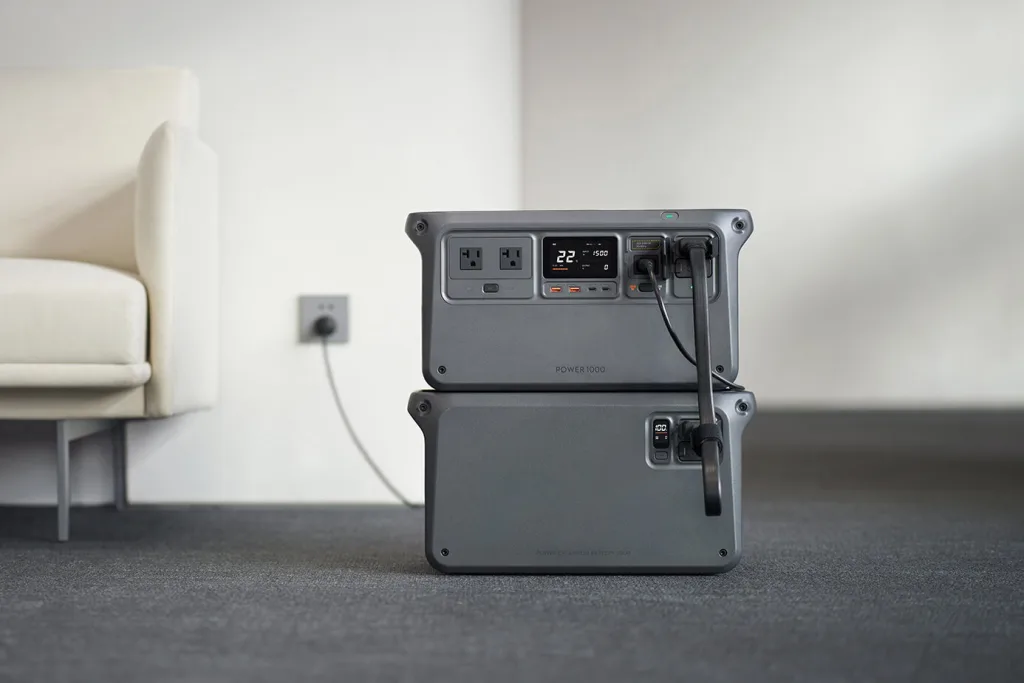
DJI Power 1000 can connect to up to five Power Expansion Battery 2000 units. A fully expanded system can reach 11,264Wh of total energy storage. With an expansion battery connected, the Power 1000 can reach up to 2,400W of continuous output under DJI’s specified conditions. The Power 1000 itself provides up to 2,200W of continuous output. The original Power 1000 requires a firmware update through DJI Assistant 2 before its first connection to the expansion battery.
Power 1000 V2 Expansion
DJI Power 1000 V2 can also connect to up to five Power Expansion Battery 2000 units, producing up to 11,264Wh of total storage. With an expansion battery connected, system continuous output can reach 3,000W. The Power 1000 V2 itself provides up to 2,600W of continuous output. The Power 1000 V2 does not require DJI Assistant 2 for its initial expansion battery connection.
Power 2000 Expansion
The Power 2000 supports up to ten Power Expansion Battery 2000 units. A fully expanded system can reach 22,528Wh, or about 22.5kWh, of total energy storage. The expanded Power 2000 system can provide up to 3,000W of continuous output under the specified configuration.
Power 500 and 1000 Mini Compatibility
Neither the Power 500 nor Power 1000 Mini supports the Power Expansion Battery 2000. Both models are designed as standalone power stations without the expansion system used by the Power 1000, Power 1000 V2, and Power 2000.
DJI Power Station Prices
The price of a DJI Power station depends on the model, region, accessories, taxes, promotions, and package contents. Current US DJI Store pricing lists the Power 500 at $299, the Power 1000 at $699, the Power 1000 V2 at $699, and the Power 2000 at $1,299. The Power 1000 Mini has its own regional pricing.
These prices are reference points for dji power station prices. The amount paid in another country adjusts because of local taxes, shipping, currency conversion, promotions, and package contents. Accessories can also increase the total cost. Solar charging equipment, drone fast charging cables, expansion cables, and other accessories may be sold separately.
DJI Power Station Specs to Check Before Buying
Battery capacity is only one part of a power station. Several specifications can change how useful a model will be with your equipment.
Battery Capacity
Capacity is measured in watt hours, or Wh. A higher Wh rating means the battery stores more energy. DJI Power 500 has 512Wh. The Power 1000 Mini has 1,008Wh. The Power 1000 and Power 1000 V2 have 1,024Wh. The Power 2000 has 2,048Wh. Actual runtime depends on the power consumption of the connected equipment and the station’s conversion losses.
Continuous AC Output
Continuous AC output tells you how much power the station can provide through its AC outlets during normal operation. The Power 500 reaches 1,000W. The Power 1000 reaches 2,200W. The Power 1000 V2 reaches 2,600W. The Power 2000 reaches 3,000W. Peak and temporary output figures are different from continuous output. Equipment with motors, compressors, heating elements, or other high startup loads can require additional power when switched on.
USB C Output
USB C output is useful for laptops, tablets, cameras, phones, and other modern devices. The Power 500 supports up to 100W per USB C port. The Power 1000 and Power 1000 V2 provide up to 140W per USB C port. On the Power 2000, two USB C ports support up to 140W while the other two support up to 65W. The connected device and cable must support the required charging standard to reach the maximum rate. DJI Power 1000 Mini has one 100W USB C port plus a 100W retractable USB C cable.
Solar Input
Solar input can extend operating time away from the electrical grid. DJI Power 500 supports up to 300W of solar input through the DJI Power Solar Panel Adapter Module. The Power 1000 supports up to 400W through the DJI Power Solar Panel Adapter Module. With the DJI Power 1.8kW Solar/Car Super Fast Charger, the Power 1000 can receive up to 1,200W from solar panels. The same charger can also provide up to 600W from a compatible vehicle system at the same time. Reaching the charger’s full 1,800W recharging rate with the Power 1000 requires a DJI Power Expansion Battery 2000.
The Power 1000 V2 supports up to 1,800W of solar recharging through the 1.8kW Solar/Car Super Fast Charger. The separate Solar Panel Adapter Module supports up to 400W. DJI Power 1000 Mini has a built in 400W MPPT module and supports up to 400W of solar input. DJI Power 2000 supports up to 1,800W of solar recharging through the 1.8kW Solar/Car Super Fast Charger and up to 400W through the separate Solar Panel Adapter Module.
Expansion Support
Expansion support becomes important if your energy requirements may increase later. The Power 1000 and Power 1000 V2 each support up to five Power Expansion Battery 2000 units. The Power 2000 supports up to ten. That produces maximum system capacities of 11,264Wh for the Power 1000 and Power 1000 V2, and 22,528Wh for the Power 2000. The Power 500 and Power 1000 Mini do not support the expansion battery.
Related Article: Solar Generator Buying Guide: Best Sizes, Wattage, and Mistakes to Avoid
Which DJI Power Station Should You Buy?
DJI Power 500 for Solo Creators and Travel
The Power 500 is the lightest model in the lineup. Its 512Wh battery and 1,000W continuous AC output suit cameras, laptops, phones, lighting equipment, and smaller appliances. It fits users who need a portable power source without moving a 13kg or heavier station between locations.
DJI Power 1000 Mini for Compact 1kWh Setups
The Power 1000 Mini provides around 1kWh of storage in a compact 11.5kg body. Its built in 400W MPPT module, retractable USB C cable, compact dimensions, and UPS function make it useful for camping, road trips, mobile content production, desktop charging, and smaller backup systems.
DJI Power 1000 or V2 for Production and Backup
The Power 1000 provides 2,200W of continuous AC output, while the V2 raises that figure to 2,600W. The V2 also adds 10ms UPS switching, support for up to five expansion batteries, four AC outlets, and compatibility with DJI’s 1.8kW Solar/Car Super Fast Charger. These models work well for video crews, home backup, power tools, appliances, desktop equipment, and demanding mobile setups.
DJI Power 2000 for High Capacity and Long Runtime
DJI Power 2000 combines a 2,048Wh battery with 3,000W of continuous AC output. Its support for up to ten Power Expansion Battery 2000 units allows a fully expanded system to reach 22,528Wh of storage. That makes it suitable for larger backup systems, extended off grid use, production locations, workshops, RV setups, and other situations where higher stored energy is more important than carrying the lightest possible station.
For drone pilots, the SDC ecosystem can reduce charging time for compatible DJI flight batteries. For home users and production crews, battery capacity, AC output, UPS switching, solar input, charging speed, and expansion compatibility can have a bigger impact on day to day use.
The right model depends on the equipment you need to power, the runtime you need, how often you will carry the station, and how much additional capacity you may need later. Looking at capacity alongside output, charging methods, ports, solar support, and expansion compatibility gives you a clearer picture of what each DJI Power station can handle.