
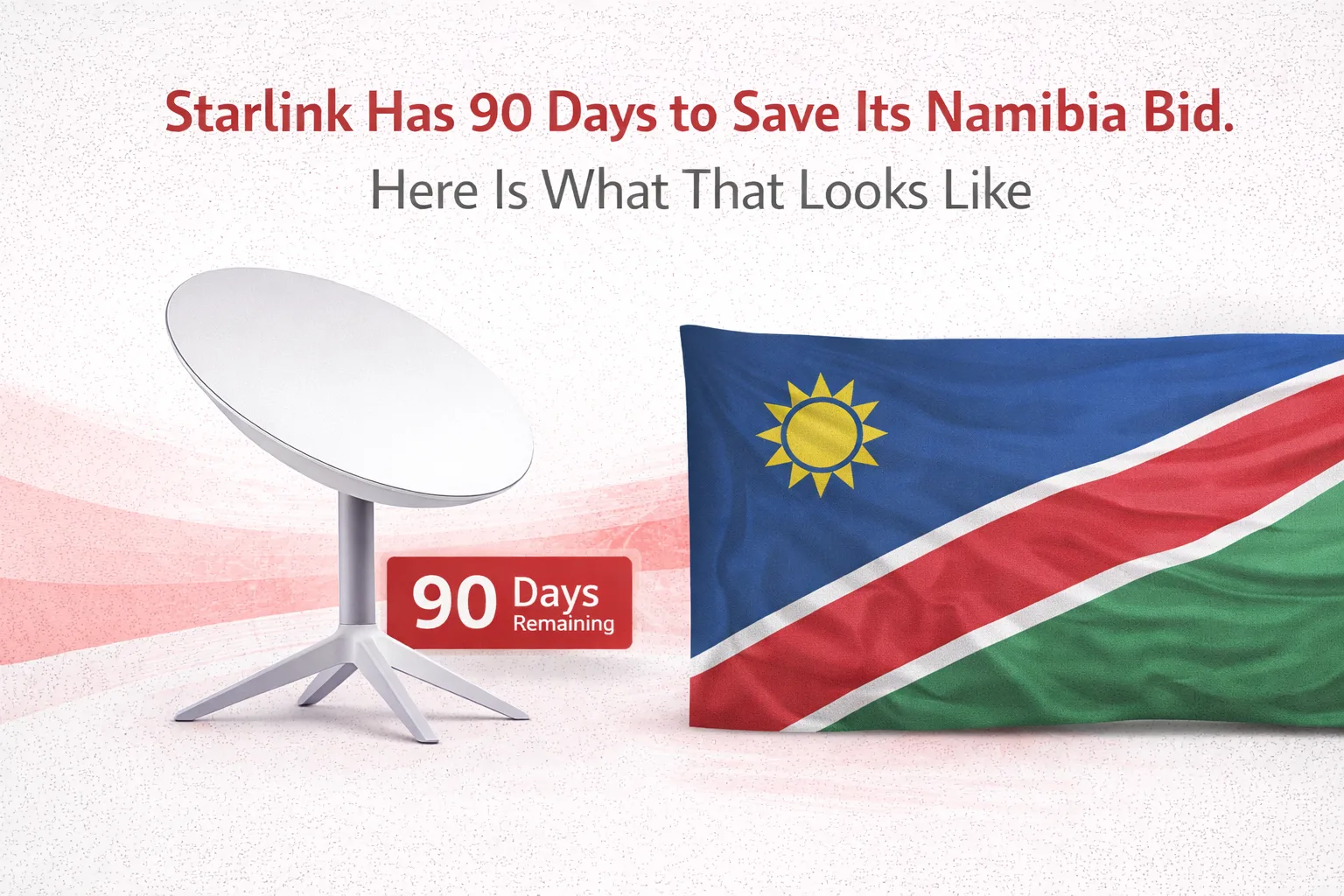

Starlink’s attempt to enter Namibia has moved from a quiet gray market operation to one of the most watched regulatory disputes in African telecoms. As of April 2026, the company is operating under a formal rejection from the Namibian government and has a narrow legal window to reverse that outcome before the door closes entirely.
Here is the full story of how it reached this point and what comes next.
2022 to 2023: The Underground Arrival
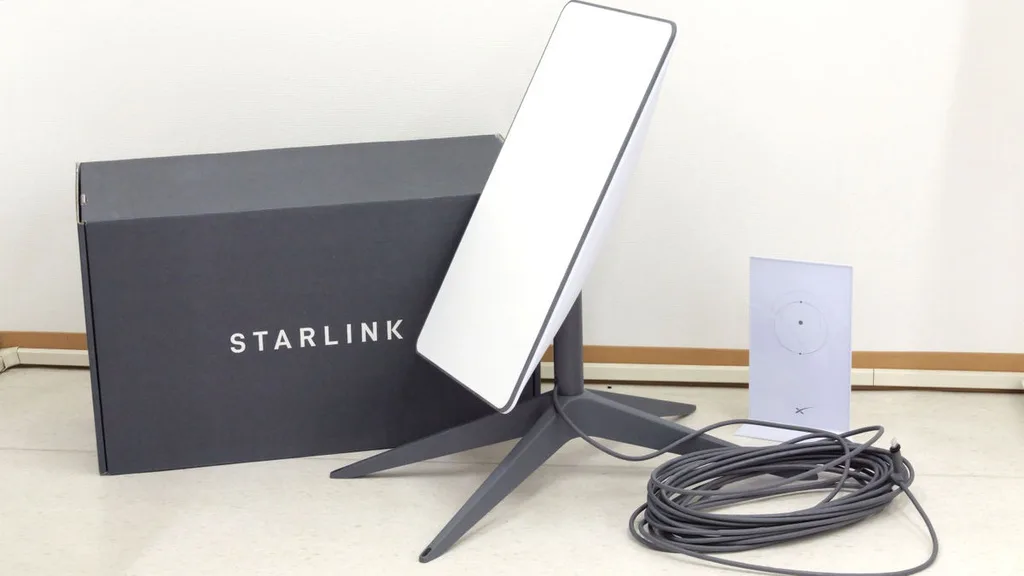
Starlink did not enter Namibia through official channels. As the service expanded across Africa with licensed operations in countries like Nigeria and Rwanda, Namibians in remote and rural areas began importing kits independently from neighboring countries including Mozambique and Zambia.
The mechanism that made this possible was Starlink’s Global Roaming feature, which allowed hardware purchased in one country to function across borders. The Namibian government largely took no action during this early period, and a quiet gray market took root, particularly among users in farming and mining communities where conventional broadband infrastructure had never reached.
2024: The Regulatory Crackdown
The informal arrangement could not last. In June 2024, Starlink filed an official application with the Communications Regulatory Authority of Namibia (CRAN) for both a telecommunications service license and a radio spectrum license. The move signaled the company’s intent to formalize its presence in the country.
One obstacle was immediately apparent. Namibian telecommunications law requires that any licensed provider be at least 51% owned by Namibian citizens or local entities. Starlink, as a wholly foreign-owned company, could not meet that threshold. In July 2024, the company formally petitioned the Minister of ICT for a special exemption from the ownership rule.
The exemption request did not pause the regulatory clock. In November 2024, CRAN officially declared Starlink’s existing operations illegal and issued a cease-and-desist order. The authority warned that unauthorized terminals were subject to confiscation and that selling or distributing the service constituted a criminal offense under Namibian law.
2025: Public Consultation and a Growing Standoff
With the application under review, CRAN conducted a public consultation process during 2025 to assess citizen sentiment on Starlink’s proposed entry into the market. The result was striking. Data from the consultation showed that 98.6% of participants supported allowing Starlink to operate in Namibia. The figure comes from Starlink’s own public response and official updates related to the Namibian government’s decision-making process.
The public support was driven largely by the connectivity gap. Starlink and its advocates pointed to the fact that around 30% of Namibians still had no internet access, with rural and remote communities bearing the brunt of that gap. Conventional fiber and mobile broadband infrastructure had not reached those areas, and satellite internet was presented as the most practical solution available.
On the regulatory side, the standoff continued. Starlink maintained its position that it would pay taxes and work within a locally structured entity, but the company held firm on its global policy of not sharing local equity. That position put it in direct conflict with Namibian law, and no resolution emerged through 2025.
March 2026: The Formal Rejection
On March 23, 2026, the Namibian government published an official notice in the Government Gazette formally declining Starlink’s application for both licenses. CRAN’s assessment was specific. The authority found that Starlink had met only 3 of the 6 mandatory statutory criteria. The three areas where the application failed were:
Local Ownership. Starlink did not meet the 51% Namibian ownership requirement and had not secured an exemption from the Minister of ICT.
National Security. CRAN raised concerns about jurisdiction and the practical enforceability of regulatory compliance given that the company is entirely foreign-owned with no local equity structure.
Compliance History. The authority explicitly cited Starlink’s “total disregard” for Namibian law, referencing the period during which the company’s roaming service operated in the country without a license.
The following day, on March 24, 2026, ICT Minister Emma Theofelus confirmed the rejection in a press briefing and stated that no exemption would be granted at that time.
What the 90-Day Window Actually Means
The rejection is not necessarily the end of the process. Under the Communications Act of Namibia, Starlink has a 90-day window from the date of the official rejection to file a formal petition for reconsideration. That window closes in late June 2026.
Starlink has signaled it intends to use that window. The approach the company appears to be taking draws from a playbook it used in South Africa, where it encouraged members of the public to make their voices heard and apply pressure on the government to grant regulatory flexibility. Given that most of Namibian consultation participants already expressed support for the service, the public sentiment is not in question. The open issue is if that sentiment is enough to move the government on the ownership rule.
CRAN has also indicated that it remains open to other satellite internet providers, provided they comply with the 51% local ownership requirement. That position suggests the authority’s objection is not to satellite internet as a category but specifically to the ownership structure Starlink has presented.
For users on the ground, the legal position has not changed. Using Starlink in Namibia remains illegal as of April 2026. Hardware purchased through the gray market or via Global Roaming kits from other countries is subject to seizure by authorities, and the government has shown it is willing to enforce that position.
Where Things Stand
The next few months will determine if Starlink finds a path into Namibia or exits the process entirely. Three outcomes are possible before the June 2026 deadline. Starlink could file a formal petition and the Minister of ICT could grant an exemption, either unconditionally or tied to specific local partnership conditions. Starlink could agree to restructure its local ownership arrangement to meet the 51% threshold, which would mean a significant departure from its current global policy. Or the petition could be filed and rejected, closing the formal regulatory process and leaving Starlink with no licensed route into the country for the foreseeable future.
None of those outcomes is certain. What is clear is that the 90-day window is the last formal mechanism available to Starlink under current Namibian law, and how the company uses it will define if this story ends in 2026 or continues into a longer legal dispute.