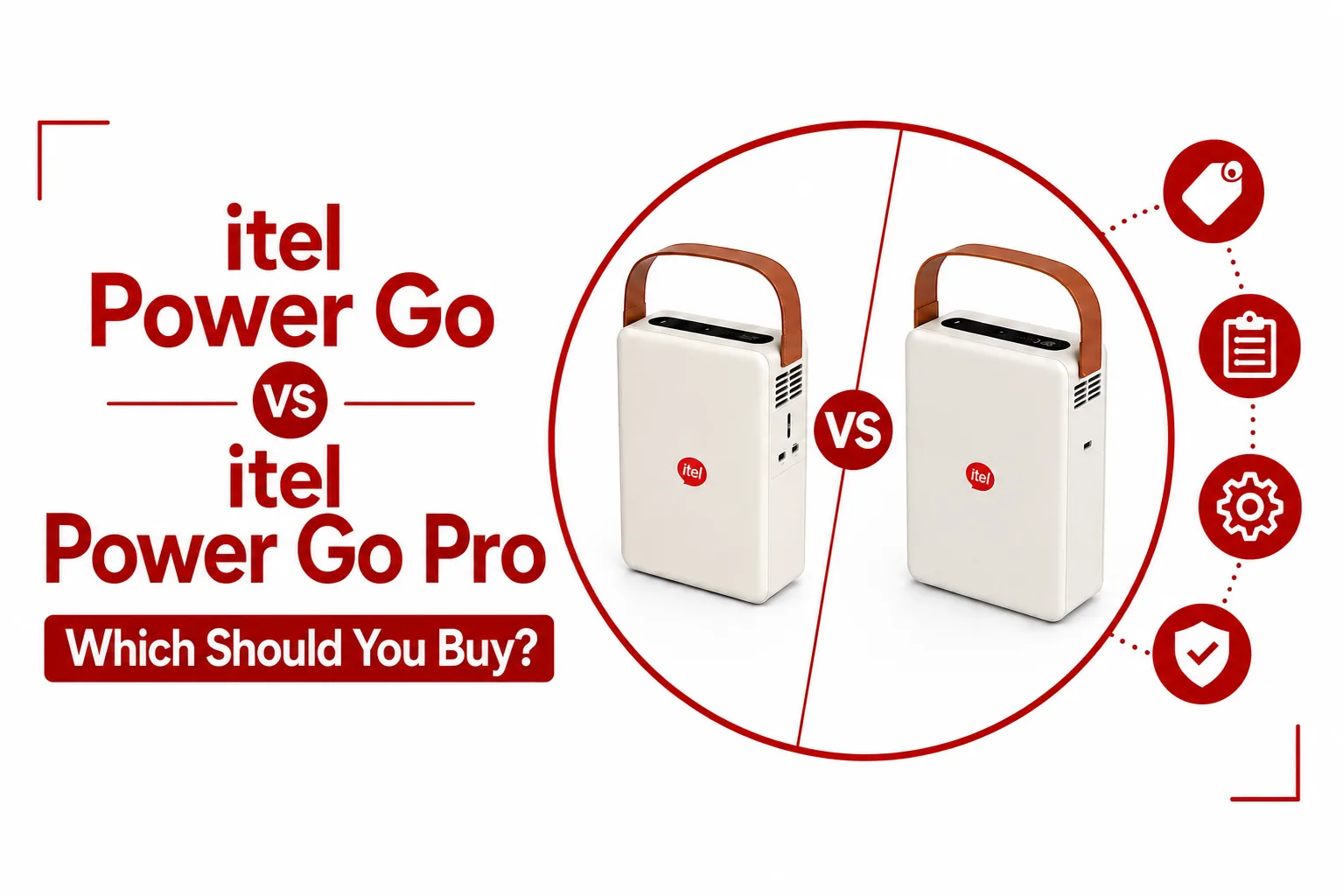

The itel Power Go vs itel Power Go Pro comparison comes down to more than their similar battery capacity. Both models have the same 100,000mAh, 320Wh LiFePO₄ battery and a rated battery life of more than 3,000 charge cycles, but they are built for different types of devices.
The standard itel Power Go focuses on USB and 12V DC charging, making it suitable for phones, routers, DC fans, lights, and USB C laptops. The Power Go Pro adds a 200W AC inverter and wall socket, allowing you to power devices that use a conventional 220V plug. That extra flexibility comes with a higher price, so the better choice depends on the devices you need to keep running during a power outage.
itel Power Go vs itel Power Go Pro: Quick Comparison
| Feature | itel Power Go | itel Power Go Pro |
|---|---|---|
| Model | IESS 320T | IESS 320ACT |
| Battery Capacity | 100,000mAh / 320Wh | 100,000mAh / 320Wh |
| Battery Type | LiFePO₄ | LiFePO₄ |
| Cycle Life | 3,000+ cycles | 3,000+ cycles |
| AC Wall Socket | No | Yes |
| AC Output | None | 200W continuous |
| USB C Output | Up to 65W PD | Up to 65W PD |
| USB A Ports | 4 | 4 |
| 12V DC Ports | 2 | 4 |
| Total DC/USB Output | Up to 130W | Up to 133W |
| Solar Input | Up to 100W | Up to 100W |
| LCD Display | Yes | Yes |
| LED Emergency Light | Yes, with SOS | Yes, with SOS |
| Weight | 3.5kg | 3.2kg |
| Price in Nigeria | ₦100,000 to ₦120,000 | ₦135,000 to ₦165,000 |
Related Article: itel Power Go Pro Price, Specs, and Full Features
The Main Difference Between the itel Power Go and Power Go Pro
The biggest difference is the AC wall socket. The standard itel Power Go does not have an AC inverter or conventional wall outlet. Its power is delivered through USB C, USB A, and 12V DC ports.
The Power Go Pro adds a 200W continuous pure sine wave AC output, giving you a standard 220V to 240V socket for compatible appliances and electronics. This makes the Pro much more flexible.
For example, if your laptop charges through USB C, the standard Power Go can charge it directly through its 65W USB C PD port. If your laptop uses an older charger with a conventional AC plug, you need the Power Go Pro.
The same applies to other equipment. A 220V LED TV or standard AC standing fan can be connected to the Pro, while the standard Power Go is limited to devices that can use its USB or 12V DC outputs.
itel Power Go: What Do You Get?
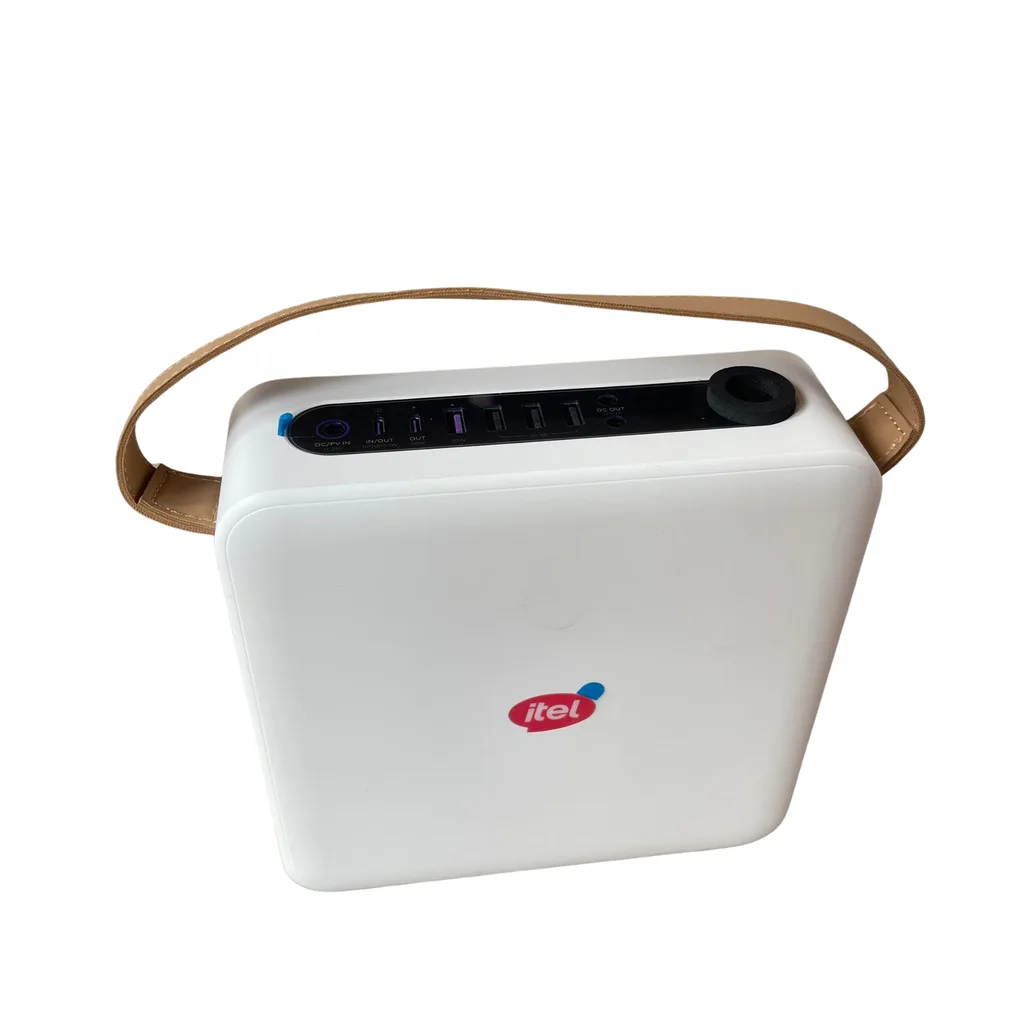
The itel Power Go IESS 320T is designed primarily as a DC and USB power station.
It has:
- 2 USB C ports with up to 65W PD
- 4 USB A ports
- 2 12V DC5521 ports
- Up to 130W total continuous output
- 100,000mAh / 320Wh LiFePO₄ battery
- Up to 100W charging input
- LCD battery display
- Built in LED emergency light
- SOS lighting function
The lack of an AC outlet is its biggest limitation, but it also helps keep the product focused on low power electronics. If most of your devices already use USB or 12V DC, you may not need the extra AC functionality of the Pro.
itel Power Go Pro: What Do You Get?
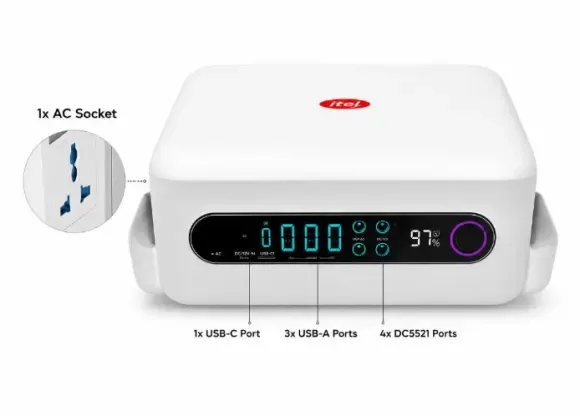
The itel Power Go Pro IESS 320ACT includes everything you would expect from a portable DC and USB power station while adding a 200W AC outlet.
Its ports include:
- 1 × 200W AC socket
- 1 × USB C port with up to 65W PD
- 4 × USB A ports
- 4 × 12V DC5521 ports
- Up to 200W AC output
- Up to 133W combined DC and USB output
The AC outlet is the biggest reason to pay more for the Pro. It allows you to connect standard pin plug devices, including traditional laptop chargers, small 220V LED TVs, and compatible AC standing fans.
Related Article: itel Power Go vs. Power Tank: Which Portable Power Station is Right for You?
Battery Capacity: Are They the Same?
Yes. Both models use the same 100,000mAh / 320Wh LiFePO₄ battery. Both are also rated for 3,000+ charge cycles, which can translate to around 10 years of regular use under suitable conditions. So you are not paying extra for a larger battery when you choose the Pro.
The extra money primarily buys you greater output flexibility, particularly the 200W AC inverter and additional DC ports.
Charging and Solar Support
Both models support up to 100W input through compatible charging sources. You can recharge them using USB C, an AC wall adapter, or a compatible solar panel. This makes both options useful during extended power outages, especially if you have access to solar power.
Their shared 320Wh battery also means the overall energy storage capacity is the same. The difference comes from how that stored energy can be delivered to your devices.
Related Article: itel Power Rover Price, Features, and Full Specifications
Laptop Charging: Power Go vs Power Go Pro
This is one area where the difference between the two models can be important. The standard Power Go can charge USB C laptops through its 65W USB C PD output. If you have a laptop that charges through USB C and its power requirement is within the 65W output limit, you can connect it directly.
The Power Go Pro can do the same thing through its 65W USB C port. However, the Pro gives you another option. You can connect an older laptop or a laptop without USB C charging through its standard AC charger. That makes the Pro a more versatile choice if you use different laptops or other electronics with conventional plugs.
Which One Is Better for a Wi Fi Router?
Both can power a Wi Fi router. If your router uses a compatible 12V DC connection, either model can provide power through its DC output. For a basic router setup, there is little reason to pay extra for the Pro solely for router backup.
The standard Power Go can handle this job while leaving more money in your budget for other accessories or backup equipment.
Which One Is Better for a DC Fan?
Again, both can work well with a compatible 12V DC fan. The standard Power Go has two DC5521 outputs, while the Pro has four. If you have several DC devices running at once, the Pro gives you more connection options. However, if you only need to power one DC fan and a few USB devices, the standard model may be enough.
Which One Is Better for a TV?
The Power Go Pro is the better choice if your TV uses a standard AC plug. Its 200W AC outlet can power compatible low wattage LED TVs within the output limit. The standard Power Go does not have an AC socket, so you cannot simply connect a conventional TV plug to it.
Price Difference in Nigeria
The standard itel Power Go costs around ₦100,000 to ₦120,000, while the Power Go Pro costs around ₦135,000 to ₦165,000. That puts the Pro roughly ₦35,000 to ₦45,000 above the standard model, depending on the retailer and current pricing.
Which Should You Buy?
Choose the itel Power Go if:
- You mainly charge smartphones and tablets
- Your laptop supports USB C charging
- You power a Wi Fi router
- You use 12V DC fans
- You use 12V DC lights
- You want the lower price
- You do not need a conventional AC wall socket
For these uses, the standard Power Go provides the essential battery capacity and charging ports without paying extra for an AC inverter you may not use.
Choose the itel Power Go Pro if:
- You need a standard 220V AC socket
- Your laptop uses a conventional AC charger
- You want to power a compatible LED TV
- You want to run a standard AC standing fan within the 200W limit
- You use several DC devices at the same time
- You want greater flexibility in the types of devices you can connect
The Pro makes more sense if you want one portable power station that can handle both USB and DC devices and compatible AC equipment.
itel Power Go vs itel Power Go Pro
The itel Power Go is the better choice if your backup power needs are mostly phones, USB C laptops, routers, DC fans, and DC lights. At around ₦100,000 to ₦120,000, it gives you the same 320Wh LiFePO₄ battery found in the Pro at a lower price.
The itel Power Go Pro is worth the extra money if you need an AC wall socket. Its 200W pure sine wave inverter lets you connect compatible standard plug devices, including traditional laptop chargers and small LED TVs, while still giving you USB and DC charging options.
In simple terms, buy the Power Go for USB and DC devices, and choose the Power Go Pro if you need AC power too.