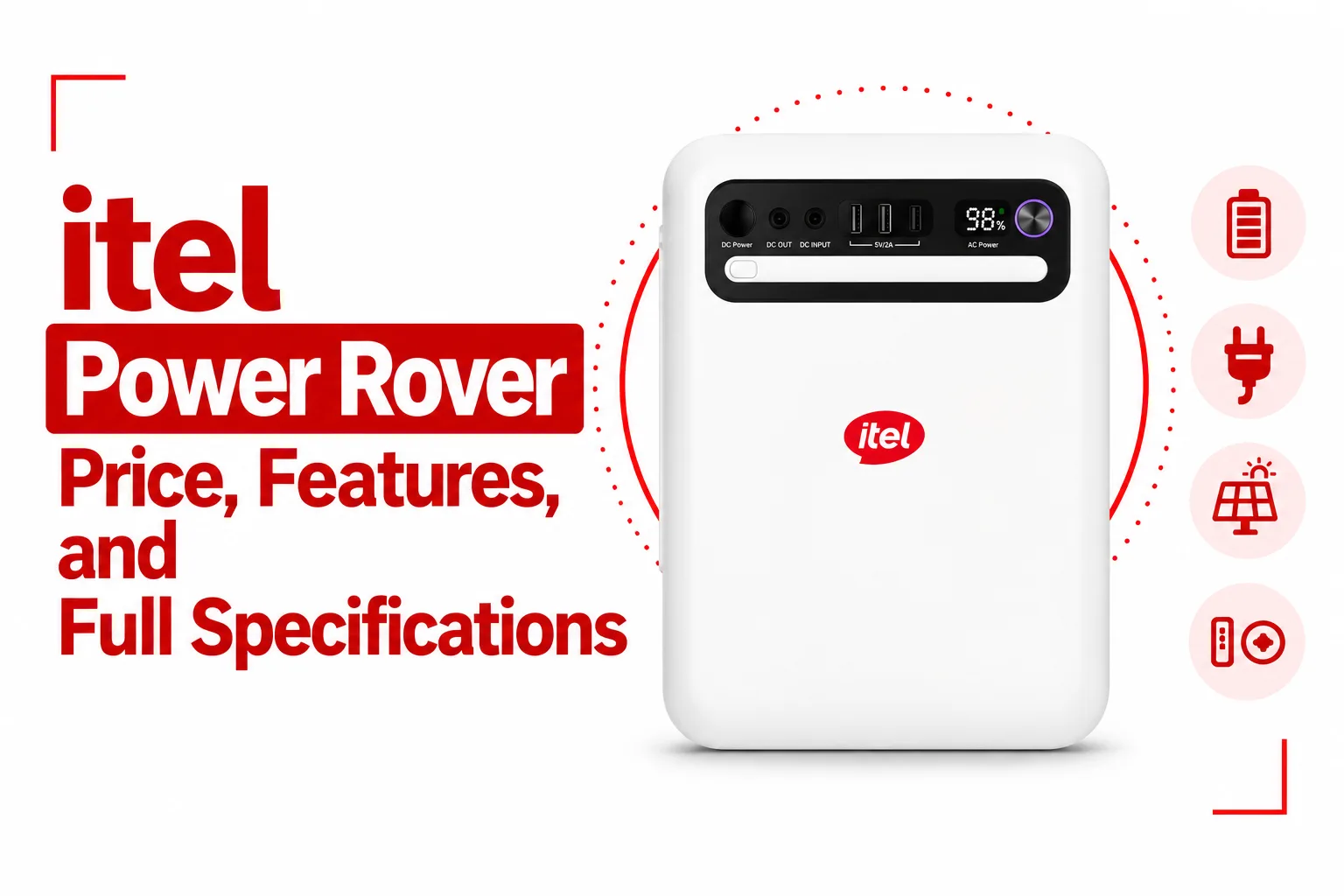

The itel Power Rover is designed for homes and small workspaces that need backup power without moving to a bulky inverter and separate battery setup. With a 1kWh battery, 500W continuous output and support for solar charging, it can keep everyday electronics such as routers, laptops, TVs and other low power devices running during outages.
The name can cause some confusion when you start looking for the unit. The 500W/1kWh model is also sold as the itel Power Tank and appears under model numbers such as IESS 05K10N and IESS 05K10P. Some regional listings use the Power Rover name for the same type of unit.
Its LiFePO4 battery chemistry, built in MPPT solar controller and UPS functionality make it more than a basic portable battery pack. Here is what you need to know about the Power Rover’s features, specifications and price in Nigeria.
Quick Navigation
itel Power Rover Key Features
1. 1kWh LiFePO4 Battery
The power station has a 1,000Wh battery capacity and uses LiFePO4 battery chemistry. This type of battery is designed for a long service life, with the unit rated for more than 6,000 charge cycles while retaining up to 80 percent of its original capacity. With regular use, that can translate into several years of service before the battery capacity falls significantly.
2. 500W Pure Sine Wave Inverter
The inverter delivers 500W of continuous AC power, with a 1,000W surge capacity for devices that briefly draw more power when they start. Its pure sine wave output is suitable for electronics such as laptops, televisions, Wi Fi routers, decoders and audio equipment. The 220V to 240V AC output also fits the electrical standard used by most household appliances in Nigeria.
3. Solar Charging With MPPT
Solar charging is handled by a built in MPPT charge controller with support for up to 400W of solar input. The maximum PV input voltage is 60V DC, so any solar panel setup used with the Power Rover should stay within that limit. Panels or configurations that exceed the voltage rating can damage the charging system. The power station can also charge from an AC wall outlet, giving you two ways to replenish the battery.
4. AC and Solar Charging Together
The Power Rover supports combined AC and solar charging. Using both power sources can shorten the time needed to recharge the battery, with a full charge possible in around two hours under suitable charging conditions. Actual charging time can vary depending on the available solar power, battery level and AC input.
5. UPS Function
The Power Rover can work as an uninterruptible power supply for suitable devices. Its less than 20 millisecond switchover time helps maintain power when the main electricity supply cuts out. That makes it useful for devices such as Wi Fi routers and computers that can restart when power disappears for even a short period.
6. Multiple Charging and Output Ports
The unit includes AC outlets alongside 12V DC outputs, USB A ports and USB C Power Delivery outputs. This gives you several ways to power or charge different devices from the same power station without needing a separate adapter for every device.
7. Portable Design
Despite its 1kWh capacity, the Power Rover uses an all in one enclosure with integrated handles. It weighs about 10kg, making it possible to move between rooms or take it with you when needed. An active fan cooling system manages internal temperatures, while the built in display shows the battery level.
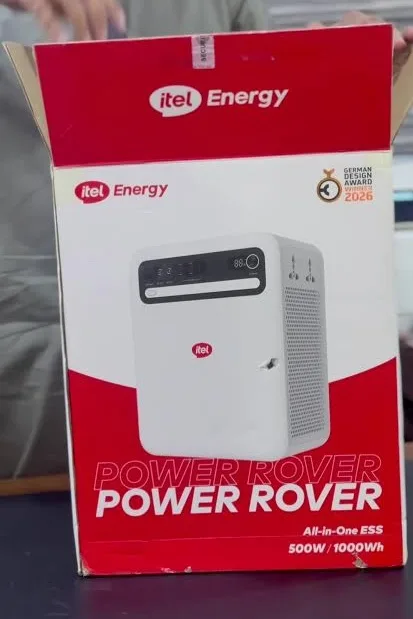
itel Power Rover Full Specifications
| Specification | Details |
|---|---|
| Model | itel Power Tank / Power Rover |
| Model Numbers | IESS 05K10N / IESS 05K10P |
| Battery Capacity | 1,000Wh / 1kWh |
| Battery Chemistry | LiFePO4 |
| Battery Life | 6,000+ charge cycles |
| Continuous Output | 500W |
| Surge Output | 1,000W |
| AC Output | 200V to 240V, 50Hz |
| Waveform | Pure sine wave |
| Solar Input | Up to 400W |
| Solar Voltage | Up to 60V DC |
| Solar Controller | Built in MPPT |
| UPS Switchover | Less than 20ms |
| DC Output | 12V |
| USB A | 5V/2A |
| USB C | USB C PD fast charging |
| Cooling | Smart fan cooling |
| Noise Level | Below 45dB |
| Operating Temperature | minus 20°C to 60°C |
| Weight | About 10kg |
itel Power Rover Price in Nigeria
The itel Power Rover price in Nigeria depends on the seller, warranty coverage and the package included with the unit. The standalone 500W/1kWh power station generally falls between ₦279,000 and ₦390,000. If you want the version bundled with a 400W solar panel, expect to pay around ₦437,000 to ₦500,000.
| Package | Price in Nigeria |
|---|---|
| Power Rover 500W/1kWh | ₦279,000 to ₦390,000 |
| Power Rover with 400W solar panel | ₦437,000 to ₦500,000 |
International pricing can also vary by market, shipping costs and import duties. The standalone unit is generally around $200 to $260 USD in markets where it is available.

How Much Power Can the itel Power Rover Provide?
The 1kWh battery gives the Power Rover a substantial amount of stored energy, but the actual runtime depends on the power draw of the devices connected to it.
For example, a Wi Fi router using around 10W would consume far less energy than a television drawing 100W or more. Running several devices at the same time also reduces the available runtime.
The 500W continuous inverter rating is just as important as the 1kWh battery capacity. Your connected devices should stay within the 500W continuous output limit, while devices with a short startup surge can use some of the available 1,000W peak capacity.
Is the itel Power Rover Good for Home Backup?
The Power Rover is well suited to smaller electronics and moderate home backup needs. It can keep a router, laptop, television, decoder, lights and similar low power devices running during an outage, provided their combined consumption stays within the inverter’s output rating.
It is not designed to replace a large home inverter system for high consumption appliances such as electric cookers, kettles, water heaters or air conditioners. For longer outages, solar charging can also help replenish the battery during the day instead of relying entirely on grid electricity.
Is the itel Power Rover Worth Buying?
The Power Rover makes sense if you want a compact backup system with a relatively large battery, solar charging and UPS functionality in one unit. Its 1kWh LiFePO4 battery and 6,000 plus cycle rating are particularly useful if you expect frequent charging and regular power cuts.
The 500W inverter also makes the unit better suited to electronics and other moderate loads than high power household appliances. Adding a compatible 400W solar panel package can make it more useful during extended outages.
Before buying, check the exact model number, included accessories and warranty coverage. The Power Rover name can appear alongside the Power Tank branding, so confirming the IESS 05K10N or IESS 05K10P model number can help you avoid confusion between different itel power products.
The itel Power Rover combines a 1kWh LiFePO4 battery, 500W pure sine wave inverter, 400W MPPT solar input and UPS functionality in a portable unit weighing about 10kg. Its long cycle life and solar charging support make it particularly suited to homes and workspaces that deal with frequent power interruptions.
In Nigeria, the standalone unit generally sells for ₦279,000 to ₦390,000, while packages that include a 400W solar panel cost around ₦437,000 to ₦500,000. The right package depends on how often you experience outages and if you want solar charging as part of your backup setup.
Related Articles:
- itel Power Go vs. Power Tank: Which Portable Power Station is Right for You?
- itel Power Go Pro Price, Specs, and Full Features
- itel Power Go vs itel Power Go Pro: Which Should You Buy?