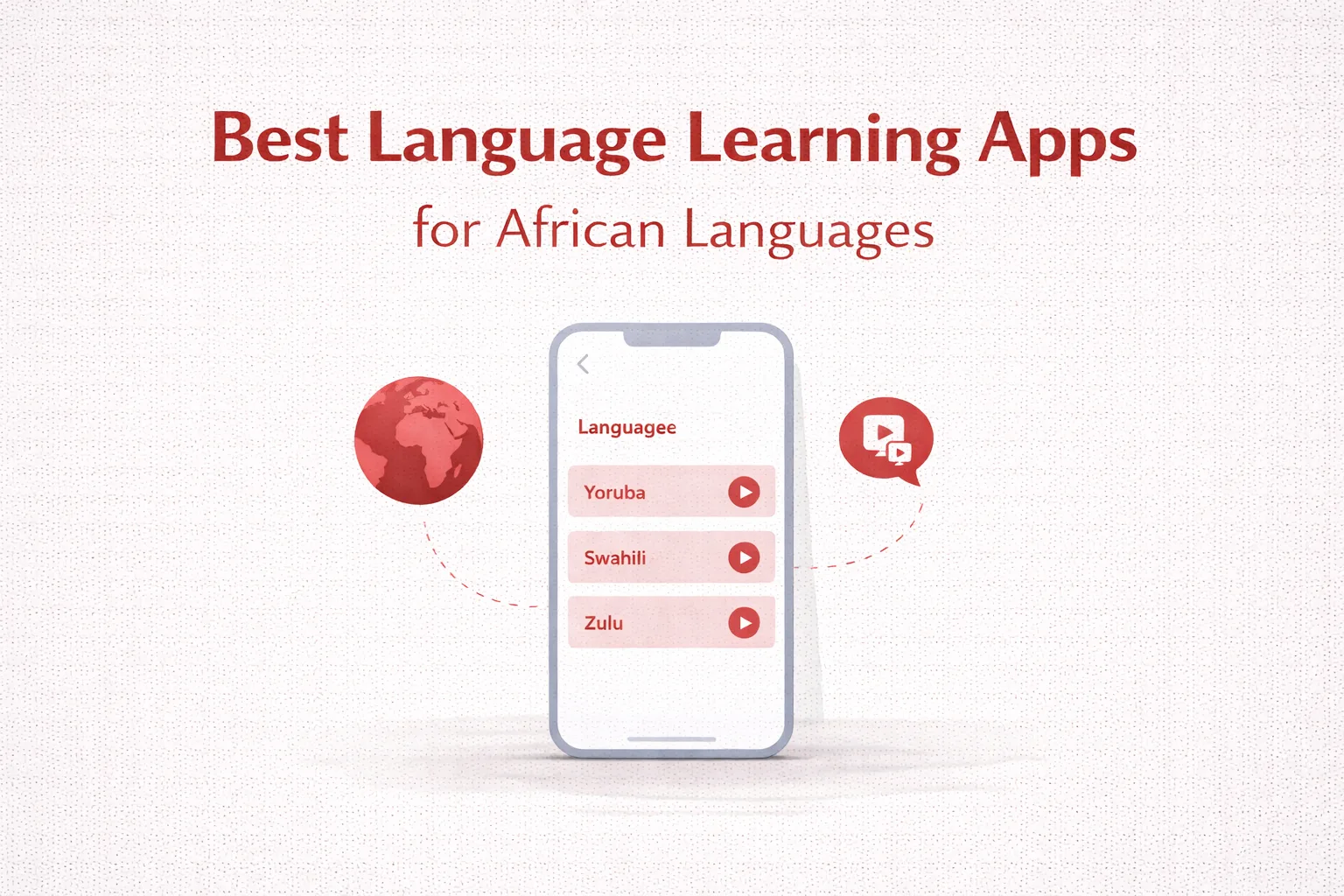

There’s something personal about wanting to learn your grandmother’s language, connect with your roots, or simply communicate in the language spoken around you every day. For too long, African language learners have been stuck with scraps: poorly designed courses created by non-native speakers, apps that treat tonal languages like they’re Spanish with different words, or platforms that offer maybe one or two African languages as an afterthought. A new generation of language learning apps built by Africans, for Africans, is finally giving learners the tools they deserve.
If you want to speak Yoruba with your family in Nigeria or pick up Swahili before traveling to East Africa, there are now apps specifically designed to handle the complexity, beauty, and tonal nature of African languages. They’re purpose-built tools that understand how these languages actually work and how people actually learn them. Let’s break down exactly which apps you should be using and what makes each one worth your time.
Why Are African Languages So Hard to Find on Language Apps?
Before we get into the solutions, it’s worth understanding why this problem existed in the first place. Most major language learning platforms were built around European languages like French, Spanish, and German. These languages follow relatively similar patterns in terms of grammar structure and pronunciation. When companies like Duolingo or Babbel tried to expand, they naturally added languages that fit their existing teaching framework.
Most learning frameworks struggle to capture the specific nuances that make African languages unique. Many are tonal languages, meaning the same word pronounced with different pitches can have completely different meanings. In Igbo, for example, the word “akwa” can mean crying, cloth, bed, or egg depending entirely on the tone you use. Standard language learning apps weren’t designed to teach or test tonal accuracy.
There’s also the issue of market size perception. Companies assumed there wasn’t enough demand for African language courses to justify the investment. This was always shortsighted. There are over 2,000 languages spoken across Africa, with millions of speakers for major languages like Hausa, Yoruba, Swahili, Igbo, and Amharic. The demand was always there. What was missing were platforms willing to do the work properly.
5 Best Language Learning Apps for African Languages
These five apps are your best bet for picking up an African language. They all offer something a little different, so the right one for you really depends on which language you’re after and how you like to learn.
1. NKENNE
Languages Covered: 15 African languages, including Yoruba, Igbo, Swahili, Lingala, Wolof, Hausa, and Somali.
NKENNE stands at the top of this list because it’s the most comprehensive platform built specifically for African languages. With coverage of 15 different languages, it offers learners more options than any other specialized app on the market. The platform’s standout feature is its specialized AI translation tool that handles tonal nuances, something generic translation apps consistently fail at. Tonal languages require different pitch patterns to distinguish between words, and NKENNE’s AI was built from the ground up to understand and teach these distinctions accurately.
NKENNE LiiVE provides one-on-one sessions with native-speaking tutors, bridging the gap between app-based learning and real conversation practice. You’re actually speaking with native speakers who can correct your pronunciation, explain cultural context, and help you sound natural.
2. Angula
Languages Covered: 10 Southern African languages, including isiZulu, isiXhosa, Sepedi, Setswana, and Tshivenḓa.
Angula takes a different approach by focusing exclusively on Southern African languages and doing them exceptionally well. Instead of trying to cover languages across the entire continent, Angula specializes in the languages spoken in South Africa, Botswana, Zimbabwe, and surrounding regions.
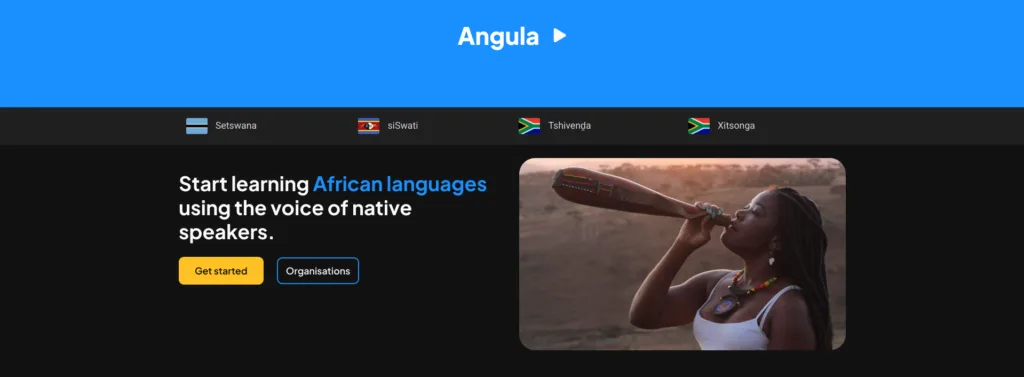
What really makes Angula stand out is that it uses high-quality audio voiced only by native speakers, so you can pick up the pronunciation just right. This isn’t AI-generated speech or non-native approximations. Every word, phrase, and sentence you hear comes from someone who grew up speaking that language naturally.
That’s especially important for a language like isiXhosa, which includes click consonants that are incredibly difficult for learners to produce correctly. Hearing authentic native speaker models gives you the pronunciation target you need to develop accurate speech patterns. For tonal languages in the region, native speaker audio ensures you’re learning the correct pitch patterns from the start rather than having to unlearn bad habits later.
3. Dialogue Africa
Languages Covered: Twi, Ga, Yoruba, Swahili, Igbo, Somali, and Shona.
Dialogue Africa distinguishes itself by placing heavy emphasis on cultural context and proverbs alongside language instruction. The platform recognizes that truly understanding a language means understanding the culture, social norms, and worldview embedded within it.
When you learn a phrase in Yoruba on Dialogue Africa, you don’t just memorize the words. You learn when it’s appropriate to use that phrase, what cultural values it reflects, and how native speakers employ it in different social contexts. This cultural grounding helps you communicate authentically.
The platform uses a crowdsourced and expert-led method, meaning native speakers and cultural experts contribute to course content. This ensures lessons reflect how people actually speak in Ghana, Nigeria, Kenya, and other countries where these languages are used daily.
4. Duolingo
Languages Covered: Swahili and Zulu.
Duolingo remains the best option for a completely free, gamified entry point into African language learning, though its selection is far more limited than specialized platforms. If you want to learn Swahili or Zulu and prefer not to spend money upfront, Duolingo is a great starting point.
The app’s signature gamification approach turns language learning into a game with streaks, points, and rewards for consistency. For learners who struggle with motivation or need external nudges to maintain daily practice, this system helps build the habit of regular study.
Duolingo’s lessons follow their standard format: vocabulary introduction, grammar pattern recognition, translation exercises, and speaking practice. You’ll find the Swahili lessons are very thorough because of how popular the language is. If you’re looking at Zulu, it’s a bit more basic for now, but it still gives you everything you need to start speaking.
The limitation is obvious: only two African languages. If you want to learn Yoruba, Igbo, Hausa, or any other African language, Duolingo won’t help. But for Swahili and Zulu learners on a tight budget, it’s hard to beat free access to a well-designed course.
5. uTalk
Languages Covered: Over 150+ languages globally, including many often-overlooked African options like Amharic, Afrikaans, and Xhosa.
uTalk takes a survival phrasebook approach, focusing on essential vocabulary and human-voiced pronunciation practice. This makes it ideal for specific use cases but less suitable for others. The platform is known for having a bit of everything. With over 150 languages, uTalk offers courses in African languages that are nearly impossible to find elsewhere. If you’re learning a less commonly taught language and struggling to find quality resources, uTalk might be one of your only digital options.
Each course focuses on practical vocabulary organized by topic: greetings, numbers, food, directions, shopping, emergencies. You learn through listening to native speaker audio and practicing pronunciation. The app provides immediate feedback on your speaking, helping you improve accuracy.
The catch is that it doesn’t go very deep. You won’t become fluent using just uTalk, but it’s great for getting the basics down quickly so you can actually handle everyday situations.. For travelers preparing for a trip, business people needing survival phrases, or learners wanting to test interest in a language before committing to further study, this approach works well.
Which App Is Best for Southern African Languages?
If you’re focused specifically on Southern African languages, Angula is your best option. This app covers 10 languages from the region, including isiZulu, isiXhosa, Sepedi, Setswana, and Tshivenḓa. All courses are narrated by native speakers rather than AI-generated voices. This is a huge deal for tonal and click languages like isiXhosa, where subtle variations in sound production can completely change meaning. An AI voice might imitate the sound, but a native speaker provides the authentic model you need to develop accurate pronunciation.
The app’s focus on Southern African languages means the cultural context in lessons reflects real-life situations you’d encounter in South Africa, Botswana, or Zimbabwe. For learners in the region or people planning to work or study there, Angula’s regional specialization provides depth that broader platforms can’t match.
Is There an App That Teaches Culture Alongside Language?
Dialogue Africa does things a bit differently by making culture just as important as the language itself. You can learn Twi, Yoruba, or Swahili here, but what really sets it apart is how much effort they put into teaching you the ‘why’ behind the words.
Language doesn’t exist in a vacuum. The way people greet elders in Yoruba culture, the social contexts where certain Swahili phrases are appropriate, the cultural significance of specific Igbo expressions, all of this holds weight if you want to truly communicate.
Dialogue Africa uses a crowdsourced and expert-led method to ensure lessons reflect real-world cultural relevance. Native speakers and cultural experts contribute to course content, ensuring you’re learning not just correct language but appropriate language for different social situations. This approach is particularly valuable for diaspora learners reconnecting with their heritage or travelers who want to engage respectfully with local communities rather than just getting by with basic tourist phrases.
Are There Apps for Central African Languages?
Kukubela fills a gap that’s been particularly neglected. While apps for Swahili, Yoruba, and Zulu have become more common, Central African languages have remained largely absent from the language learning app world.
Kukubela specializes in Kimbundu, Kikongo, Umbundu, Tchokwe, and Lingala. For speakers of these languages or people moving to Angola, DRC, or surrounding regions, this is one of the few quality digital learning options available.
What Should You Actually Expect from These Apps?
It’s important to be realistic. No app, no matter how well designed, will make you fluent by itself. Language learning requires consistent practice, real conversation, cultural immersion, and time. Apps are tools that make this process more accessible and structured, but they’re not magic solutions.
What these specialized African language apps do provide is something that was unavailable just a few years ago: quality instruction designed around how these languages actually work, created by people who speak them natively and understand the cultural context.
You’ll make faster progress with these tools than trying to learn from generic platforms or piecing together YouTube videos and outdated textbooks. But you still need to show up consistently, practice speaking out loud even when it feels awkward, and ideally find opportunities for real conversation with native speakers.
How Do You Choose the Right Language Learning App?
Start by figuring out your goals and constraints. Are you learning for family connection, work, travel, or personal interest? Do you need a language spoken in a specific region? Is authentic pronunciation your priority, or are you more focused on reading and writing?
Most of these language learning apps offer free trials or limited free versions. Test them before committing to subscriptions. Pay attention to how well the teaching style matches how you learn best. Some people thrive with gamified lessons, others prefer more traditional instruction, and some learn best through conversation practice. It’s better to have a good-enough app you use daily than a flawless one that just sits on your phone.
African languages deserve the same quality learning tools as any other language family. The tools are all there. Now, it’s just a matter of picking the one that works best for you.