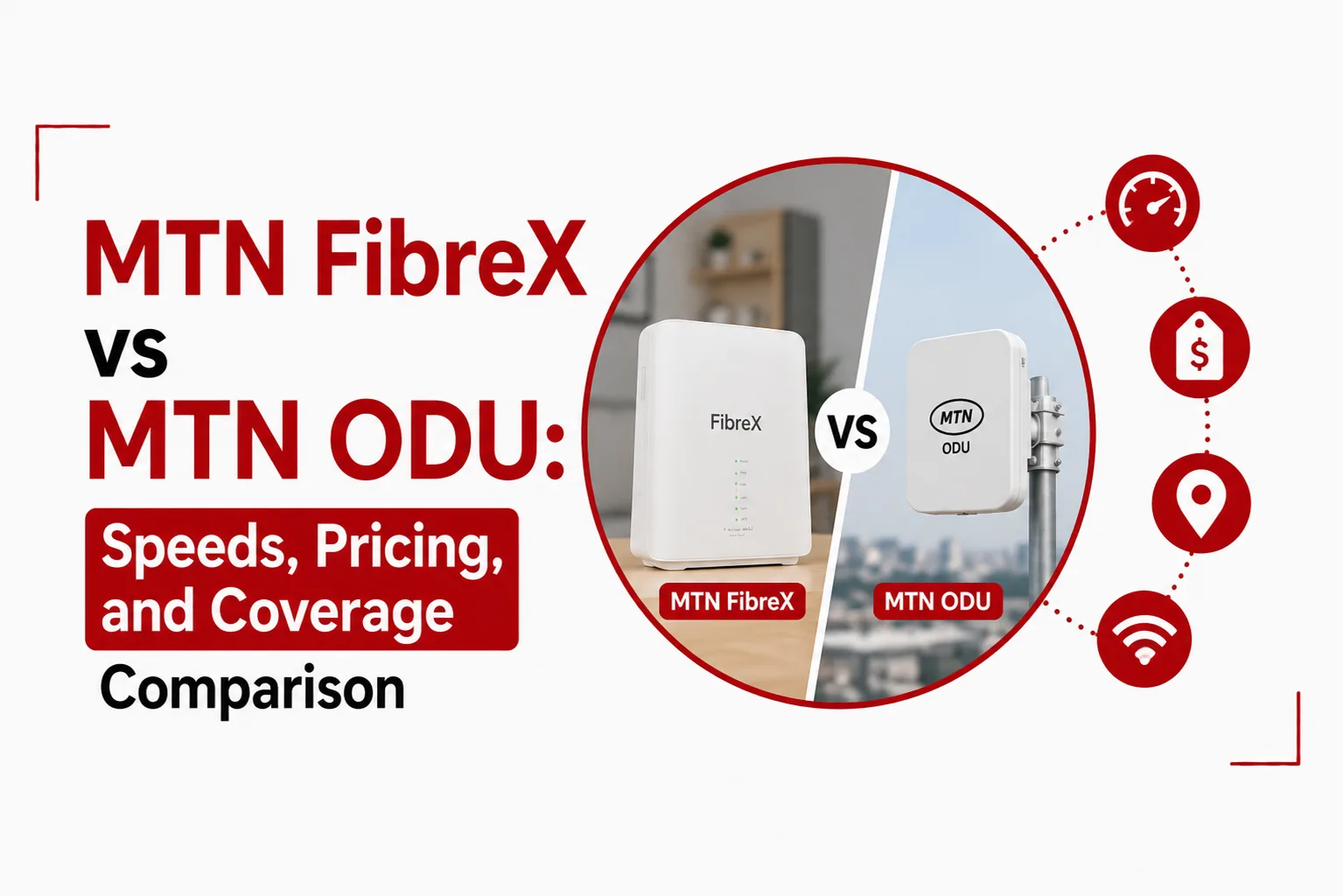

Internet access at home can come through a physical fibre connection or a wireless network, and MTN Nigeria offers both options. MTN FibreX vs MTN ODU presents a comparison between two fixed broadband services that use different technologies to deliver internet to your home.
MTN FibreX uses fibre optic cables connected directly to your property, while MTN ODU uses an outdoor receiver to capture MTN’s 4G LTE or 5G signal and deliver the connection to an indoor router. These different technologies affect the speeds available, connection consistency, coverage, installation process and pricing.
Your location, internet consumption and preferred connection type all play a part in deciding which service fits your needs best. Here is how MTN FibreX and MTN ODU compare across the areas that count most when selecting a home broadband connection.
Quick Links
MTN FibreX vs MTN ODU
| Feature | MTN FibreX | MTN ODU |
|---|---|---|
| Connection type | Fibre to the home | Fixed Wireless Access |
| Delivery method | Fibre optic cable | 4G LTE or 5G wireless signal |
| Available speeds | 50Mbps to 1Gbps | Up to 50Mbps or 100Mbps |
| Latency | Low | Higher than FibreX |
| Data model | Unlimited | Volume based or FUP based |
| Weather impact | Minimal | Heavy rain can affect performance |
| Tower congestion | Not affected | Can affect performance |
| Coverage | Areas with MTN fibre infrastructure | Areas with supported MTN 4G or 5G coverage |
| Installation | Fibre cabling and router setup | Outdoor receiver and indoor router |
| Equipment cost | Wi Fi router included under standard terms | Outdoor receiver kit usually purchased separately |
How MTN FibreX and MTN ODU Work
MTN FibreX and MTN ODU bring internet into your home through completely different technologies.
MTN FibreX uses fibre optic cables installed underground or overhead. The fibre connection runs directly to your property, providing a fixed wired link to the MTN network.
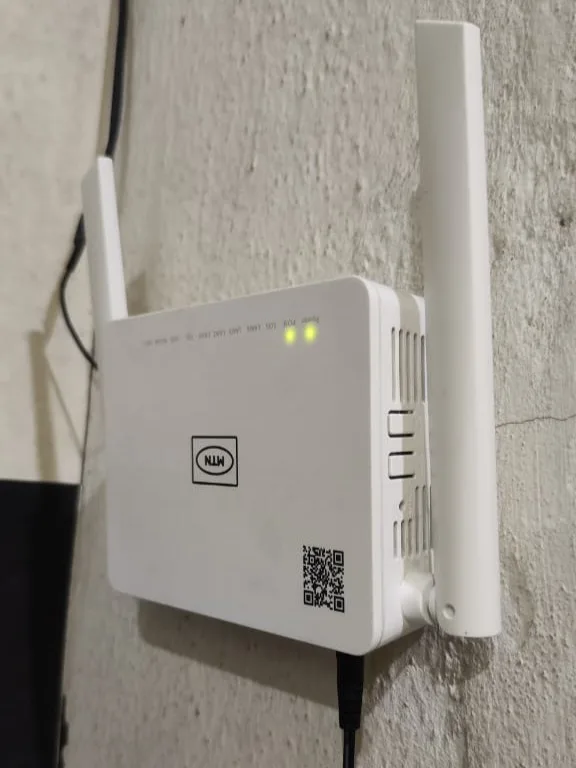
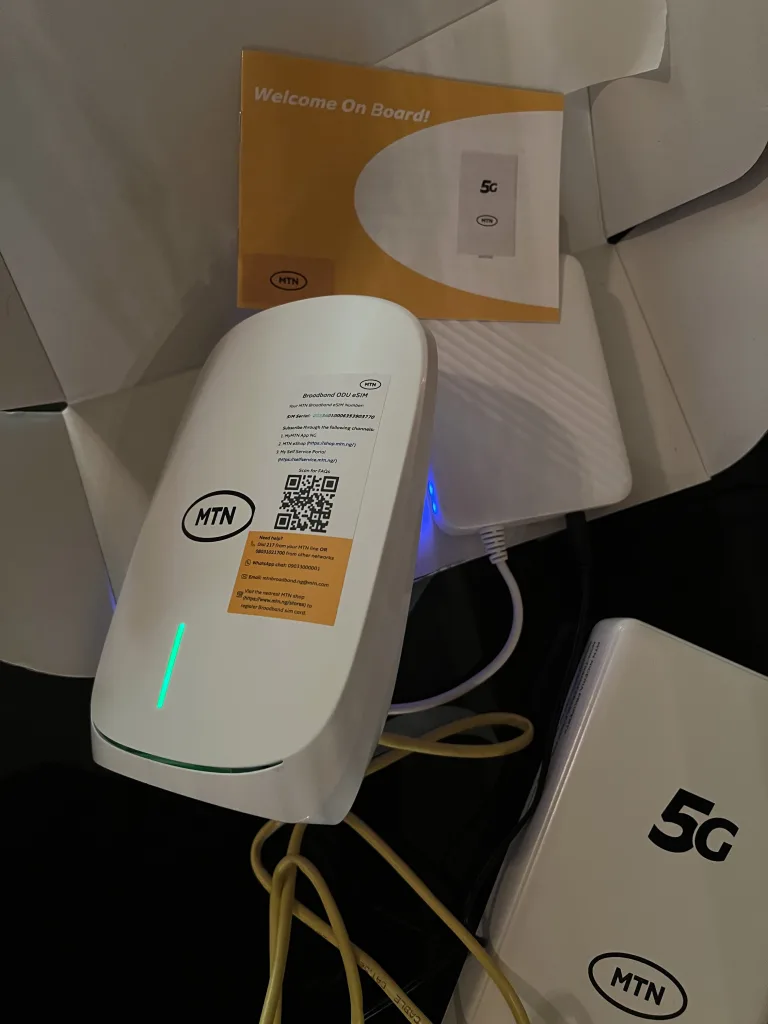
MTN ODU uses Fixed Wireless Access. An outdoor directional receiver is installed on your building to capture a 4G LTE or 5G signal from an MTN tower. A cable connects the outdoor receiver to an indoor router, which distributes the connection to your devices.
FibreX therefore depends on physical network infrastructure reaching your property, while ODU depends on suitable wireless coverage at your location.
MTN FibreX vs MTN ODU: Speed Comparison
MTN FibreX offers the higher speed ceiling. Available speed tiers range from 50Mbps up to 1Gbps, with options including 50Mbps, 100Mbps, 200Mbps, 300Mbps and 1Gbps.
The fibre connection also provides low latency and symmetrical upload and download speeds. This can be useful for video conferencing, cloud services, online gaming, large file uploads and other activities that need consistent two way connectivity.
MTN ODU offers speeds of up to 50Mbps or 100Mbps, depending on the hardware and whether the connection uses 4G or 5G. Actual speeds can also be affected by signal quality and congestion on the local MTN network.
For households with several people streaming, gaming, working or studying online at the same time, FibreX provides access to higher speed tiers.
Related Article: MTN ODU Router: Price, Speed, and Subscription Plans
Which Has Better Performance?
MTN FibreX generally provides more consistent performance because data travels through a physical fibre connection. Normal weather conditions do not interfere with the fibre connection in the same way they can affect wireless transmission. FibreX is also not affected by congestion on nearby mobile towers.
MTN ODU depends on the wireless link between the outdoor receiver and the MTN network. Heavy rainfall, trees, nearby buildings and network congestion can affect the quality of the connection. The outdoor receiver helps capture the available wireless signal, but your ODU performance can still depend on local network conditions.
MTN FibreX vs MTN ODU: Coverage
Coverage is one of the clearest differences between the two services.
MTN FibreX Coverage
FibreX is available only where MTN has deployed fibre infrastructure. Your neighbourhood, estate or commercial area must have a suitable fibre network before the service can be installed. Installation can involve a site survey, physical cabling and approval from a landlord or property manager where external wall drilling or cable installation is needed.
MTN ODU Coverage
ODU has access to a wider potential footprint because it uses MTN’s 4G LTE or 5G network. You can use the service in locations covered by the supported MTN wireless network, including places where fibre infrastructure has not reached your property.
Signal quality still plays an important role. Buildings, trees, network traffic and weather conditions can affect the connection available to the outdoor receiver.
MTN FibreX vs MTN ODU: Data and Pricing
The two services use different pricing models.
MTN FibreX Pricing
FibreX uses unlimited data plans, with the monthly price based mainly on the speed tier you select.
Available options include:
- 50Mbps: ₦30,000 per month (ideal for up to 10 devices)
- 100Mbps: ₦45,000 per month (ideal for up to 20 devices)
- 200Mbps: ₦70,000 per month (ideal for heavy usage)
- 300Mbps: ₦100,000 per month (ideal for busy homes or offices)
- 1Gbps: ₦200,000 per month (ideal for large setups and 50+ devices)
Standard FibreX terms also include installation and a Wi Fi router. The unlimited data structure means you can use the connection throughout the month without a fixed monthly gigabyte allowance.
MTN ODU Pricing
MTN ODU plans fall into two categories: speed capped unlimited plans and high volume capped bundles. Both types have a 30 day validity period unless stated otherwise.
The unlimited options let you continue browsing throughout the validity period, but a Fair Usage Policy applies. Once you pass the specified monthly data threshold, your connection speed is throttled for the remainder of the period.
- 50Mbps Unlimited ODU Plan: ₦30,000 for 30 days
- 100Mbps Unlimited ODU Plan: ₦45,000 for 30 days
The high volume capped bundles take a different approach. You receive a larger fixed data allowance and retain the available speed until you use up the allocated data. Once the allowance is exhausted, the bundle ends instead of continuing at a reduced speed. This makes the high volume option a better choice when maintaining full speed is more important than having continuous access throughout the month.
Related Article: MTN FibreX: Coverage, Installation, and Subscription Plans
Which Is More Affordable?
The monthly cost depends on how much internet you consume and the speed you need. FibreX starts at a higher monthly price, but unlimited data can make it attractive for heavy users. You can use large amounts of data without working around a monthly gigabyte allowance. ODU can have a lower entry point depending on the package you select, although you also need to account for the upfront cost of the outdoor receiver.
For users with moderate data consumption, an ODU package may be enough. Heavy users can benefit from the unlimited structure offered by FibreX.
MTN FibreX vs MTN ODU: Installation
FibreX installation involves connecting your property to MTN’s fibre network. A site survey may take place before the fibre cable is installed and connected to the Wi Fi router. External cable installation or drilling may also need permission from your landlord or property manager.
ODU installation involves mounting a directional outdoor receiver on the exterior of your building. The receiver is positioned to capture the available MTN 4G LTE or 5G signal and connects to an indoor router through a cable. This installation method allows ODU to serve locations where fibre cabling is not available.
MTN FibreX vs MTN ODU: Which Should You Get?
MTN FibreX is the better fit when you have access to MTN fibre infrastructure and want higher speeds, lower latency and unlimited data. The service is well suited to homes with several connected devices, frequent streaming, gaming, remote work and large file transfers.
MTN ODU works well in locations where fibre is unavailable but MTN 4G or 5G coverage is available. It provides fixed home internet through an outdoor wireless receiver, with several data and FUP based packages.
Your location should be the first thing you check. FibreX depends on fibre infrastructure reaching your property, while ODU depends on a suitable wireless signal. Your monthly data consumption should also guide your decision, particularly because ODU packages can have FUP limits.
Related Article: MTN MiFi Data Plans: Prices, Activation Codes, and Validity
MTN FibreX vs MTN ODU: Final Verdict
MTN FibreX has the advantage in maximum speed, latency, connection consistency and data allowance. Its speeds reach up to 1Gbps, and its unlimited plans make it well suited to heavy home internet use where fibre service is available.
MTN ODU provides another option for locations without fibre infrastructure. Its connection uses MTN’s 4G LTE or 5G network, with speeds reaching up to 50Mbps or 100Mbps depending on the hardware and available network conditions.
For households with access to both services, FibreX offers the more capable connection. ODU makes sense for locations where fibre is not available and MTN wireless coverage can support the service.