
Shopping for a portable solar generator is one of those purchases that looks straightforward from the outside and becomes deeply confusing once you start comparing specifications. Every brand leads with impressive numbers, and without a clear framework for reading those numbers, it is easy to buy a unit that either fails to start your appliances or runs out of power far sooner than expected.
The entire decision comes down to two metrics: wattage, which determines what the unit can turn on, and capacity, which determines how long it can keep those things running. Get both right and everything else falls into place.
Wattage and Capacity
Inverter Wattage: What the Generator Can Run at Once
The wattage rating tells you how much electrical power the generator can output simultaneously. If you plug in a 60W laptop charger, a 100W television, and a 40W fan, your total continuous draw is 200W. The generator’s rated wattage must sit above that combined figure at all times.
One additional number to check is the surge or peak wattage. Motorized appliances like refrigerators, water pumps, and power tools need a large burst of energy to start before they settle into their normal running wattage. A generator that meets your continuous draw but cannot handle those startup spikes will trip its overload protection the moment you switch those appliances on. Always cross-check the peak surge rating against the appliances you plan to run.
Related Article: Solar Generator vs Solar Inverter? Choosing Based on Budget & Energy Needs
Battery Capacity: How Long the Power Lasts
Battery capacity is measured in Watt-hours (Wh) and tells you how much energy is stored inside the unit. Calculating your expected runtime is straightforward: divide the battery capacity by the total wattage of your connected devices.
A 100W television running on a 500Wh generator will last roughly four to four and a half hours. That estimate accounts for a 15 percent efficiency loss that occurs as the unit converts DC battery power into AC wall electricity. Every conversion carries a small energy cost, and building that figure into your calculations prevents overestimating how long the battery will actually last in use.
Before spending anything, check the small fine-print sticker on the power brick of each device you plan to run. It states the exact maximum wattage the device draws, for example “Output: 19.5V x 3.34A = 65W.” Add those figures up across all your target devices, multiply by the number of hours you need them running, and you have your exact baseline wattage and capacity figures before making any purchase decision.
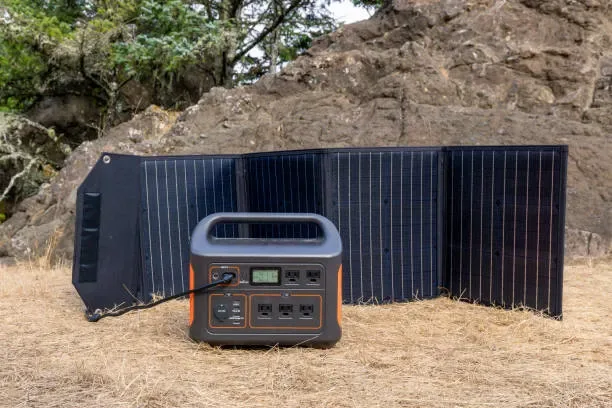
Choosing the Right Solar Generator
Portable power stations fall into four broad tiers based on output and capacity. Knowing which tier matches your actual usage prevents both overspending and underbuying.
Mini and Ultra-Portable: 100W to 300W Output, 150Wh to 250Wh Capacity
This tier covers smartphones, tablets, laptops, drones, headlamps, and Wi-Fi routers. It is well suited for casual camping trips, remote work from a coffee shop, or keeping communication lines open during a brief power outage. Units in this range are very light, sitting between 1.5 and 3.5 kg, and fit easily into a backpack or a car seat.
Mid-Sized Backup: 500W to 1000W Output, 500Wh to 1000Wh Capacity
This is the ideal tier for Nigerian households managing rolling blackouts and work-from-home setups. It runs desktop computers, 50-inch LED televisions, standing fans, mini-fridges, and basic shop tools. Weight sits between 5 and 11 kg, making these units manageable for moving between rooms. This tier also covers single-room overnight power and multi-day road trips where access to grid electricity is uncertain.
Related Article: Cola Solar vs itel Power Tank vs Hithium: Which 1kWh Solar Generator Is Best?
High-Capacity Home Emergency: 1500W to 2400W Output, 1200Wh to 2000Wh Capacity
This tier steps into full household appliance territory. It runs full-sized kitchen refrigerators, microwaves, and blenders. Units in this range are built for extended outages lasting 24 to 48 hours, off-grid cabins, or mobile food vendors who need sustained power throughout a trading day. Weight increases significantly here, between 16 and 27 kg, and many units in this tier include built-in wheels for easier movement.
Whole-House and Heavy Duty: 3000W and Above, 3000Wh and Above
The top tier covers air conditioners, water pumps, clothes dryers, and entire household sub-panels. These are stationary units built for dedicated off-grid living or multi-day family home backup. Most weigh upward of 35 kg and rely on modular, stackable expansion batteries to scale capacity after the initial purchase.
Related Article: DJI Power Stations Compared: Specs, Pricing, and Best Use Cases
Mistakes to Avoid When Buying a Solar Generator
Buying a Unit With the Wrong Battery Chemistry
Always check the battery chemistry listed in the specification sheet before purchasing. Older portable power stations use Lithium Nickel Manganese Cobalt (NMC) chemistry, which degrades to 80 percent health after around 500 charge cycles. Modern units use Lithium Iron Phosphate (LiFePO4 or LFP), which routinely lasts over 3,000 to 3,500 cycles before any noticeable degradation. That is up to six times the lifespan at a comparable price point. If the spec sheet does not clearly state LFP, ask before buying.
Confusing Modified Sine Wave With Pure Sine Wave Output
Cheaper generators use modified sine wave inverters. That jagged electrical current works adequately for basic lighting or a simple appliance, but it can overheat, damage, or cause severe buzzing in sensitive electronics including laptops, gaming consoles, medical devices, and high-end televisions. The specification to look for is Pure Sine Wave. It should appear clearly on the product listing or the box. If it is not there, assume it is modified.
Underestimating the Solar Input Limit
A large battery capacity is only as useful as the solar input the charge controller will accept. A 2000Wh battery paired with a charge controller that caps solar input at 100W will take over 20 hours of uninterrupted sunlight to recharge from empty. That is not viable for daily use. The solar input rating should be high enough to allow the battery to recharge fully within three to six hours under reasonable sunlight conditions. Match the panel wattage to the input ceiling, not just the battery size.
Related Article: Oraimo Energy KILI Power Station: Specs, Features, and Price
Running Heat-Generating Appliances on the Wrong Tier
Appliances that produce heat or use compressors draw enormous amounts of power instantly. Electric kettles, hair dryers, and pressing irons draw between 1200W and 2200W the moment they are switched on. Connecting a standard kitchen kettle to a mid-sized 1000W generator will trigger the unit’s overload protection immediately and shut it down. These appliances need to be matched to the high-capacity tier or removed from the load plan entirely when working with mid-sized units.
The clearest way to avoid a mismatched purchase is to do the wattage calculation before walking into a shop or placing an order online. List every device you plan to run, find the wattage draw on the power brick or in the product manual, add those figures together, and multiply by the number of hours you need them running daily. That single calculation gives you both the wattage floor your generator must meet and the minimum capacity your battery needs to hold. Buying above those figures gives you headroom. Buying below them gives you frustration.