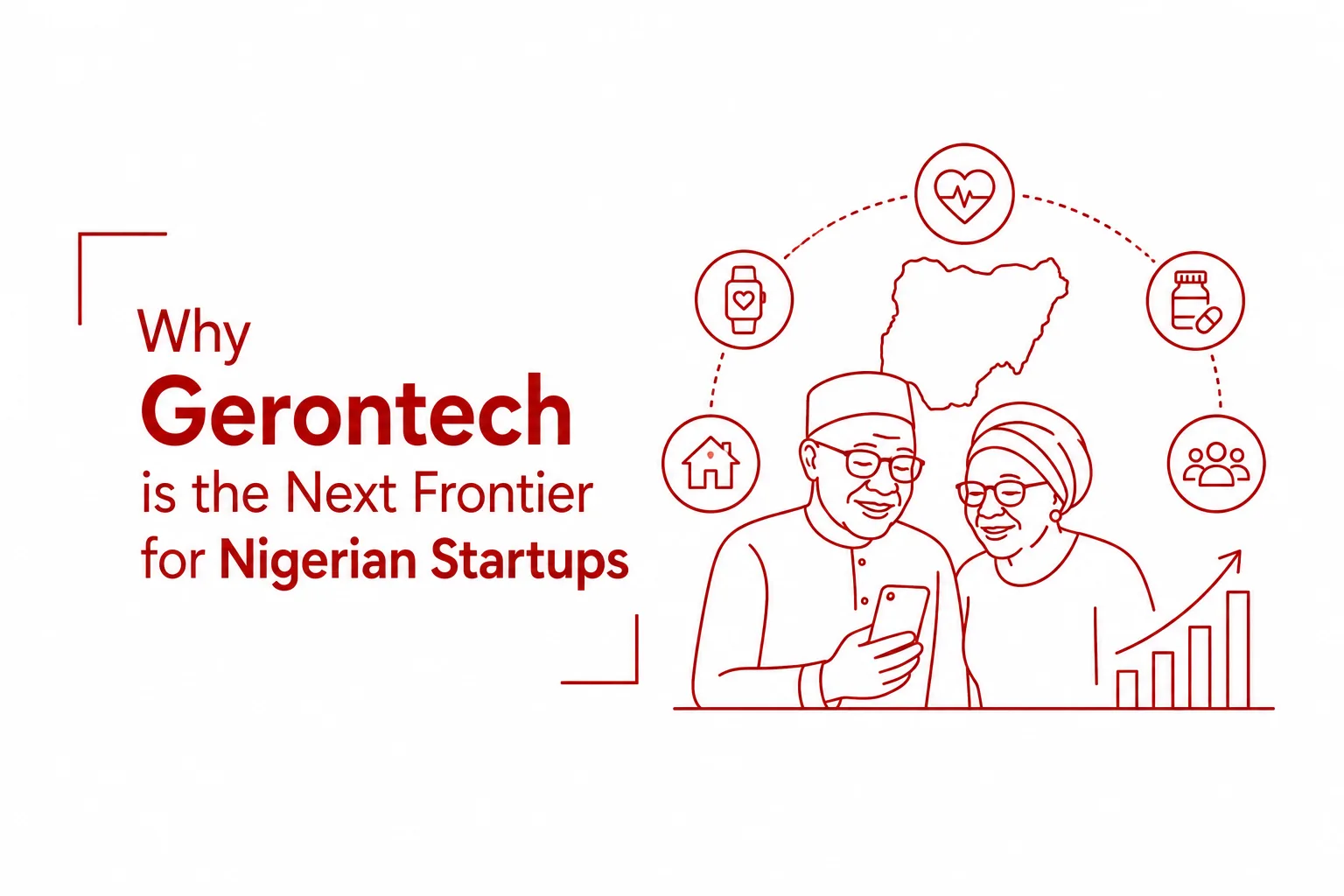

Nigeria is a young country. A median age of 18.3 years, a total population crossing 242 million, and a startup ecosystem that has been built almost entirely around that youth energy. The assumption embedded in nearly every Nigerian tech product ever funded is simple: the user is young, urban, and online. Build for that person and you will find your market. That assumption has produced results. It has also produced a blind spot so large that an entire economy is growing inside it, and that economy is what the world now calls Gerontech.
While founders race to capture the attention of Gen Z, a quieter demographic shift is underway. Nigeria’s elderly population is expanding. Life expectancy at birth has climbed to 55 years, a figure that understates the opportunity. Nigerians who make it to 65 can expect to live, on average, another 12 to 15 years. That is a population of seniors, millions of them, sitting on pensions, properties, and decades of accumulated wealth, with almost no technology built specifically for them.
Gerontech is a portmanteau of gerontology, the science of aging, and technology. Simply put, it is tech built specifically for older people. Nigeria has an aging population that is growing faster than most people realize and receiving almost nothing from the startup ecosystem in return. For the Nigerian startup ecosystem, that gap is the opportunity.
The Care Gap Nobody Wants to Talk About
Starting with the ‘Japa’ effect, because it is impossible to talk about elder care in Nigeria without it.
The mass emigration of young Nigerian professionals over the past several years has quietly produced a crisis that nobody is building a product around. Millions of elderly parents have been left at home without immediate family nearby to help with basic daily needs. The phone calls happen, the remittances happen. But the physical care, the daily check-ins, the medication management, the emergency response, none of that has a product solution designed for the Nigerian context. This is the care gap. And it is enormous.
Remote monitoring tools, professional home-care platforms, and telemedicine services designed specifically for non-tech-savvy seniors are not just social goods. They are businesses with a paying customer who is highly motivated, often abroad, and willing to spend money to solve a problem that currently has no good solution.
What makes this commercially interesting is the payment dynamic. The customer is not the senior. It is the son or the daughter abroad who is already sending remittances home and would gladly redirect a portion of that money toward a structured care platform if one existed. That is a customer with an active problem, existing payment behavior, and no good product to spend on.
Social Contract Is Breaking Down
For generations, the Nigerian elder care system ran on a simple, unwritten agreement: children take care of parents. No formal pension. No assisted living. No state support.
That contract is fracturing under economic pressure. Young Nigerians are financially stretched in ways their parents never anticipated. The cost of living, the unemployment rate, the pressure to build a life while also supporting aging parents, it is a weight that is becoming harder to carry through informal means alone. The traditional system where children serve as the sole pension plan for their parents is weakening, and the gap it is leaving has no institutional replacement yet.
Assisted living platforms, specialized home-care apps, formal elder-care marketplaces, and digital financial tools designed for retirees are all products that address needs created by a social shift that is already happening. The market is waiting to be served.
Nigeria’s elderly are not without resources either. Many are retirees from the civil service or the private sector, with pension income and property assets. They or their diaspora children have disposable income available for quality-of-life improvements. The spending power is there. What is missing is the product layer that allows them to spend it on services that actually work for their age, their digital literacy level, and their physical circumstances.

Telemedicine
Nigerian seniors carry a disproportionate burden of chronic illness. Hypertension, diabetes, and arthritis are common, and managing any one of them in Nigeria’s healthcare environment is expensive, exhausting, and often poorly coordinated.
The opportunity here is not just large. It is specific. Telemedicine platforms that are designed for users who are not comfortable with apps, wearable health trackers with simple interfaces and local language support, digital pill dispensers that send reminders, these are not futuristic concepts. They are products that can be built with existing technology, sold to a demographic with documented health spending, and distributed through the diaspora payment channel that is already flowing. Nigeria’s urban population stands at 55.8%, which means a significant portion of the senior population lives in areas where specialist healthcare is either far away or prohibitively expensive.
Financial Inclusion
Digital banking in Nigeria has made remarkable progress over the past decade. It has also been designed almost exclusively for users who are comfortable with smartphones, data plans, and fast-moving interfaces. For a senior with reduced eyesight, limited dexterity, and low confidence around digital tools, the current generation of Nigerian fintech products is largely inaccessible. The fraud exposure compounds the problem. Seniors are the primary targets of SIM-swap attacks, fake investment schemes, and social engineering fraud precisely because they are less likely to recognize the pattern before the damage is done.
Age-inclusive banking tools that simplify digital payments for users with limited digital literacy, flag unusual transaction patterns, and allow trusted family members to monitor account activity without removing financial autonomy are a product category that does not meaningfully exist in Nigeria today. The building blocks are already in place. Nigeria’s Open Banking framework provides the regulatory foundation for delegated account access. The fraud detection infrastructure exists within the major banks. What is missing is the product layer that ties these together.
Why Now?
Gerontech is not a future market. It is a present one sitting quietly at the edge of Nigeria’s startup boom, waiting to be noticed. The demographic data is already there. The care gap is already open. The traditional support systems are already weakening. The diaspora is already sending money home for elder care through informal channels that a structured product could formalize and improve. The disease burden is already creating monthly recurring health expenditure that a subscription model could capture. And the life expectancy data, tells a story about a generation of Nigerians who will live long enough to need real solutions, not just family goodwill.
The founders who move into this space will not just be solving a social problem. They will be building businesses in a market where demand is documented, competition is nearly absent, and the customer is actively waiting for a product that works.