

Wearable tech innovations have moved well past the novelty phase. What started as glorified step counters strapped to wrists has quietly evolved into a category of remarkably useful devices that touch almost every part of daily life, from how well you sleep to how you pay for your morning coffee. The most exciting part is that the best of these innovations are no longer bulky, obvious, or uncomfortable. They are shrinking, blending into everyday routines, and filling in the gaps that exist beyond what a phone sitting in your pocket can comfortably do.
Here are five wearable tech innovations worth paying close attention to.
Minimalist Smart Rings
The biggest shift happening in wearable technology right now has nothing to do with bigger screens or louder notifications. It is moving in the opposite direction entirely. Consumers are increasingly drawn to devices that collect data quietly, without demanding constant attention.
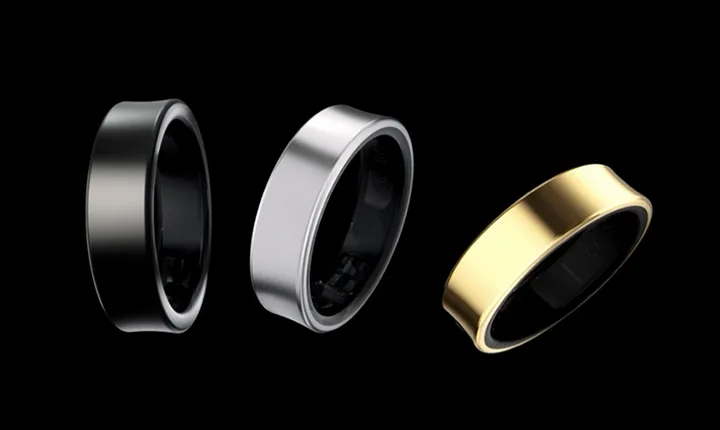
Smart rings are leading that shift. Devices like the Oura Ring 4 and Samsung Galaxy Ring pack advanced health tracking algorithms into a form factor small enough to pass as everyday jewelry. There is no screen buzzing on your finger. No notifications pulling you back into your phone. Just a sleek ring sitting on your hand, tracking sleep quality, daily stress levels, skin temperature, and movement throughout the day, including low-intensity activity like household chores that most wrist-worn devices fail to register accurately.
For anyone dealing with screen fatigue or trying to create more distance from their devices without abandoning health tracking entirely, the smart ring category offers something no smartwatch can: total visual silence with the data still running quietly in the background.
Real-Time Translation Earbuds
Not long ago, traveling to a country where you did not speak the language meant a combination of translation apps, awkward pauses, and the occasional miscommunication at a restaurant. That friction is disappearing quickly.
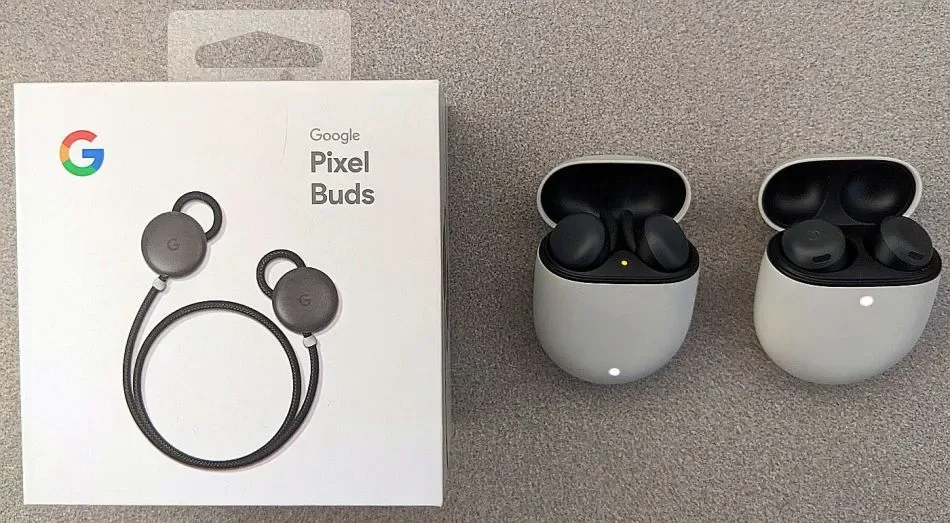
AI-powered earbuds from Google, Apple, and specialized translation brands now handle live, bidirectional translation directly inside your ear. Two people speaking entirely different languages can wear compatible earbuds and hold a conversation in real time, with the software translating each side as the words are spoken.
The everyday applications are more human than the technology might suggest. Picture navigating a holiday abroad, ordering food from a local street vendor, or sitting across from a business contact who speaks a different language, and following every word without glancing at a screen once. That experience is no longer reserved for people with years of language study behind them. It is available to anyone wearing the right pair of earbuds.
For travelers, international students, and anyone whose work brings them into contact with people from different linguistic backgrounds, this category of wearable tech innovations is one of the most transformative on this list.
Passive Stress and Burnout Tracking
Fitness wearables spent years obsessing over physical metrics. Step counts, calorie burn, heart rate during workouts. Useful data, but incomplete. The most pressing health challenge for most working adults is not physical fitness. It is mental load, sustained stress, and burnout.
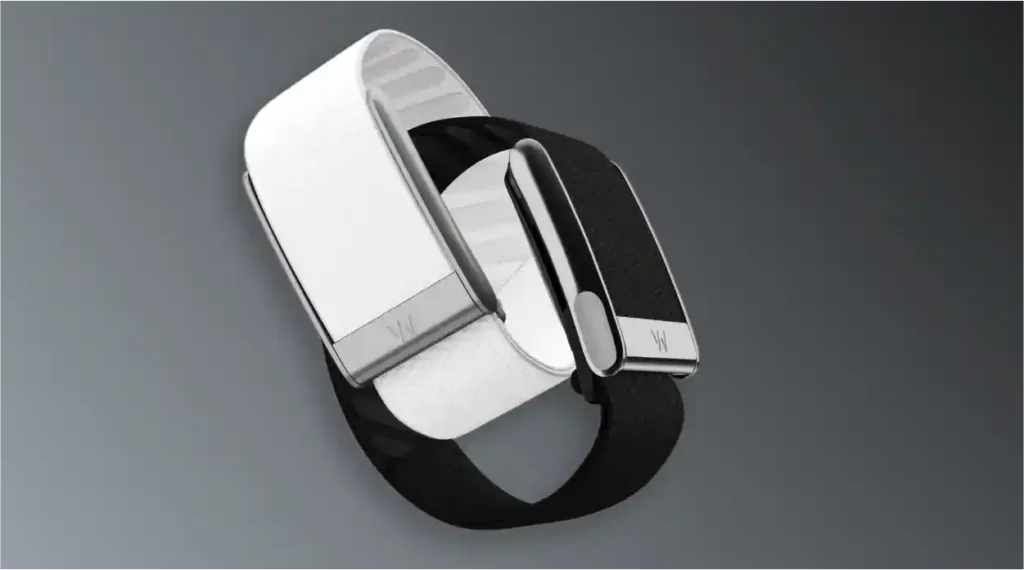
Devices like the Fitbit Charge 6 and Whoop MG bands are built around that reality. Using electrodermal activity (EDA) sensors, these wearables monitor subtle physiological signals: changes in skin temperature, heart rate variability, and sweat gland activity. Taken together, those signals paint a picture of the body’s stress state in real time.
When stress levels spike, these devices do not send a notification filled with text. They send a gentle vibration, a quiet prompt to pause, breathe, or step away from whatever is causing the pressure. No alarm. Just a nudge at exactly the right moment.
For remote workers who blur the line between work and rest, and for busy parents managing packed schedules with little margin for recovery, having a personal device that monitors stress before it becomes overwhelming is the kind of support that used to sound futuristic. It is available right now, on your wrist.
Tap-to-Pay Smart Rings
Pulling a phone out of a tight pocket or digging through a bag for a card to buy a single cup of coffee is a small frustration. But it adds up across dozens of transactions every week. Smart rings with built-in payment technology are making checkout completely effortless.
Devices like the McLEAR Ring contain tiny chips that store payment credentials. There is no battery inside. No charging required. The chip is passive, meaning it draws power from the contactless payment terminal at the point of sale, not from an internal power source. You wave your hand over any standard contactless terminal at a grocery store, petrol station, or transit gate, and the transaction completes instantly.
As contactless payment infrastructure continues to expand globally, this category of wearable tech innovations is positioned to become far more mainstream in the next few years.
Smart Glasses
Smart glasses spent years trapped in the perception that they were either a failed consumer product or a heavy virtual reality headset requiring a powerful computer nearby. That perception is outdated.
The current generation, including Even Realities Smart Glasses and mainstream audio eyewear collaborations, looks nothing like the headsets of the past. These frames are designed to pass as ordinary fashion eyewear. From the outside, they are indistinguishable from a standard pair of glasses. Inside, they carry micro-speakers and open-ear audio technology that sits just above the ear canal without blocking environmental sound.
The use cases are straightforward. You can listen to a podcast on your walk to work without earbuds. You can get turn-by-turn walking directions read aloud through the frames while keeping your eyes up and your phone in your bag. No glancing at a screen. No earbuds sealing off the world around you.
For urban commuters, cyclists, and anyone who wants to stay connected without staring down at a device every few minutes, this approach to wearable audio and navigation is one of the most underrated developments.
Here Is Why Wearable Tech Innovations Keep Getting Better
What connects all five of these developments is a shared direction. Wearable tech innovations are moving away from devices that demand your attention and toward devices that work in the background of your life without interrupting it. Smaller form factors. Passive functionality. Solving specific problems elegantly and slotting into daily life without demanding a complete change in how you already live.
That shift is what makes this moment in wearable technology worth paying close attention to. The devices are getting better at staying out of the way while still delivering value. For consumers tired of being pulled toward yet another screen, that is exactly the kind of progress worth paying attention to.