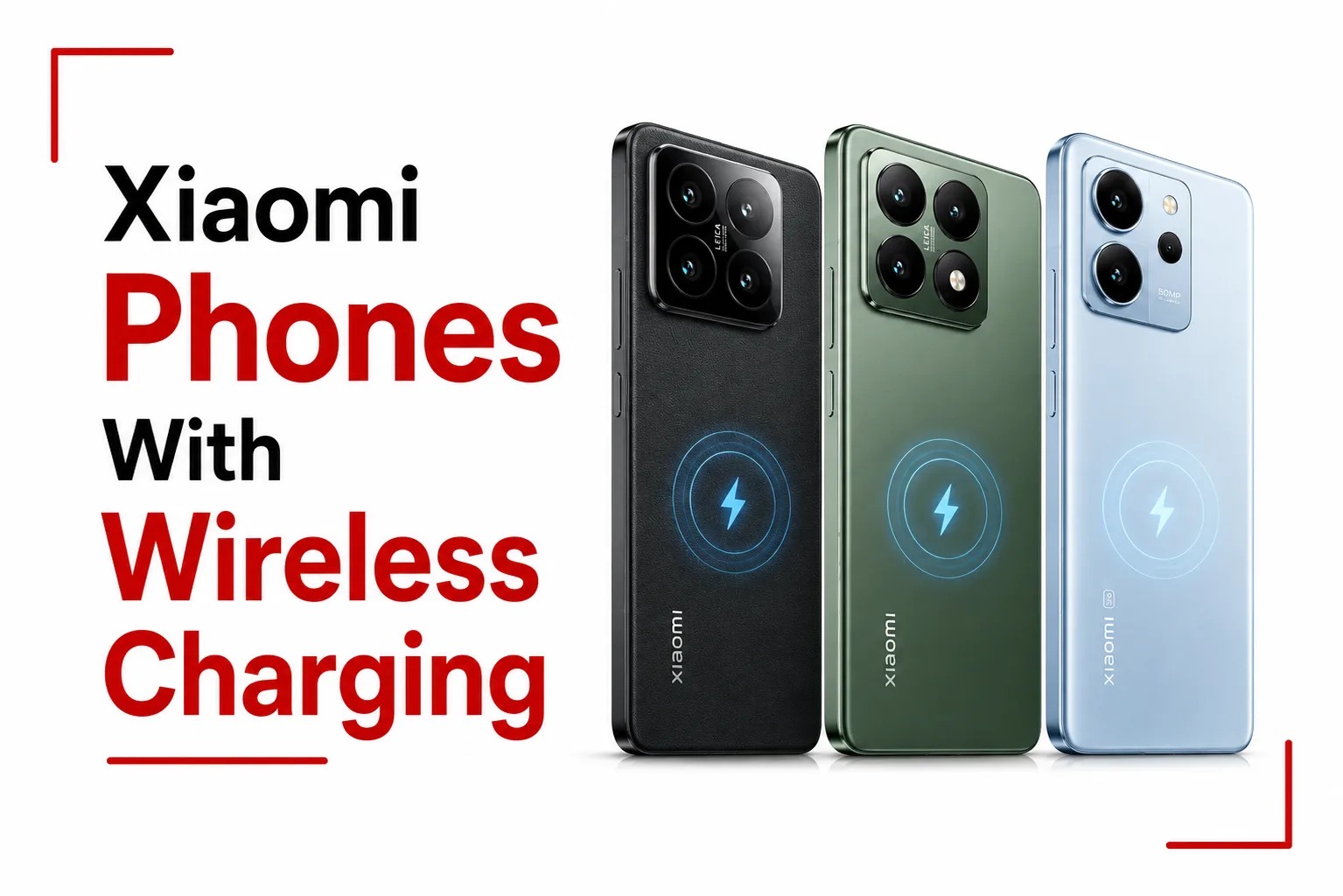

Xiaomi phones with wireless charging cover a surprisingly wide range, from the brand’s earliest experiments back in 2018 to its current 80W flagship speeds today. Across nearly a decade of development, Xiaomi has pushed wireless charging further and faster than most competitors, turning what used to be a slow overnight convenience into something that can fill a battery in under an hour.
What makes this lineup worth understanding is just how differently each generation handled the feature. Some phones introduced it as a basic 7.5W extra, while others, like the current 15 Ultra, treat it as a core selling point capable of rivaling wired charging speeds. Even Xiaomi’s foldables and budget conscious sub brands have found their own place in this story, often in ways that surprise people who assume fast wireless charging is reserved only for the most expensive flagships.
Before getting into the full list, there’s one important thing every reader should understand about how this feature actually works in real life.
Quick Links
What Most People Get Wrong About Wireless Charging
Every phone on this list is fully Qi compatible, meaning it will charge safely on a standard third party pad, a hotel nightstand charger, or a car mount without any issues. The catch is speed. On standard third party gear, these phones drop down to a modest 7.5W or 15W base speed.
To actually hit the advertised 30W, 50W, or 80W speeds, you need to use an official, actively cooled Xiaomi wireless charging stand paired with a high wattage wall adapter. Without that specific combination, the fast numbers below simply won’t show up.
1. Xiaomi 15 Series
The Xiaomi 15 series sits at the top of the current lineup, running on the Snapdragon 8 Elite platform. This includes the Xiaomi 15, Xiaomi 15 Pro, and Xiaomi 15 Ultra.
The standard 15 and 15 Pro both support 50W wireless HyperCharge, while the camera focused 15 Ultra pushes that up to 80W, fast enough to fill the battery in under 50 minutes. All three include 10W reverse wireless charging.
What stands out here is the packaging achievement. Fitting a 50W wireless coil into the base Xiaomi 15, which is a compact phone, is rare in the industry. Meanwhile, the 15 Pro manages to balance a massive 6,100 mAh battery with fast wireless speeds without adding noticeable bulk.
2. Xiaomi 14 Series
The Xiaomi 14 series, built on the Snapdragon 8 Gen 3 processor, is the generation that made high speed wireless charging consistent across the board. It includes the Xiaomi 14, Xiaomi 14 Pro, and Xiaomi 14 Ultra.
The 14 and 14 Pro both support 50W wireless charging. The 14 Ultra introduced an 80W wireless system with a dedicated Boost mode that reaches 100% in roughly 46 minutes. All three models include 10W reverse charging.
A big part of what makes this generation work is the internal cooling design. This is when Xiaomi integrated its custom Dual chip Surge battery management system, made up of P2 and G1 chips that monitor thermal data in real time. This is what allows the 14 Ultra to sustain high wattage wireless charging without overheating.
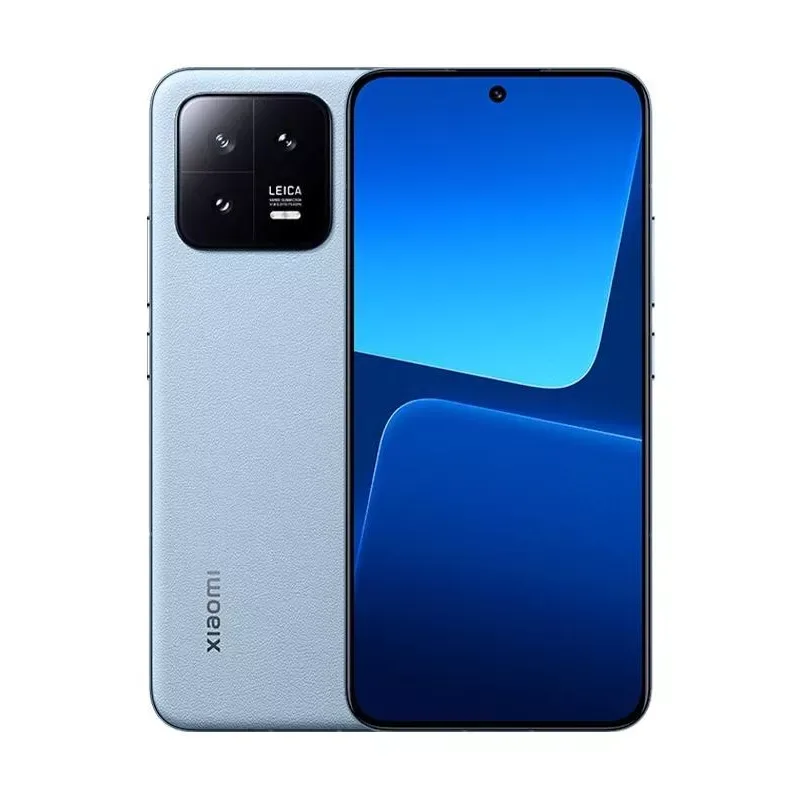
3. Xiaomi 13 Series
The Xiaomi 13 series standardized 50W wireless charging across the entire premium flagship tier, while also cementing the brand’s partnership with Leica. It includes the Xiaomi 13, Xiaomi 13 Pro, and Xiaomi 13 Ultra.
Unlike newer generations that split speeds between models, this generation keeps things consistent. All three phones cap out at a uniform 50W wireless HyperCharge speed, alongside 10W reverse wireless charging.
This makes the 13 series a smart pick for buyers on a tighter budget. Since these phones run on the stable Snapdragon 8 Gen 2 platform, they remain fast even today.
4. Xiaomi 12 and 12S Series
This generation laid the technical groundwork for Xiaomi’s current high speed wireless charging setup. It includes the Xiaomi 12, 12 Pro, 12S, 12S Pro, and 12S Ultra.
All of these premium variants support 50W wireless fast charging along with 10W reverse wireless charging.
The 12S Ultra holds a special place in this lineup as the phone that introduced Xiaomi’s one inch main camera sensor era. It proved a device could manage heavy image processing, large camera lenses, and 50W wireless power transfer all at once without thermal throttling.
5. Xiaomi 11 Series
The Xiaomi 11 series, known as the Mi 11 series at launch, was Xiaomi’s experiment in pushing raw wireless charging speeds as far as they could go. It includes the Mi 11, Mi 11 Pro, and Mi 11 Ultra.
The base Mi 11 offers 50W wireless charging, while the Mi 11 Pro and Mi 11 Ultra introduced a 67W wireless system capable of taking the devices from zero to 100% in under 40 minutes.
The Mi 11 Ultra in particular pushed the rest of the smartphone industry to take wireless charging seriously, breaking the old assumption that wireless pads had to be slow.
6. Xiaomi 10 Series
The Mi 10 series marks the point where Xiaomi committed to making wireless charging a permanent fixture across its flagship lineup. It includes the Mi 10, Mi 10 Pro, Mi 10 Ultra, and Mi 10S.
The Mi 10, Mi 10 Pro, and Mi 10S all support 30W wireless charging. The Mi 10 Ultra went further by upgrading its internal dual charge pump architecture to support 50W wireless charging.
This generation is when wireless charging moved out of the experimental phase and became tightly integrated into Xiaomi’s hardware ecosystem, supported by custom, actively cooled desk docks.
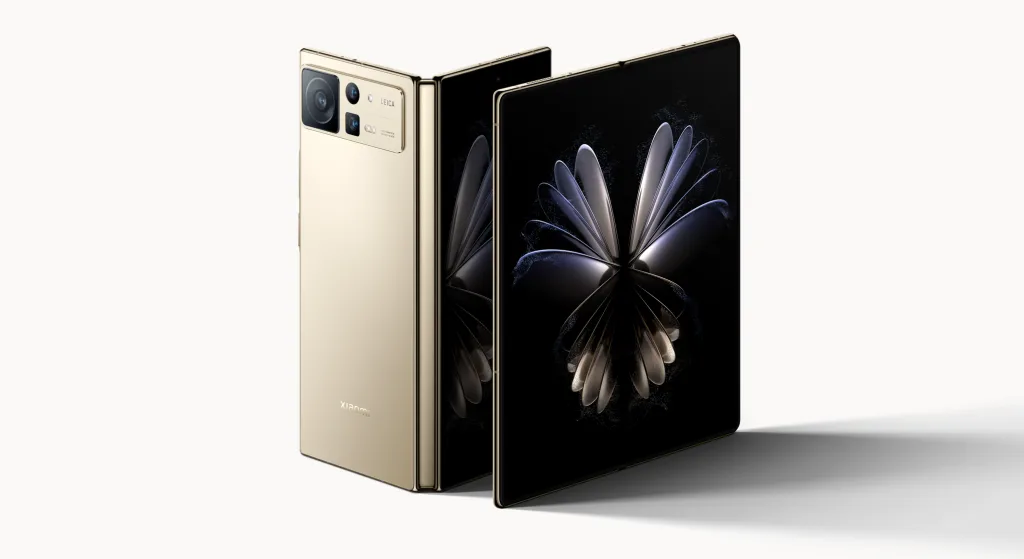
7. Xiaomi MIX Fold Series
Xiaomi leaves wireless charging out of its compact clamshell Flip phones due to space limitations, but treats it as essential for its larger book style foldables. This category includes the Xiaomi MIX Fold 4 and MIX Fold 3.
Both foldables support 50W wireless HyperCharge along with standard 10W reverse wireless charging.
This is an engineering achievement worth noting. Foldable phones rely on split, ultra thin batteries to balance weight across the hinge. Fitting a 50W wireless coil into a chassis that measures 4.6mm thick when unfolded puts Xiaomi ahead of many competitors in this space.
8. The Classic MIX Series
The classic MIX series represents Xiaomi’s earliest experimental flagships, known for unique ceramic builds and edge to edge displays. It includes the Mi MIX 2S, Mi MIX 3, and MIX 4.
The Mi MIX 2S was Xiaomi’s very first phone with wireless charging, starting at a modest 7.5W. The Mi MIX 3 bumped that up to 10W. Years later, the MIX 4, known for its under display camera, jumped all the way to 50W wireless speeds.
This series is a useful contrast point for seeing just how quickly Xiaomi’s engineering moved, climbing from basic 7.5W charging to flagship level speeds in a short development window.
9. Xiaomi Mi 9 Series
The Mi 9 series introduced the first real version of fast wireless charging to the wider public market. It includes the Mi 9 and Mi 9 Pro 5G.
The standard Mi 9 launched with 20W wireless charging, notably faster than most competitors at the time. The Mi 9 Pro 5G followed shortly after, pushing the speed up to 30W.
This series marks the shift from wireless charging being a slow, overnight convenience to something that could realistically top up a phone during the day.
10. POCO and Redmi
Wireless charging is mostly reserved for Xiaomi’s premium flagship tier, but a handful of performance focused value devices have broken that pattern, both old and new. This category includes the POCO F5 Pro, Redmi K60, Redmi K60 Pro, and the more recent Redmi K80 Pro.
The POCO F5 Pro, Redmi K60, and Redmi K60 Pro all support 30W wireless fast charging. It’s worth noting that the K70 series and the base Redmi K80 dropped the feature entirely, which made it look like wireless charging on Xiaomi’s value line was a one time experiment that quietly disappeared.
That assumption doesn’t hold up anymore. The Redmi K80 Pro brought wireless charging back in a big way, pairing flagship grade 50W wireless charging with a Snapdragon 8 Elite processor. Instead of treating this as a dead trend, it’s more accurate to see it as a feature Xiaomi selectively reserves for the Pro tier of its Redmi K series, used as a clear way to separate the Pro models from their base counterparts.
Related Article: POCO Phones That Support Bypass Charging
Xiaomi Reverse Wireless Charging
One detail that applies to almost every phone on this list is reverse wireless charging, usually capped at 10W. This feature works by flipping the switch on in settings, then placing the phone face down on a flat surface. Once active, the back glass effectively becomes a small power bank, transferring a slow but steady charge to whatever is resting on top of it.
It’s a small feature that rarely gets attention in marketing, but it’s surprisingly useful in everyday situations. Topping up a pair of wireless earbuds without digging out a separate charging cable, or helping a friend whose phone has died right before an important call, are exactly the kind of moments this feature was built for. Since it’s included across nearly every generation on this list, from the Mi 10 series onward, it’s worth checking if the feature is switched on, since most phones ship with it turned off by default.
It’s been a long road between the Mi MIX 2S, which could only manage 7.5W back in 2018, and the Xiaomi 15 Ultra hitting 80W today. The most important thing to remember when shopping for any of these phones is that the speed on the box only shows up with Xiaomi’s own charging stand and adapter. Anything less, and even the fastest phone on this list will charge no faster than a basic pad.