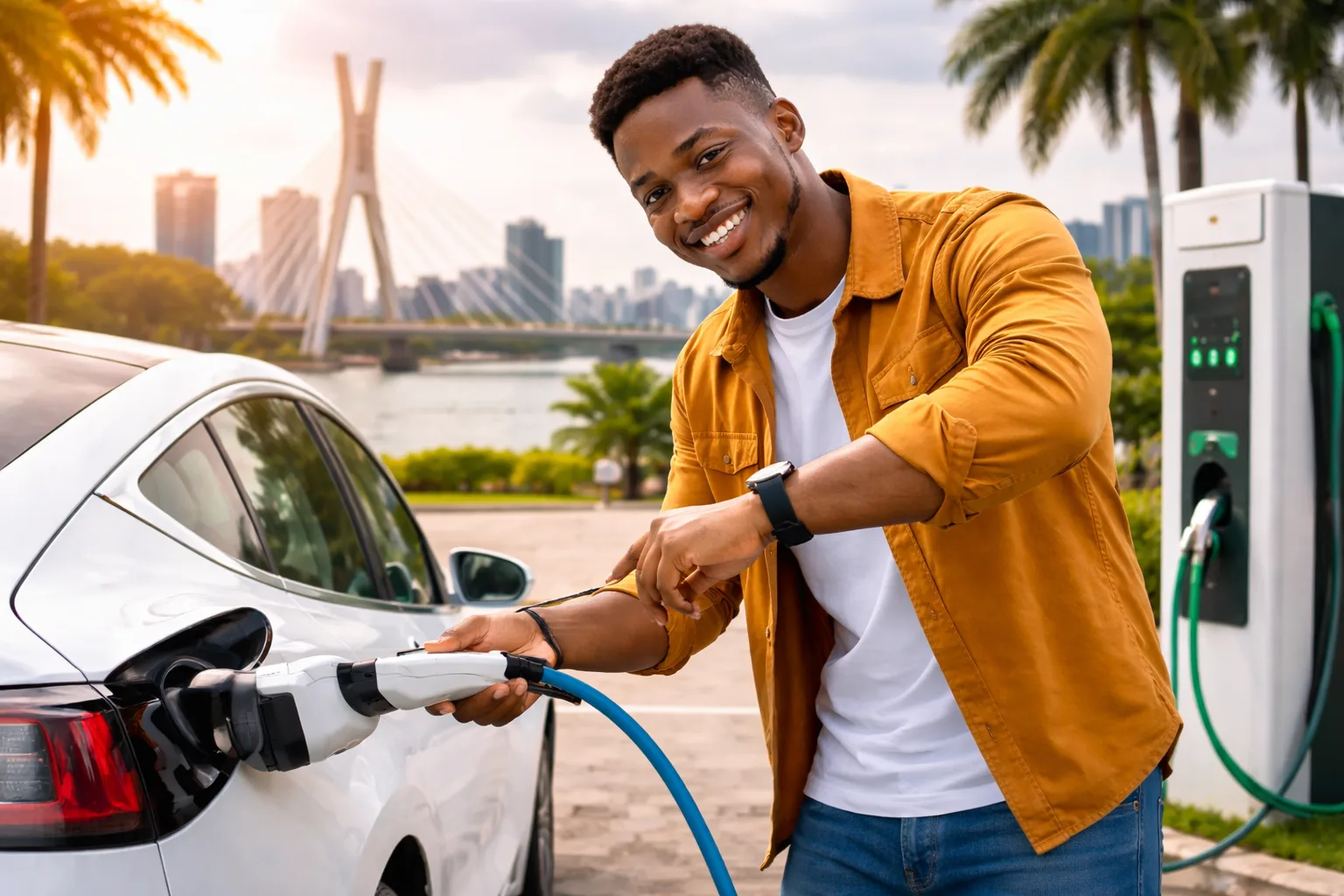

Lagos is changing, and if you’ve noticed more electric vehicles quietly gliding through traffic on the mainland or Island, you’re witnessing the early stages of a mobility revolution. The switch to electric isn’t just happening in Europe or America anymore. Right here in Nigeria’s commercial capital, charging infrastructure is slowly but surely taking root. If you own an electric vehicle or you’re considering making the switch, the big question isn’t if EVs make sense for Lagos traffic. It’s simpler and more practical: where exactly can you plug in when your battery runs low?
You have options, and they’re growing. To get the most out of your commute, you need a solid plan for where and when to charge an electric vehicle in Lagos. The reality, though, is that this network is still in its infancy. You won’t find a charging station on every corner like you would a fuel station. But knowing where the available points are and how to access them can make EV ownership in Lagos not just possible, but seamless. Let’s map out exactly where you can charge an electric vehicle across different parts of the city.
Where to Charge an EV in Victoria Island and Lekki
Victoria Island and Lekki are where Lagos’s EV infrastructure is most developed, which makes sense given the concentration of early adopters and premium facilities in these areas. If you work or live around here, charging becomes easier.
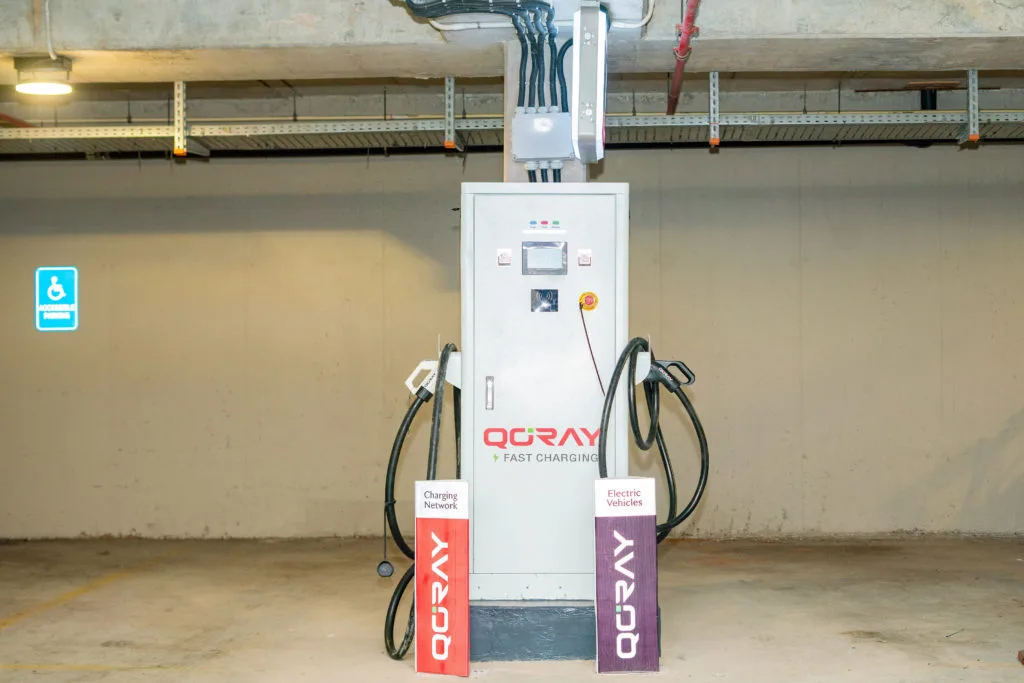
- The Qoray Charging Station on 300 Adeola Odeku Street in Victoria Island operates from 9 AM to 6 PM on both weekdays and weekends. Qoray Mobility has positioned itself as one of the serious players in Nigeria’s EV charging space, and this location serves as a convenient spot for people working in the VI business district. You can check their website for real-time availability and any updates on operating hours.
- Over in Lekki Phase 1, the AMP Charging Station at Plot 5a, Block 8 Wumego Crescent runs from 8 AM to 5 PM every day except Sunday.
- SAGLEV Electromobility operates multiple charging points in the area. They have a public charging station at the Mega Plaza Car Park rooftop in Victoria Island. Their main showroom and business office is located at 298B Akin Olugbade Street, also in VI.
- MAX, known primarily for their ride-hailing services, also operates charging infrastructure. Their Lekki locations include 25B, Bisola Durosinmi Etti Street in Lekki Phase 1 and 74 Emma Abimbola Cole, also in Lekki Phase I.
Where Can You Charge an Electric Vehicle in Ikeja and Oregun?
Ikeja, as Lagos’s capital and a major commercial hub, is catching up with charging infrastructure. The newest addition here is particularly noteworthy: Qoray recently launched a DC fast charger at the Sheraton Hotel, specifically at Car Park B2. Fast charging is a game changer because it dramatically cuts down the time you spend waiting. While a standard charger might take several hours to fully charge your vehicle, a DC fast charger can get you to 80 percent in under an hour, depending on your vehicle’s capacity.
Ecowaka, located at 4/6 Kudirat Abiola Way in Oregun, operates generally from 9 AM to 6 PM on weekdays. They’re another dedicated player in the EV charging space, and their location in Oregun makes them accessible from both the mainland business districts and the Island.
For electric motorcycle users, which is a growing segment of Lagos’s two-wheeler delivery and transport sector, Spiro operates swap stations rather than traditional charging points. Their locations include 34 Mobolaji Johnson Avenue in Oregun and 1 Bassie Ogamba Street in Surulere. The swap model is brilliant for commercial riders who can’t afford downtime. You simply exchange your depleted battery for a fully charged one and keep moving.
MAX has a good presence in Ikeja as well. Their locations include Bond Plaza on Simbiat Abiola Way, the NNPC station at 34 Mobolaji Johnson Avenue in Oregun, and 42 Airport Road. The NNPC location is particularly strategic because it sits on a major route and operates with the reliability you’d expect from an established fuel station.
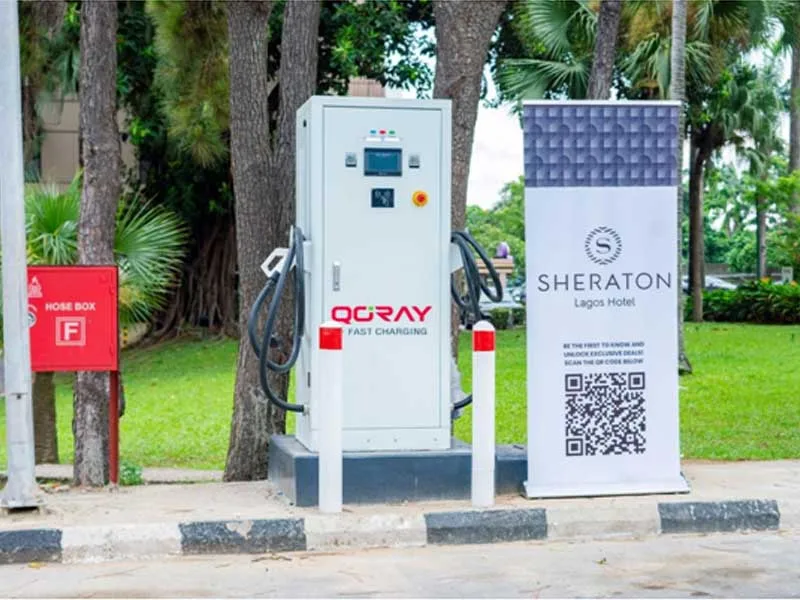
EV Charging Stations in Other Parts of Lagos
The network extends beyond the Island and Ikeja, though options become more scattered. In Yaba, MAX operates stations at 56b Moleye Street in Sabo and at the NNPC station on 200 Murtala Muhammed Way. These locations serve the Yaba, Akoka, and surrounding mainland communities.
Interestingly, there’s an EV charging station right on the University of Lagos campus, located beside Julius Berger Hall. This is significant for a couple of reasons. First, it signals institutional support for EV infrastructure. Second, it provides a charging option for staff, students, and visitors in the Akoka area who might not have many alternatives nearby.
In Ikoyi, MAX has a location at the NNPC station on Alfred Rewane Road (formerly Kingsway Road). This puts a charging point in one of Lagos’s most established residential and commercial districts.
How Much Does It Cost to Charge an Electric Vehicle in Lagos?
This is where things get a bit unclear, and it’s one of the frustrations of the current ecosystem. Pricing is a mixed bag between providers and even between charging speeds at the same location. Some stations charge per kilowatt-hour, others charge a flat session fee, and some use time-based pricing.
The honest answer is that you need to check with each specific provider. Qoray, Ecowaka, SAGLEV, and MAX all have different pricing structures. Some offer membership programs that reduce per-charge costs for regular users. Others keep things simple with pay-as-you-go models.
What makes this even more important is that the network is expanding rapidly. New stations are coming online, pricing models are being tested and adjusted, and availability can change. Calling ahead or checking company websites isn’t just recommended, it’s necessary if you want to avoid showing up to a station that’s fully booked, temporarily offline, or operating on different hours than you expected.
What Should You Know Before Relying on Public Charging?
The reality of EV ownership in Lagos right now is that it requires more planning than simply driving to the nearest fuel station. Charging takes longer than filling a tank, even with fast chargers. You need to know your vehicle’s charging capacity, which connector types it accepts, and roughly how long a full charge will take at different stations.
Most charging stations in Lagos use Type 2 connectors for AC charging and CCS or CHAdeMO for DC fast charging. Make sure your vehicle is compatible before making a trip. There’s nothing more frustrating than arriving at a charging point only to discover your car can’t connect to the equipment.
Battery range anxiety is another concern, especially in Lagos traffic where you might sit stationary for an hour in a jam. Know your vehicle’s realistic range under Lagos conditions, which is often less than the manufacturer’s claimed range, and plan your charging stops around that.
Is Lagos Ready for Electric Vehicles?
The infrastructure is growing, but it’s not mature yet. If you’re an early adopter, you’re part of building this ecosystem. Your experience, feedback, and willingness to work with the current limitations help shape what comes next.
Companies like Qoray, MAX, SAGLEV, and Ecowaka are investing real money into building this network because they see the future. Fuel prices aren’t getting cheaper, and the environmental case for EVs gets stronger every year. Lagos traffic might be brutal, but electric motors are actually more efficient in stop-and-go conditions than combustion engines.
The charging network will improve as more vehicles hit the roads and demand increases. For now, knowing where you can charge and planning your routes around available infrastructure makes EV ownership workable. Check provider websites regularly, join EV owner communities online where people share real-time updates, and always have a backup charging location in mind.
Your electric vehicle can work in Lagos. You just need to know where to plug in.