
A Wits University spinout building AI-powered air quality systems has landed a significant funding boost, with South Africa’s Technology Innovation Agency (TIA) approving R11.7 million in support for its AI4Mines/AIrSynQ solution.
AIrSynQ Systems has been quietly building something worth paying attention to. The Johannesburg-based startup combines advanced air quality sensing, IoT connectivity, and artificial intelligence to help organisations monitor environmental conditions in real time, flag risks early, and act before those risks become incidents. With this new funding, the company is now positioned to push harder into one of its most demanding target markets: mining.
What the technology actually does
At the centre of AIrSynQ’s offering is an AI-driven analytics engine that goes beyond passive monitoring. Using machine learning algorithms, the system continuously analyses fluctuations in temperature, gas levels, and particulate matter to detect early signs of abnormal conditions. Beyond detection, it forecasts future trends based on historical data and environmental behaviour, providing intelligent recommendations for proactive interventions. The idea is to transform raw sensor data into actionable foresight, so that mining operators are preventing risks instead of simply reacting to them.
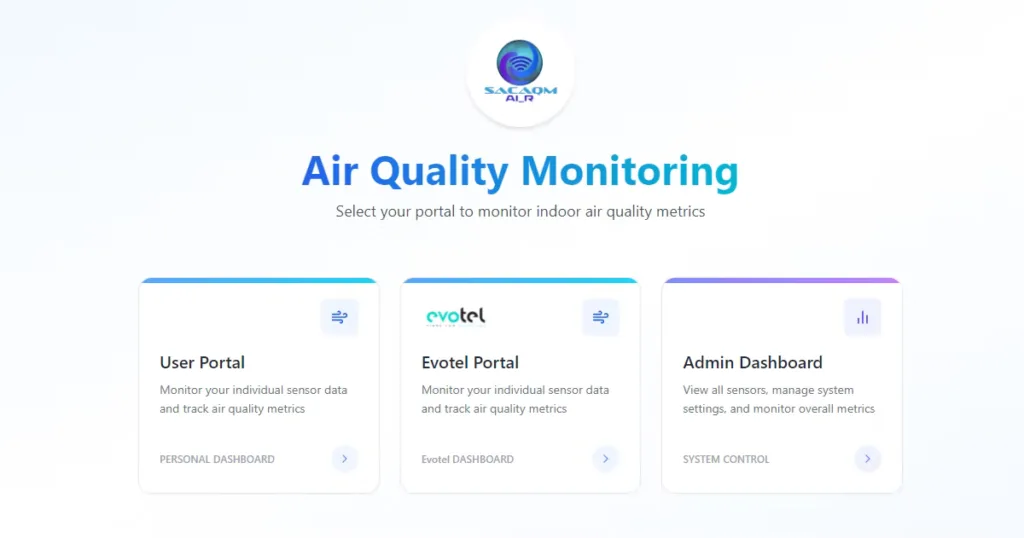
The company’s dashboard gives users a real-time view of environmental data captured by IoT sensors, tracking metrics like particulate matter, CO₂ levels, and volatile organic compounds (VOCs). The AI backend then analyses patterns and anomalies to predict air quality changes and detect early warning signs of hazardous conditions, including fire risks or toxic gas buildup.
Why mining?
In industrial and mining environments, the stakes around air quality are concrete and immediate. Pollutants that accumulate underground or in enclosed worksites can compromise worker health, impair cognitive performance, and in worst cases, trigger life-threatening incidents. AIrSynQ’s systems are built to support healthier and safer workforces by strengthening pollutant monitoring and allowing earlier intervention, before conditions deteriorate.
Dr. Edward Nkadimeng, Head of Engineering at AIrSynQ Systems, framed the moment plainly: “TIA’s support comes at a critical stage in our product development journey. Our priority is to build robust, affordable and intelligent systems that can operate reliably in demanding environments, from mines and industrial sites to offices and other indoor spaces.”
The company has already deployed its solutions across multiple real-world operational environments. It has also secured distribution partnerships to accelerate market reach, including a notable partnership with Africa Weather to expand distribution of its technology specifically in the mining sector.
Backed by Wits, building for scale
AIrSynQ is a spinout of the University of the Witwatersrand and works alongside Wits Commercial Enterprise (Pty) Ltd, the university’s commercial arm and a shareholder in the company, to advance commercialisation.
Professor Zeblon Vilakazi, Vice-Chancellor and Principal of Wits University, said: “AIrSynQ is an excellent example of how innovation emerging from a research university can be translated into practical solutions with real impact. We are proud to see a Wits spinout attracting this important support from TIA to develop products that can improve health, safety and productivity across multiple sectors.”
Dominique Adams, Head of Marketing at AIrSynQ Systems, summed up the shift happening in how businesses think about the air their workers breathe: “More organisations now understand that air quality is not only about compliance or health. It also affects how people feel, how they work and how businesses perform.”
For South African mining, the technology conversation has long centred on extraction efficiency. AIrSynQ is pushing a different agenda, one where the health of the workforce is the metric that gets the AI treatment. With institutional backing now confirmed, the startup has the foundation to make that argument at scale.