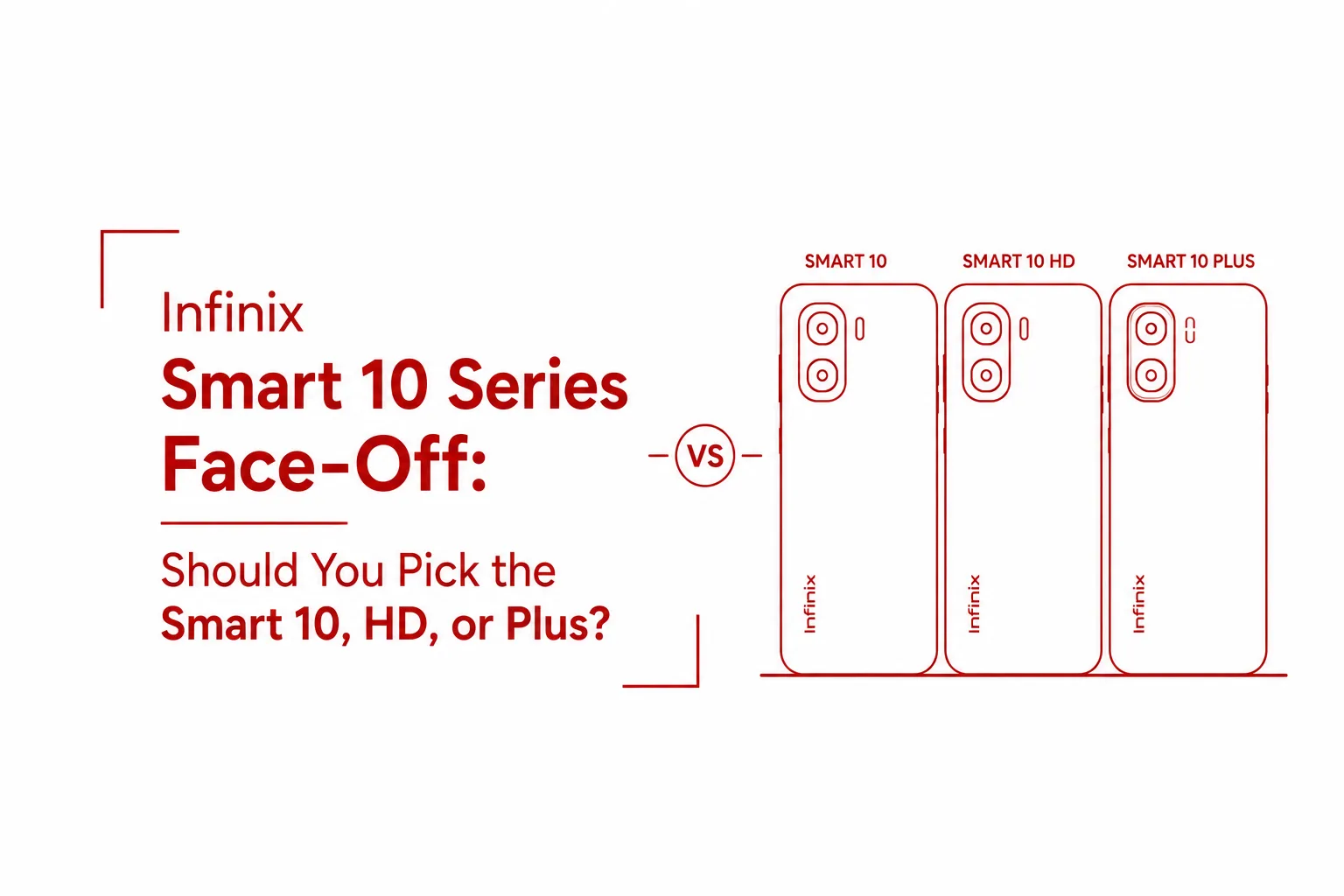

Infinix launched three phones under the Smart 10 banner on June 16, 2025, and the naming convention has caused more confusion than it should. The Infinix Smart 10, Smart 10 HD, and Smart 10 Plus share a family name but are built around meaningfully different hardware decisions. The HD is not a higher-resolution version of the standard model. The Plus is not simply a larger phone. Each one targets a different type of buyer, and picking the wrong one means paying for features you do not need or missing the ones that would have made the difference.
This breakdown covers every significant specification across the three models and ends with a clear verdict on which one belongs in whose hands.
Infinix Smart 10: Specs, Features and Price
The standard Smart 10 is the middle child of the series in terms of pricing and positioning. It runs the Unisoc T7250 chipset built on a 6nm process, which is a notable step above what budget phones in this bracket usually offer. The display is a 6.67-inch IPS LCD panel running at 120Hz with a peak brightness of 700 nits. That refresh rate and brightness combination is competitive at this price point and holds up well under outdoor use.
Memory options start at 3GB RAM with a 3GB Extended RAM buffer on top, and go up to 4GB with the same extension. Storage is either 64GB or 128GB of eMMC 5.1, with a dedicated microSDXC slot for expansion. The main camera is an 8MP wide lens at f/2.0 with PDAF, and both the rear and front cameras record at 1080p at 30fps. Audio is handled by dual stereo speakers with 300% Ultra Volume, which is a standout in this category.
The battery is a 5,000mAh cell with 15W wired charging. Software is XOS 15 running on Android 15. The phone carries an IP64 rating for dust and splash resistance. Pricing sits between ₦119,900 and ₦125,000.

Infinix Smart 10 HD: Specs, Features and Price
The Smart 10 HD is the entry point of the series, and it is important to understand what that means before purchasing. It runs the Unisoc T606 chipset on a 12nm process, which is a generation behind the T7250 used in the other two models. The display is a 6.6-inch IPS LCD at 90Hz, a step down from the 120Hz panels on the Smart 10 and Plus. RAM starts at 2GB with a 3GB option available, and internal storage is 64GB across all configurations.
The camera setup is where the HD separates itself on paper. It uses a 13MP dual AI camera system with a 13MP primary lens and a 0.3MP depth sensor, paired with dual-LED flash. The front camera is 8MP at f/2.0, and video tops out at 1080p at 30fps on both cameras. Audio comes from a single speaker with DTS processing, which is a downgrade from the dual speakers on the other two models.
The battery is 5,000mAh with 10W standard charging, the slowest charging speed in the series. The most significant distinction of the HD model is its software. It runs Android 14 Go Edition, a lightweight version of Android designed for lower-RAM devices. This means some full Android apps are replaced by Go variants, and the overall software experience is more restricted than on the other two models.
The Smart 10 HD is priced between ₦116,500 and ₦120,000, making it the most affordable in the series by a small margin.
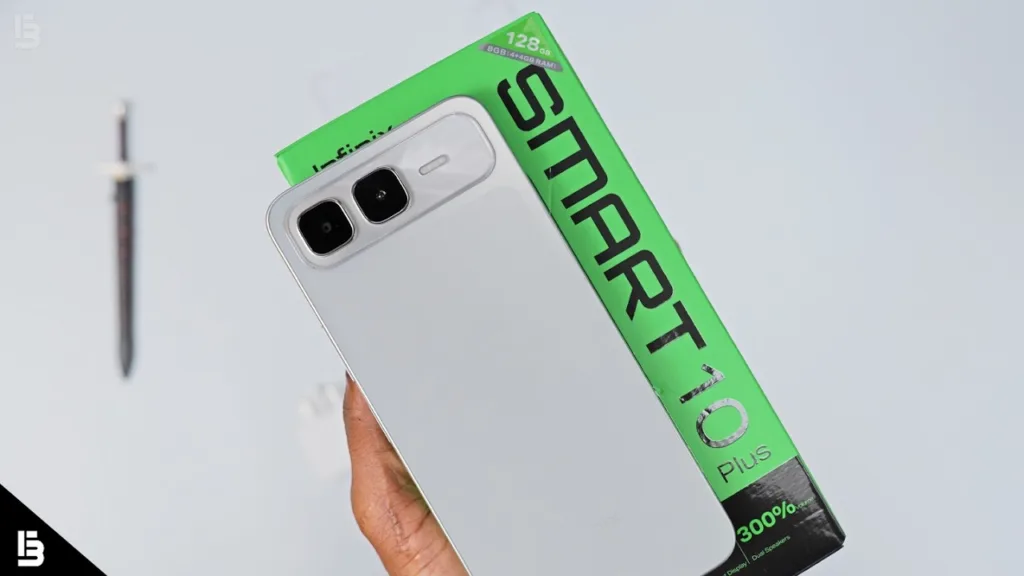
Infinix Smart 10 Plus: Specs, Features and Price
The Smart 10 Plus is the clear flagship of the three, and several of its specifications stand out for a phone in this price bracket. It shares the Unisoc T7250 6nm chipset and the 6.67-inch 120Hz IPS LCD display with the standard Smart 10, but the similarities largely stop there.
The battery steps up to 6,000mAh, with Infinix quoting up to 36 days of standby time. Charging is the fastest in the series at 18W wired, and the Plus adds reverse wired charging, allowing it to charge other devices. RAM options go up to 8GB, with 128GB of internal storage across all configurations.
The camera system on the Plus records at 1440p at 30fps on both the rear and front cameras, which is QHD video recording at a price point where most competitors are still at 1080p. The rear setup is an 8MP and 2MP depth dual AI camera at f/2.0. It is a modest camera hardware package, but the video output capability is a differentiator.
Two features on the Plus stand out for this price category. The first is NFC, listed as Touch Transfer for file sharing. NFC at this price point is uncommon. The second is the Folax AI Assistant built into XOS 15.1, the most recent software version in the series. The phone also retains the dual stereo speakers with 300% Ultra Volume from the standard Smart 10 and carries the same IP64 dust and splash resistance.
Pricing for the Smart 10 Plus runs between ₦144,500 and ₦151,500.
Smart 10 vs Smart 10 HD vs Smart 10 Plus: What Actually Separates Them
Four differences define which phone belongs to which buyer.
Battery and charging
The Plus is the only model with a 6,000mAh battery and 18W fast charging. It also supports reverse charging. The standard Smart 10 offers 5,000mAh at 15W, and the HD sits at 5,000mAh with 10W. If battery life and charging speed are priorities, the Plus is the only logical choice.
Display refresh rate
The Smart 10 and Plus both run 120Hz panels. The HD runs at 90Hz. For users who notice the difference in scrolling smoothness, the HD does not match its siblings here.
Software
The HD is the only model running Android Go Edition. This is a functional but restricted software experience. Users who want full Android app compatibility and the complete XOS feature set should look at the Smart 10 or the Plus.
NFC and video recording
The Plus is the only model with NFC and QHD video recording at 1440p. For anyone who uses contactless payments or shoots video regularly, these are features that do not exist on the other two models.
Which One Should You Buy?
The Smart 10 HD makes sense for one type of buyer: someone who needs a functional, affordable smartphone for calls, messaging, and basic app use, and does not need the full Android experience. The slightly lower price and 13MP camera make it acceptable as a first phone or a backup device.
The standard Smart 10 is the balanced pick. It runs full Android 15, hits 120Hz, offers the better chipset over the HD, and stays under ₦125,000. For buyers who want a capable everyday phone without stretching to the Plus price, this is the most sensible choice in the series.
The Smart 10 Plus justifies its premium through specifics. NFC, a 6,000mAh battery, 18W charging, reverse charging, and QHD video recording are not features you find together under ₦155,000 regularly. Buyers who shoot video, care about battery endurance, or want contactless payment capability will find the extra spend over the standard model well-placed.