
Kenya has a new short-form video platform. UrbanTok, owned by the Mzawadi Group, officially launched on April 30, 2026, at the Connected Africa Summit in Nairobi. The platform is designed for video sharing and livestreaming, and its stated purpose is to give African creators a more direct and reliable path to earning from their content without depending on foreign payment infrastructure or global algorithms.
Kenyan ICT Principal Secretary John Tanui spoke at the launch, framing UrbanTok as a step toward digital sovereignty. His argument was direct: local creators should not have to route their income through foreign systems that were not built with African markets in mind. The Mzawadi Group is positioning UrbanTok not as a technology novelty but as an economic tool, one built around the specific income barriers that African creators face on global platforms.
What UrbanTok Is Built to Do
The monetization suite is the centrepiece of the product. Creators can paywall specific videos, setting their own premium prices for content they want to gate from non-paying viewers. During livestreams, integrated e-commerce features allow creators to sell products directly to their audience in real time. There is also a crowdfunding mechanism that lets fans contribute directly to fund a creator’s projects.
The payment infrastructure is built around local systems. UrbanTok integrates with M-Pesa, Kenya’s dominant mobile money platform, allowing creators to receive earnings without routing payments through international processors like PayPal, which carry high transaction fees and withdrawal restrictions that have long been a frustration for African creators on global platforms.
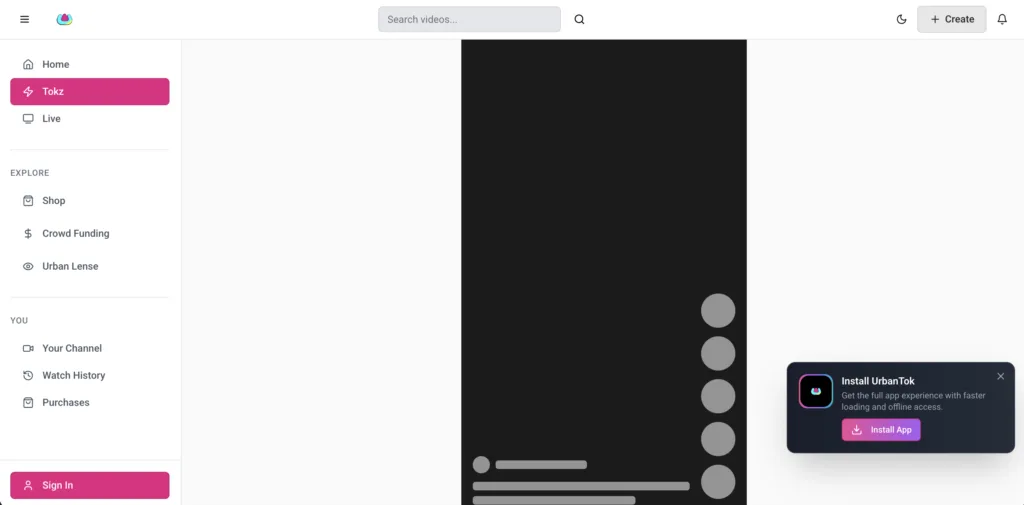
Beyond payments, the platform runs a localised algorithm designed to surface local trends and narratives. The intention is to stop Kenyan and broader African content from being buried under the volume of global content that dominates recommendation systems on platforms like TikTok.
TikTok currently has over 18 million adult users in Kenya. UrbanTok is not trying to match that scale globally. The strategy, as stated at the launch, is to serve the 18.4 million Kenyans already using short-form video by solving the problems that TikTok has not prioritised for this market, starting with reliable, low-friction creator income.
On the technical side, the web version of UrbanTok is live and accessible. The Android app had a harder debut. It briefly appeared on the Google Play Store at launch before being pulled down for further updates.
The launch sits within a wider pattern across Africa. Locally owned digital infrastructure is increasingly being built to reduce dependency on platforms governed elsewhere and optimised for audiences elsewhere. The vulnerability of African creators to policy changes, algorithm shifts, or sudden account suspensions on foreign-owned platforms has been a recurring concern. UrbanTok’s commercial-first design is a direct response to that reality.