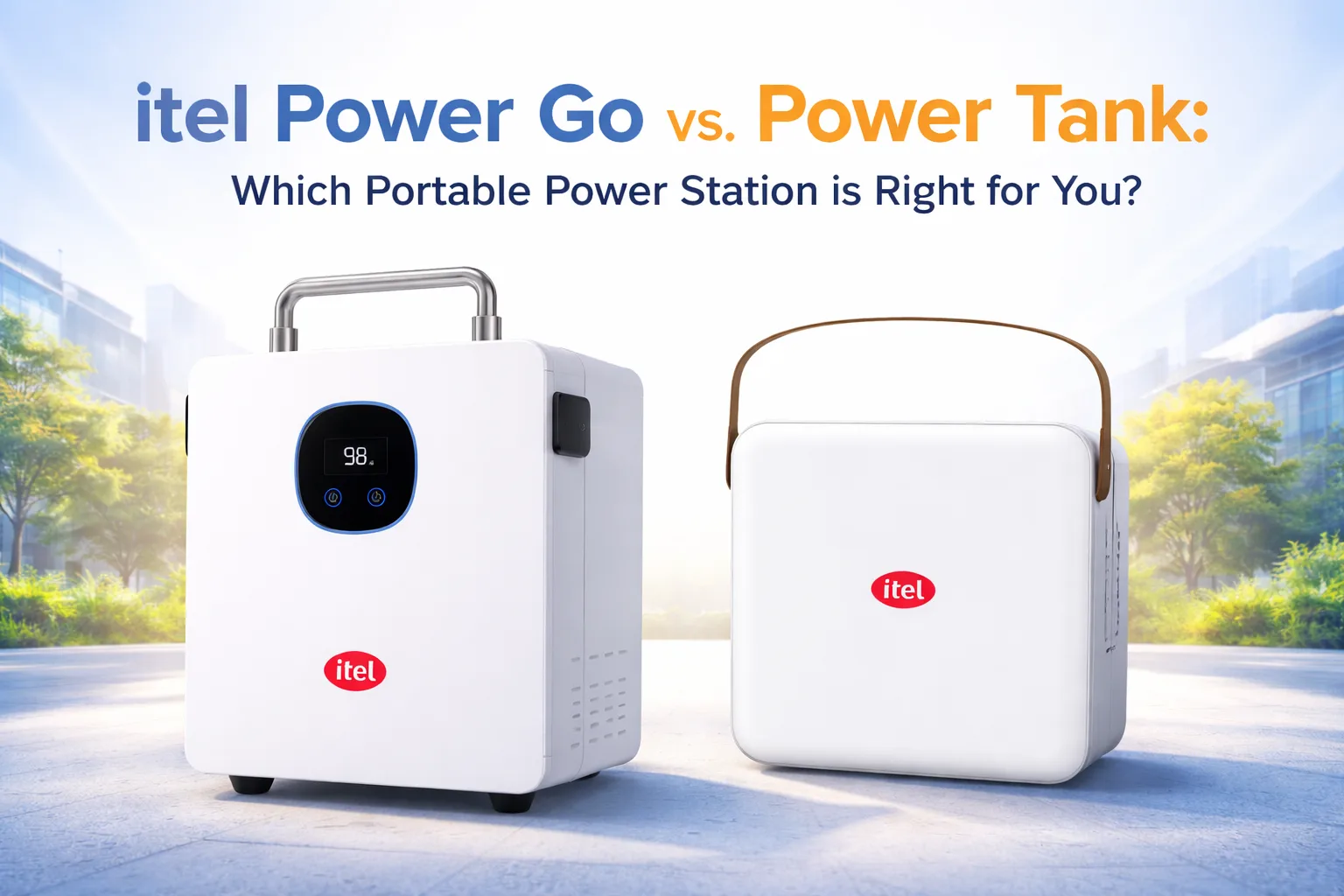

Nigeria’s power situation hasn’t improved, and anyone tired of generator noise, fuel costs, and constant blackouts knows that portable power stations have become an alternative. itel has released two distinct options: itel Power Go and the Power Tank. Both promise to keep your devices running when NEPA fails, but they’re built for completely different purposes and budgets. One is a high-capacity power bank you can carry around. The other is a full home backup system that can run actual appliances.
Choosing between them isn’t about which one is better overall. It’s about understanding what you actually need. If you pick the wrong one, you’ll either overspend on capacity you’ll never use or underbuy and find yourself frustrated when the device can’t handle what you need it to power. Let’s break down exactly what each power station offers, what separates them, and which one makes sense for your specific situation.
itel Power Go (IESS-320T): The Portable Option
The Power Go is what itel calls a “super power bank,” and that description is accurate. This is a compact device designed for mobile workers, students, and anyone who needs reliable power for gadgets and small electronics while moving around or working remotely.
Capacity and Power Output
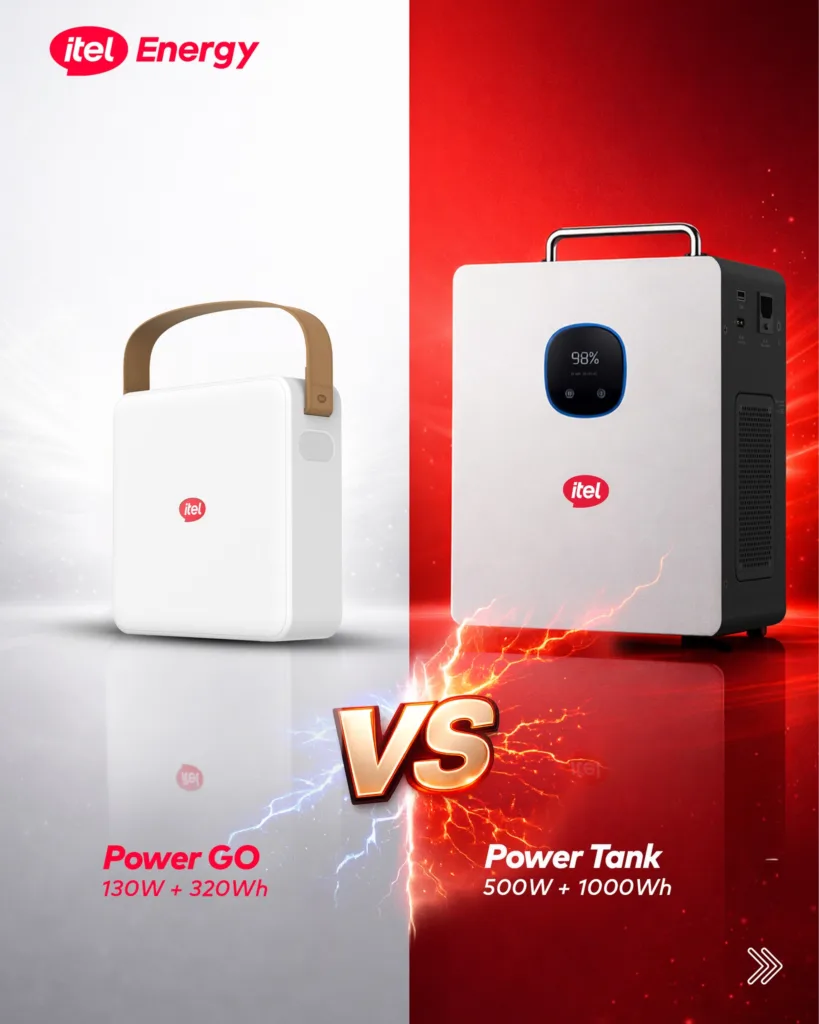
The Power Go packs 320Wh of capacity, which translates to roughly 100,000mAh in power bank terms. That’s substantial for a portable device, far beyond what standard power banks offer. Maximum output sits at 130W total across all ports. This is enough to charge laptops, tablets, phones, and similar devices, but it’s not designed to run larger appliances like fans, TVs, or anything that draws heavy power.
Ports and Connectivity
The device features 8 output ports in total, giving you plenty of options for charging multiple devices simultaneously. The port selection includes USB-A ports for standard charging and USB-C with Power Delivery up to 100W, which handles modern laptops that charge via USB-C.
The device does not include a standard AC outlet. All outputs are DC-based: four USB-A ports and two Type-C ports for charging phones, tablets, laptops, and other USB-powered devices.
Battery Technology
The Power Go uses LiFePO4 (Lithium Iron Phosphate) battery cells, which are more durable and safer than standard lithium-ion batteries. itel rates these cells for over 3,000 charge cycles, which translates to roughly 10 years of use if you’re charging and discharging the device regularly. LiFePO4 batteries handle heat better than standard lithium batteries, which is important in Nigerian climate conditions where devices often operate in warm environments.
Charging Options
You can recharge the Power Go through a standard wall outlet using the included 65W fast charger. The device also supports solar charging with up to 200W solar input, which means you can pair it with compatible solar panels to recharge without grid power. This solar capability makes the Power Go useful in areas with unreliable electricity or for people who want to reduce reliance on NEPA entirely.
Portability and Extra Features
Weighing between 3.5kg and 5kg, the Power Go is portable. You can carry it in a backpack, take it to work, or bring it along when traveling without it becoming a burden. The device includes a built-in bright LED flashlight, useful during blackouts or outdoor use. There’s a carry strap for easier transport and a smart display that shows current power levels, so you always know how much capacity remains.
Pricing
The Power Go currently retails for about ₦105,000 to ₦130,000 depending on the seller and any ongoing promotions.
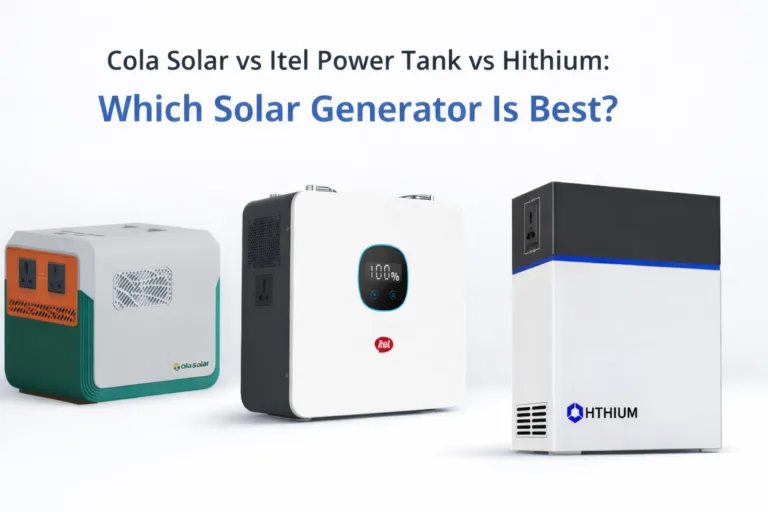
Also Read: Cola Solar vs itel Power Tank vs Hithium: Which 1kWh Solar Generator Is Best?
itel Power Tank (IESS-05K10N): The Home Backup System
The Power Tank is a completely different category of device. This is a larger all-in-one solar generator designed to function as a home backup power system during blackouts.
Capacity and Power Output
With 1000Wh (1kWh) of capacity, the Power Tank holds more than three times the energy of the Power Go. This isn’t just for charging phones and laptops. This capacity is meant to run actual household appliances. Maximum continuous output is 500W, with surge capability up to 1000W. This means you can run devices that draw up to 500W steadily, with the ability to handle brief power surges up to 1000W when appliances like refrigerators or fans start up and temporarily draw extra power.
AC Outputs and Inverter
The Power Tank features multiple AC output ports for standard wall plugs, allowing you to connect several appliances simultaneously as long as the combined power draw stays within the 500W limit. The device contains a built-in 500W hybrid inverter, which is what allows it to function as a complete home power backup system. This inverter converts the battery’s DC power into AC power that household appliances can use, and it does so with pure sine wave output that’s safe for sensitive electronics.
Battery Technology and Lifespan
Like the Power Go, the Power Tank uses LiFePO4 battery technology, but with even longer lifespan ratings. itel claims over 6,000 life cycles, designed for 10+ years of regular use. This extended lifespan is more important for a home backup system because you’ll likely cycle the battery more frequently than you would a portable power bank.
Fast Charging Capability
The Power Tank can recharge fully in about 2 hours when you combine grid power and solar input simultaneously. This is impressively fast for a 1000Wh battery. Even charging from grid power alone is relatively quick compared to similar-capacity devices from other brands.
UPS Functionality
One of the Power Tank’s standout features is its UPS (Uninterruptible Power Supply) function with less than 20ms switchover time. This means when NEPA cuts out, the Power Tank automatically switches to battery power in under 20 milliseconds. That switchover is fast enough to keep your TV, router, or computer running without interruption. You won’t experience the usual blackout where everything turns off and you have to restart devices.
Solar Input and MPPT Controller
The Power Tank includes a built-in 400W MPPT (Maximum Power Point Tracking) controller for efficient solar charging. MPPT controllers are more efficient than standard solar charge controllers, extracting more power from solar panels especially in varying sunlight conditions. This makes the Power Tank well-suited for pairing with solar panels as a semi-permanent or permanent backup power solution.
Quiet Operation
The device operates silently at under 45dB, which is quieter than normal conversation. Unlike generators that create noise pollution, you can run the Power Tank indoors without disturbing anyone. This quiet operation is a major advantage for nighttime use or in residential areas where generator noise would be problematic.
Weight and Portability
Weighing between 10kg and 12kg, the Power Tank is considerably heavier than the Power Go. It’s still technically portable in that you can move it from room to room or take it with you if needed, but it’s not something you’d carry around casually like the Power Go.
Pricing
The Power Tank’s price varies by dealer, ranging from ₦300,000 to ₦450,000.
What Actually Separates These Two Devices?
The fundamental difference comes down to inverter capacity and intended use case.
Home Backup vs. Mobile Power
The Power Go is designed for mobile use. You take it with you to charge laptops, phones, tablets, and small devices wherever you are. It’s for students working in cafes, remote workers without reliable power, or anyone who needs portable power for gadgets.
The Power Tank is designed to stay in one place and function as home backup power. It can run a TV, a standing fan, and several light bulbs simultaneously for extended periods. This is what you use to keep essential appliances running during blackouts.
The Inverter Difference
The Power Tank’s built-in 500W hybrid inverter is what allows it to power household appliances. It can handle devices that plug into normal wall outlets and draw substantial power. The Power Go’s AC outlet is much more limited. The Power Go uses only DC outputs through USB-A and USB-C ports.
Capacity and Runtime
The Power Tank’s 1000Wh capacity gives it staying power for extended blackouts. Combined with its higher output capability, this device can run multiple appliances for hours. The Power Go’s 320Wh capacity is substantial for a portable power bank but won’t last nearly as long when powering devices.
Price Difference
The Power Go costs roughly ₦105,000 to ₦130,000. The Power Tank costs ₦300,000 to ₦450,000. You’re paying more than double, sometimes triple, for the Power Tank, but you’re getting a different device with much higher capacity and output.
Which One Should You Actually Buy?
The answer depends entirely on what you need to power and where you need to use it.
Buy the Power Go if:
- You need portable power for work or school. If you’re a student who studies in libraries or cafes, a remote worker who moves around, or someone who travels frequently and needs reliable power for laptops and phones, the Power Go makes sense.
- You only need to charge small electronics. Phones, tablets, laptops, cameras, portable speakers, and similar gadgets all work perfectly with the Power Go’s capacity and output.
- You want something lightweight you can carry easily. At 3.5kg to 5kg, you can pack this in a bag without it becoming a burden.
- Your budget is limited. At roughly ₦100,000 to ₦130,000, the Power Go is significantly cheaper than the Power Tank.
Buy the Power Tank if:
- You need home backup power during blackouts. If your primary concern is keeping lights, fans, TV, and other household appliances running when NEPA fails, the Power Tank’s higher capacity and output make it the only viable option.
- You want UPS functionality. If uninterrupted power for your router, TV, or computer matters to you, the Power Tank’s sub-20ms switchover time provides UPS protection.
- You plan to integrate solar panels. While both devices support solar charging, the Power Tank’s 400W MPPT controller and higher capacity make it better suited for serious solar integration.
- You need to run actual appliances, not just charge devices. The 500W continuous output allows you to run fans, TVs, and other appliances that the Power Go simply cannot handle.
- You have the budget for it. At ₦300,000 to ₦450,000, this is a significant investment, but it is a home backup system, not just a large power bank.
Both the itel Power Go and Power Tank use quality LiFePO4 batteries designed to last years. Both support solar charging. But they serve completely different purposes. The Power Go is a super-sized power bank for people who need portable power for gadgets and small electronics. The Power Tank is a home backup power station for people who need to run household appliances during blackouts.
Don’t buy the Power Tank if all you need is to charge your phone and laptop. You’ll waste money on capacity and features you won’t use. Don’t buy the Power Go if you’re trying to power a fan or TV during blackouts. It won’t deliver enough power, and you’ll be frustrated. Match the device to your actual needs, and either option will serve you well for years.