
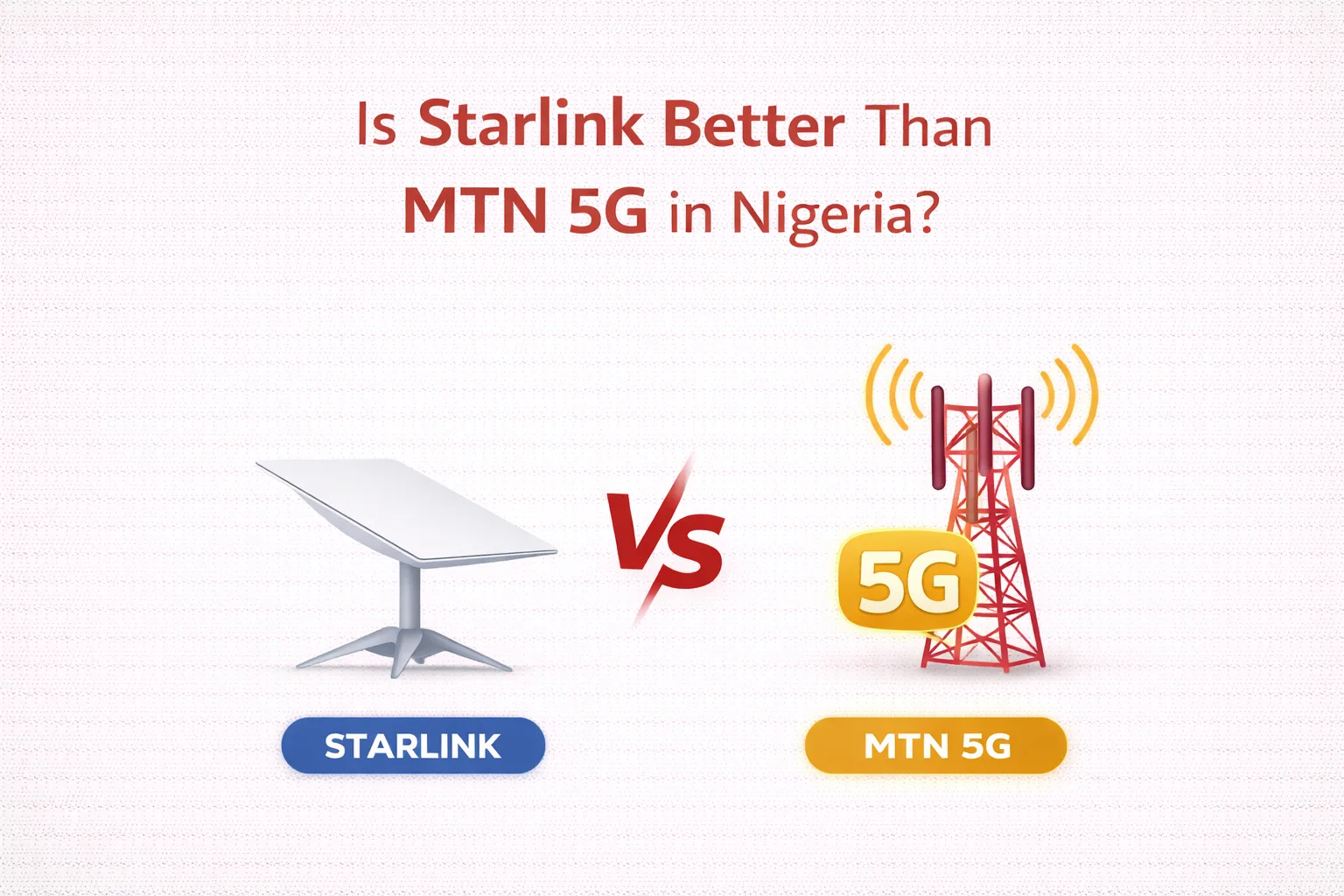

Reliable internet access is one of the most searched topics among Nigerian tech users, and for good reason. Between frequent power outages, inconsistent network coverage, and the growing demand for remote work and streaming, finding an internet solution that actually holds up has become a priority for a large number of Nigerians. Two options dominate that conversation right now: Starlink and MTN 5G. Both promise fast, reliable internet. But they are built differently, priced differently, and suited to very different situations. This post breaks down both options across every dimension that actually counts before you spend your money.
Hardware and Setup Cost
This is where the gap between the two is most immediate.
The Starlink standard hardware kit costs around ₦590,000. That is the upfront cost before you pay a single month of subscription. The dish needs to be mounted outdoors with a clear view of the sky, and the setup process, while straightforward, needs a stable power source to function properly.
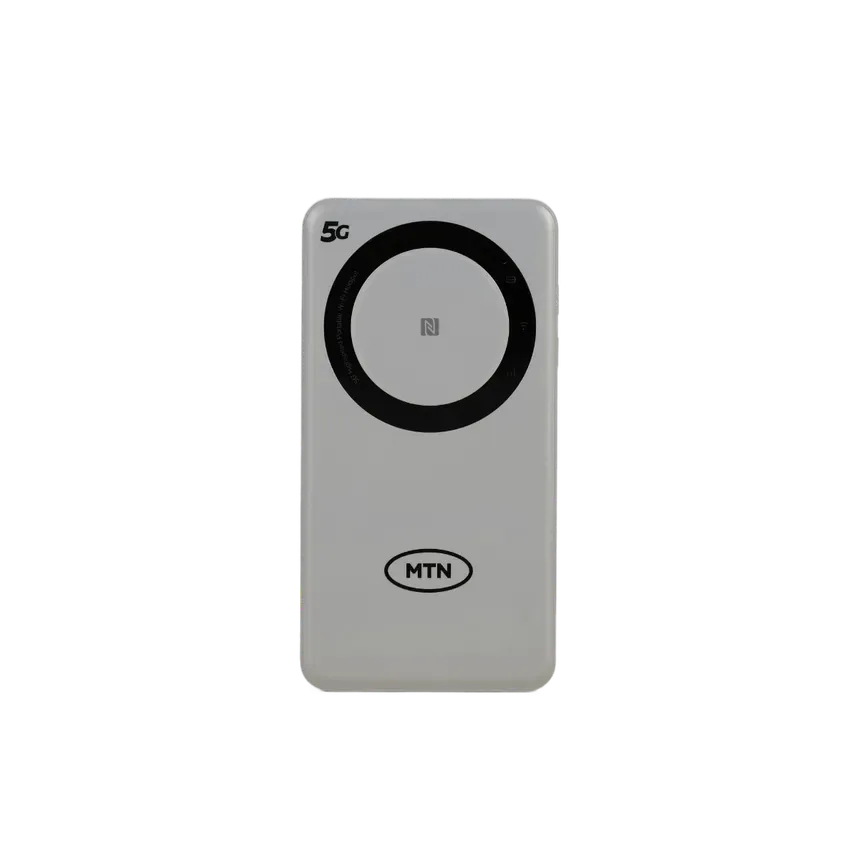
MTN 5G offers two hardware entry points. The MTN 5G Router retails for ₦80,000 and comes with a 120GB activation bonus. The MTN 5G MiFi retails for ₦70,000 and also includes a 120GB bonus. Both are plug-and-play devices that work indoors and do not need outdoor installation.
The hardware cost difference alone is significant. At ₦590,000 versus ₦80,000, Starlink costs more than seven times what MTN 5G costs to get started.
Monthly Subscription and Data
MTN 5G operates on capped data plans. The current monthly options are as follows:
- 120GB for ₦24,000
- 200GB for ₦37,500
- 450GB valid for 90 days at ₦75,000
- 1.5TB valid for 365 days at ₦225,000
Starlink charges a flat ₦75,000 per month for residential users. In return, the data is truly unlimited with no speed caps or daily throttling on the residential plan.
For a heavy user, the Starlink monthly cost is comparable to MTN’s mid-range plans, but with no data ceiling. For a light user, MTN’s lower tier plans offer more flexibility at a lower monthly spend.
Speed and Performance
On paper, both services are fast. In practice, the experience depends heavily on where you are and what you are doing.
MTN 5G can reach speeds above 500Mbps in the best conditions within Lagos or Abuja. In real-world use, it averages between 100Mbps and 200Mbps. Starlink averages between 100Mbps and 250Mbps across Nigeria.
The meaningful difference shows up in latency. MTN 5G delivers a ping of 15ms to 30ms, which makes it the better option for gaming and real-time applications. Starlink runs higher at 40ms to 60ms, which is acceptable for most tasks but noticeable in competitive gaming or live video calls with large groups.
On reliability, the two services have different weak points. Starlink is not affected by local fiber cuts or tower maintenance issues, but heavy rainfall can temporarily disrupt the signal. MTN 5G performance is closely tied to proximity to a tower and tends to slow down during evening peak hours when network congestion is highest.
Coverage
This is the section where the two services diverge most clearly. Starlink works across all 36 states in Nigeria, including rural areas, remote communities, and offshore locations. The coverage does not change based on geography.
MTN 5G is currently available in major cities including Lagos, Abuja, Port Harcourt, Kano, and Ibadan. Outside those specific coverage zones, the device falls back to 4G speeds. If you travel frequently or live outside the core urban centers, the 5G experience is not guaranteed.
Power Consumption
Power availability in Nigeria is a real constraint for most users, and both devices handle it differently. Starlink draws between 50 and 75 watts during operation. That consumption level calls for a decent inverter or solar setup to maintain service during grid outages. It is not a device that runs well on a small backup battery for extended periods.
The MTN 5G router draws around 12 watts. That low consumption means it can run for several hours on a small DC UPS during a blackout without any significant drain. For users in areas with frequent power cuts, that difference in power draw is an advantage worth factoring into the total cost of ownership.
Also Read: African Countries Where Starlink Is Banned or Illegal in 2026
Which One Makes More Sense for You
The answer to that question sits entirely in your location and how you use the internet.
If you live in Lagos, Abuja, or any of the cities currently covered by MTN 5G, and your usage stays within a manageable data cap, MTN 5G is the more practical starting point. The ₦80,000 entry cost, low power draw, and competitive speeds in urban areas make it a reasonable choice for individuals and small households.
If you live outside the 5G coverage map, run a business that cannot afford throttled speeds or data caps, or need a connection that holds across multiple states, Starlink justifies the higher entry cost. The unlimited data, nationwide coverage, and consistent speeds regardless of location make it the more dependable long-term option for heavy users and remote locations. The ₦590,000 hardware cost is a barrier, but for users who have exhausted every other option, it is a one-time cost against a service that does not drop based on tower proximity or fiber infrastructure.
Neither service is universally better. The one that is better is the one that fits where you live, how much you use, and what you can realistically power and afford.