
Namibia’s retail financing market is small and consolidated, which is a direct result of the country’s population of roughly 3 million people. BNPL platforms in Namibia do not take the form of independent fintech apps backed by venture capital. Instead, installment credit in Windhoek flows through specialized digital micro lenders, commercial bank credit structures, traditional hire purchase models, and regional South African cross border fintech platforms.
For Namibian consumers, accessing credit at checkout usually means working through an existing bank account or visiting a physical store, not downloading a new app. Here are five verified and active options currently available.
Quick Links
1. PostFin (PostOffice Financial Services)
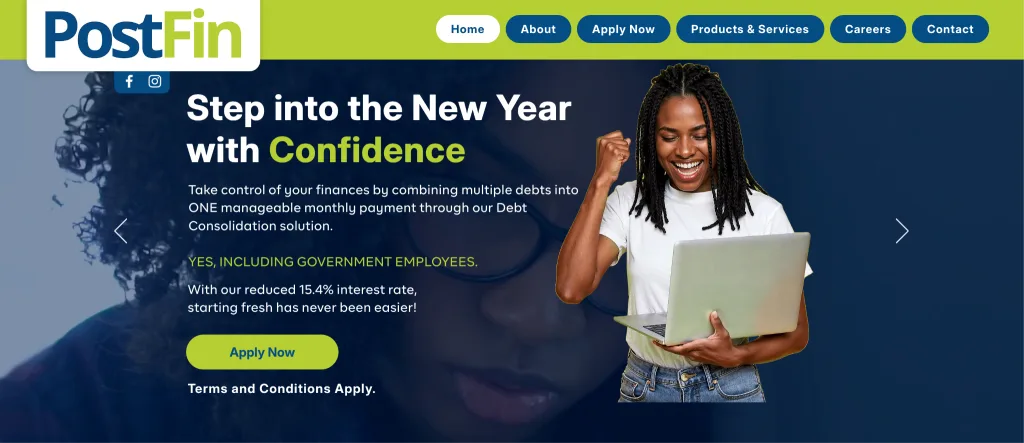
PostFin is a registered tier two microfinance institution that runs on Namibia’s national postal network infrastructure, making it one of the most widely accessible credit options in the country. It serves government employees and private sector workers across both urban and rural areas.
Credit is available for retail goods and essential expenses, with repayment terms that can stretch anywhere from short term loans up to 60 months depending on the client’s profile. PostFin is strictly regulated by NAMFISA, the Namibia Financial Institutions Supervisory Authority, which makes it one of the most compliant credit alternatives available locally.
2. TFG Money Account
Many large clothing and digital retailers operating in Namibia are subsidiaries of South African parent companies, most notably brands under The Foschini Group (TFG), which includes Sportscene, Markham, Totalsports, and Foschini. Because South African digital platforms like Mobicred do not accept Namibian bank accounts, these retail chains provide their own cross-border revolving credit lines through the TFG Money Account.
Namibian consumers apply for this credit facility directly at local physical storefronts using their Namibian National ID and local payslips. Once approved, the customer receives a set credit limit that functions exactly like a digital BNPL account. This single credit line can be used to split payments across any store brand within the group, and it integrates directly into their centralized online e-commerce platform, allowing Namibian shoppers to buy online and pay over a 6 to 12-month period.
3. FNB Namibia Credit Card Budget Facility
First National Bank Namibia is the largest commercial bank in the country, and its credit card comes with a built-in Budget Facility that works as a direct BNPL tool without any third party app involved.
When a customer makes a purchase above N$200 at a local store or online, they choose the Budget option at checkout instead of paying the full amount as a straight transaction. This instantly converts that specific purchase into fixed monthly installments over a period of 6 to 60 months on a reducing balance, meaning the full cost never hits the next statement date in one lump sum.
For personal cash needs, FNB also offers a Cash Advance and Credit Limit Shift feature inside the app. Pre-approved salary earning customers can instantly access micro credit lines or adjust their straight and budget credit allocations, based on automated profiling of their monthly salary deposits.
4. Nedbank Namibia Credit Card Budget Facility
Nedbank Namibia offers a structured installment option built into its retail banking credit card services. At physical or online merchant point of sale terminals, customers can process a large purchase through a pre-set Budget Facility instead of paying the full amount upfront. Purchases convert into monthly payment structures running between 3 and 24 months. Because the entire process runs through the bank’s own security architecture, shoppers never need to share their banking details with a third party provider, which is a meaningful advantage over standalone fintech apps.
5. Traditional Retail Hire Purchase
While digital options are still developing in Namibia, large retail conglomerates like the Lewis Group, House and Home (Shoprite Holdings), and OK Bazaar dominate the pay over time space for most consumers. Shoppers visit a physical storefront to buy furniture, appliances, or mobile devices, completing an in store credit verification using a national identity document and proof of income.
A down payment is needed upfront, with the balance spread over 6 to 36 months at specific interest rates. This remains the most widely accessible form of asset financing for the general public in Namibia, and it is the foundation that digital BNPL services are gradually working to move online.
BNPL Platforms in Namibia
What makes BNPL platforms in Namibia different from markets like Nigeria or Kenya is where the credit actually lives. It sits inside banks, post offices, and physical retail stores, not inside fintech apps. For consumers, this means the approval process is tied to existing financial relationships and income verification, which adds a layer of stability but also limits access for those without formal banking histories.
As cross border digital processors expand and local banks continue building out their app based credit tools, the digital side of this market is likely to grow. For now though, the options above cover the range of what is available to Namibian consumers today.
BNPL platforms in Namibia are institutionally anchored and few in number, but they cover everyday consumer needs across electronics, furniture, travel, and essential expenses. Anyone exploring these options should confirm eligibility requirements upfront, since most are tied to existing bank accounts, salary verification, or physical store visits.