

Android phones without a camera bump are still uncommon, especially among premium models where larger sensors, optical image stabilization, and telephoto hardware demand considerable space inside the chassis. If you are tired of a phone rocking on the desk every time you tap the screen, or you simply prefer a clean rear panel that sits flat inside a case, the difference is immediately noticeable.
A completely flat camera design also involves more than appearance. Smartphone cameras need room for lenses, sensors, stabilization hardware, and protective glass, so removing a raised camera island forces manufacturers to make careful decisions about the internal layout. Some phones hide their cameras completely beneath the rear glass, while others use individual lens rings that protrude only slightly from the back.
This guide focuses on Android phones where the rear camera hardware is either completely flush with the back or has a very low profile. A phone may look flat at first glance, but the camera lenses can still stick out from the back. The models below are grouped according to how closely their camera hardware sits with the rest of the phone.
Table of Contents
Truly Flush Rear Designs
If you want a phone with the flattest possible rear surface, the REDMAGIC range deserves particular attention. These models take an unusual approach to camera placement by integrating the rear camera system beneath the rear cover instead of building a conventional raised camera island.
REDMAGIC 10 Pro, 9S Pro and 9 Pro
The REDMAGIC 10 Pro, REDMAGIC 9S Pro, and REDMAGIC 9 Pro are among the clearest examples of a completely flat rear camera design. Their rear glass remains essentially level across the camera area, with the camera hardware concealed beneath the rear cover glass. There is no conventional camera island projecting from the back, giving the phones a clean, uninterrupted surface.
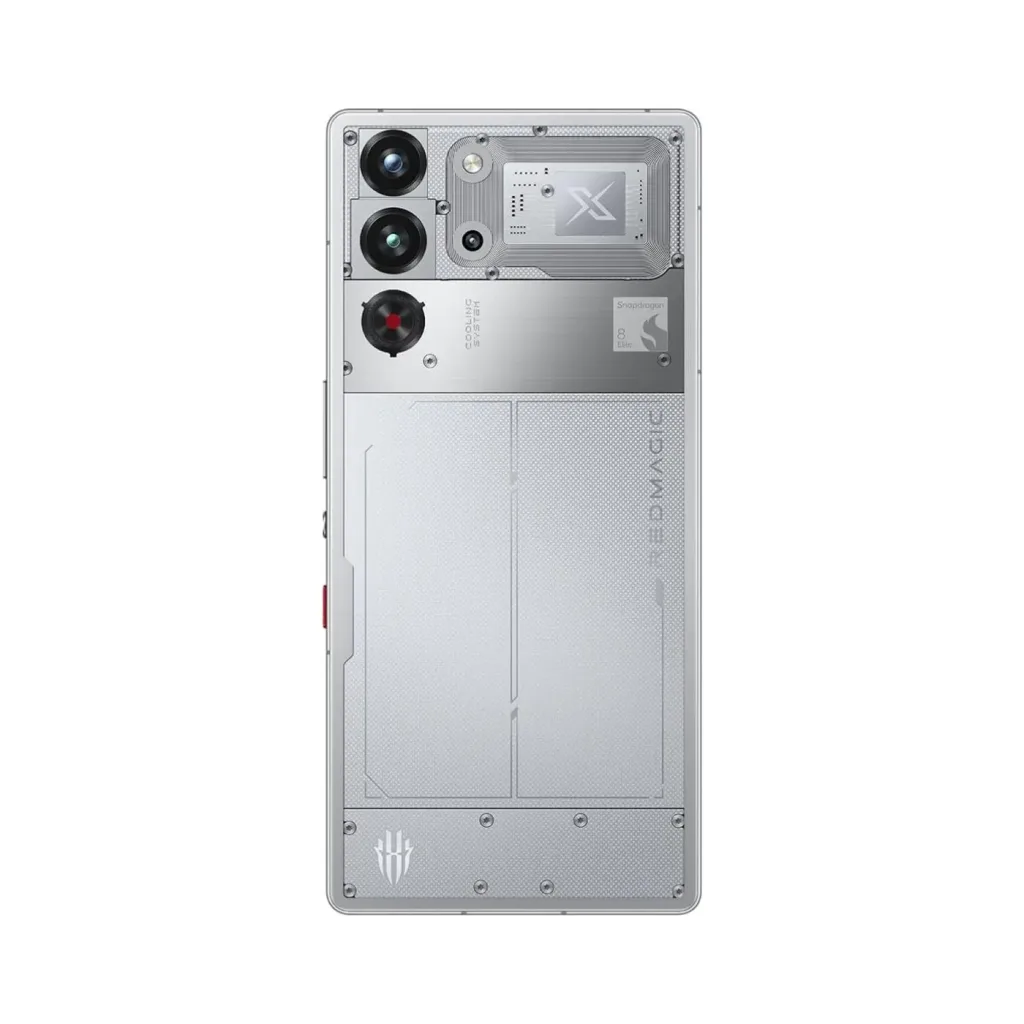
The design also fits the wider engineering approach used across REDMAGIC gaming phones. These models pair high end Snapdragon processors with an internal cooling fan, allowing active airflow through the phone as the processor handles sustained workloads. The front camera is also placed beneath the display, leaving the screen without a conventional punch hole or notch. For anyone who prefers a completely flat rear panel, this is one of the most distinctive Android designs available.
REDMAGIC 8 Pro and 8S Pro
The REDMAGIC 8 Pro and REDMAGIC 8S Pro continue the same design philosophy. Both phones use a squared off chassis with a flat rear glass panel and no conventional raised camera island. Their three rear cameras sit within the rear glass assembly, keeping the back substantially flatter than most modern smartphones.
The REDMAGIC 8 Pro and 8S Pro use the Snapdragon 8 Gen 2, with the selfie camera placed beneath the display. The rear cameras are integrated into the flat glass panel, so there is no raised camera island breaking up the back of the phone. Place either model on a desk and the rear panel stays level instead of rocking around a protruding camera housing.

Related Article: Which SmartPhones Come With 1TB Internal Storage?
Low Profile and Minimal Protrusion Options
Not every phone without a noticeable camera bump has a completely flush rear panel. Some models use individual lens rings or a very shallow camera housing. These designs still leave the back considerably cleaner than phones with large rectangular camera islands.
Google Pixel 9a
The Google Pixel 9a takes a different approach from recent Pixel models. Instead of the prominent horizontal camera bar found on several generations of Pixel phones, the camera hardware is integrated into the upper rear portion of the phone with a much flatter profile.

The phone uses Google’s Tensor processor and has an IP68 rating for dust and water resistance. It also receives Google’s extended software support, giving it a longer update commitment than many phones in its price category. Its rear camera system consists of two cameras, with the housing sitting close to the rear surface. It is not identical to the completely flush construction used by REDMAGIC, but the reduction in camera protrusion is substantial.
Google Pixel 10a
The Google Pixel 10a follows the same general design direction, with a subdued rear camera treatment instead of a large raised camera bar. Its Tensor based platform, IP68 protection, and extended software support place it within Google’s current mid range phone family, while the restrained camera housing keeps the rear profile relatively clean.

Google Pixel 10a moves away from the large horizontal camera bar used on several recent Pixel phones, giving the rear of the phone a cleaner, flatter appearance.
Related Article: Best Android Phones Without Cameras
Samsung Galaxy A15 and Galaxy A16
Samsung takes a much simpler approach with the Galaxy A15 and Galaxy A16. Each rear camera has its own lens ring, with no large rectangular housing covering the group of cameras. The lenses still protrude slightly from the rear panel, but the design keeps the back of the phone relatively flat and uncluttered.
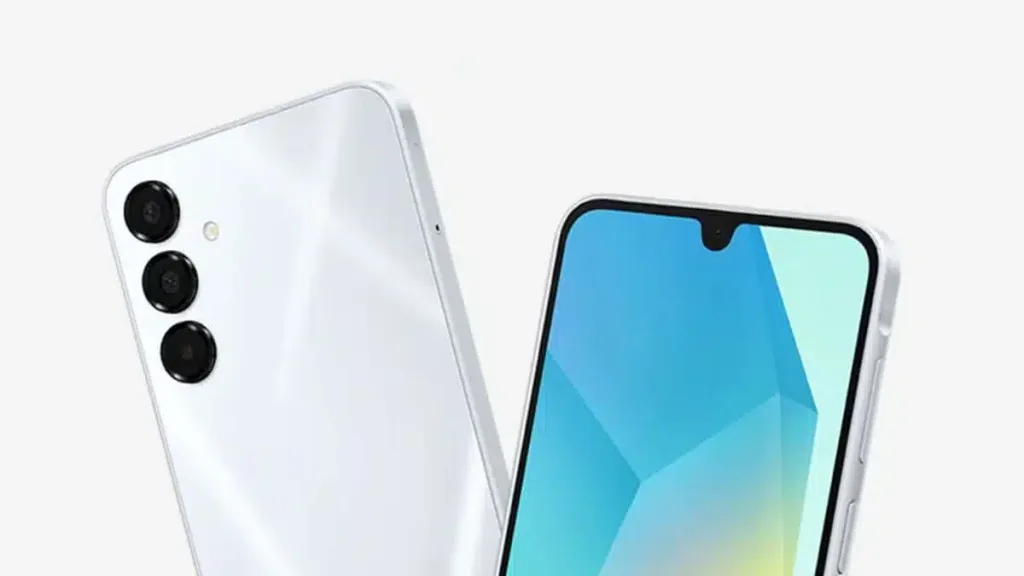
Both models also bring features that remain useful for everyday use, including AMOLED displays and expandable storage through a microSD card slot. Their battery capacity and relatively modest hardware also keep power consumption manageable during ordinary daily use.
Motorola Moto G Play and Moto G Power
The Moto G Play and Moto G Power also keep the rear camera design fairly low profile, with the camera housing blending more closely into the back of the phone. Motorola generally uses a rear cover that flows into the camera housing instead of creating an abrupt, oversized camera island. This makes the transition between the back of the phone and the camera area less pronounced.
Large batteries are another recurring feature of the Moto G range, and selected models retain a 3.5 mm headphone jack. Motorola’s software experience also stays relatively close to standard Android, without the extensive interface changes found on some competing phones. The camera design is not identical across every Moto G generation, so the specific model year is important when the rear profile is a deciding factor.
Why Are Completely Flat Camera Phones So Uncommon?
Getting a smartphone camera completely flush with the rear panel is an engineering challenge. Modern phone cameras have become physically larger because manufacturers are using bigger sensors, more sophisticated lens arrangements, optical image stabilization, and increasingly complex autofocus systems.
A large camera sensor needs sufficient space for its optics and movement. OIS adds another layer of mechanical hardware because the lens or sensor has to move slightly to compensate for hand movement. Keeping all of that inside a phone without creating a raised section requires careful internal packaging.
There is also a trade off between camera hardware and the rest of the phone. Space occupied by the camera system cannot simultaneously be used for the battery, cooling components, speakers, or other internal parts. A manufacturer pursuing a completely flat rear surface has to design the entire phone around that constraint.
Hardware Trade Offs of Flush Camera Designs
Smaller Camera Hardware Can Mean Smaller Optics
Large camera sensors and lenses need physical depth. A completely flat camera arrangement leaves less room for conventional optical hardware, which can restrict the size and complexity of the camera system. This does not automatically mean poor image quality. Image processing, sensor technology, and computational photography can have a substantial effect on the final photograph. Still, physical space remains an important limitation when manufacturers are designing the optics.
Periscope Zoom Needs More Internal Space
Long range optical zoom is particularly difficult to combine with a completely flat rear panel. Periscope telephoto systems use folded optical paths to fit longer focal lengths inside a relatively thin phone. Even with that folded arrangement, the hardware requires significant internal space. This is one reason phones with sophisticated long range zoom cameras often have prominent camera housings.
The Phone Can Be Thickened Internally
A flat rear surface does not necessarily mean that every component inside the phone is thinner. Manufacturers can preserve a level rear panel by giving the entire chassis more internal depth. That creates additional room for the camera components while keeping the exterior surface flat.
The extra internal volume can also be used for other components, including a larger battery or cooling hardware. The REDMAGIC design shows this approach clearly, with its flat rear construction paired with substantial gaming hardware and active cooling.
The design of smartphone cameras has made completely flat rear panels increasingly uncommon, particularly as sensors, stabilization systems, and zoom hardware have become more sophisticated. The phones covered here take different approaches to reducing that physical protrusion, ranging from the fully concealed camera systems to the low profile lens arrangements used on several mid range Android phones.
The design also comes with engineering trade offs. A flush rear surface leaves less room around the camera hardware, while larger sensors and advanced optics need more space inside the chassis. The way a phone handles its rear camera is closely tied to how its internal components are arranged.