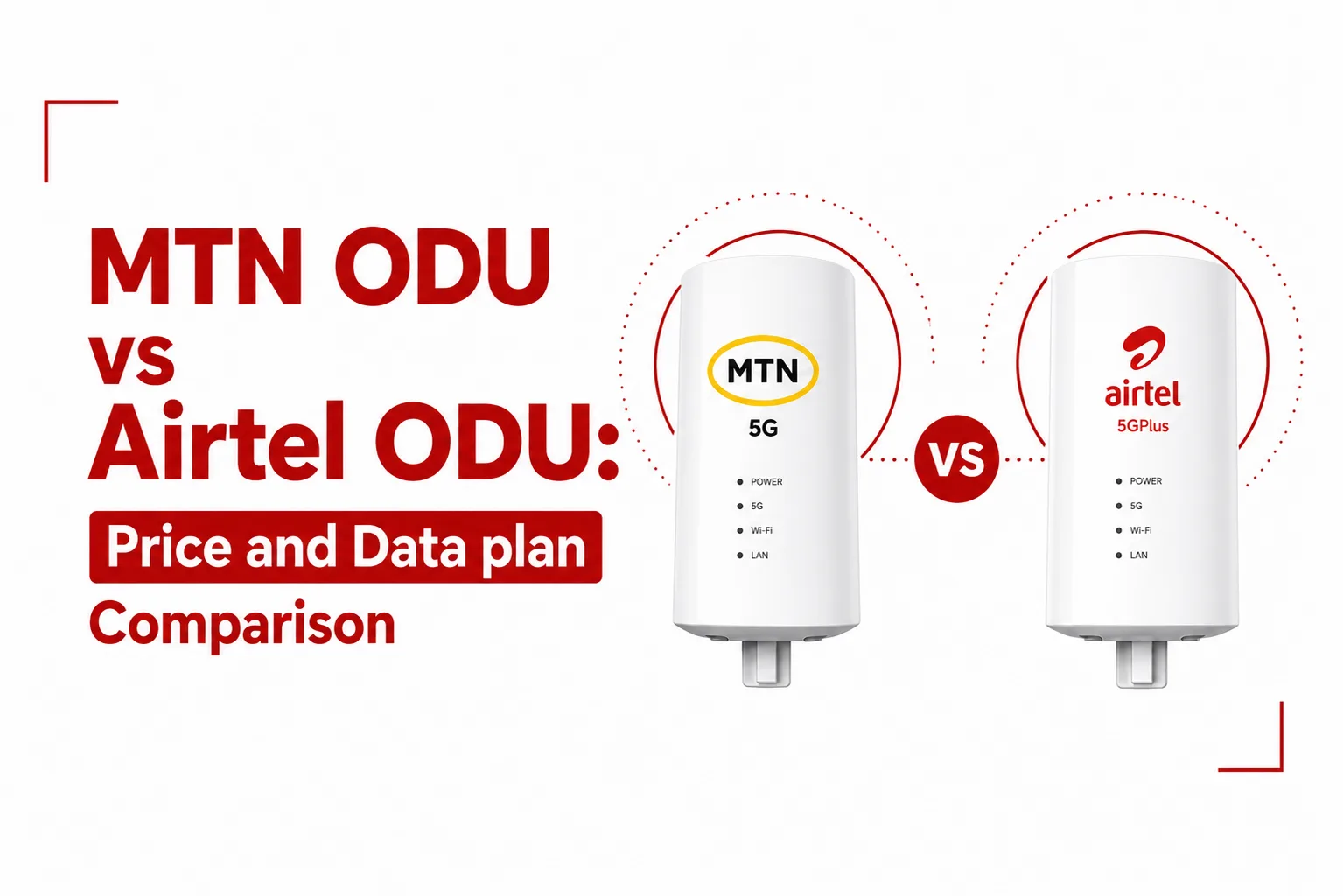

MTN ODU vs Airtel ODU comes down to a choice most buyers do not expect to make when shopping for outdoor 5G broadband, since the two devices do the same job through two very different business arrangements. Both units are designed to solve the same problem, capturing weak or distant 5G signals outdoors and feeding it into a home or office through an indoor access point, but the money changes hands in almost opposite ways once installation starts.
One network sells the hardware outright and leaves the customer in full control from day one, while the other hands over the equipment for free and holds onto ownership as long as the subscription stays active. Below is a full breakdown of how the two compare on price and data plans.
Ownership Model
Both devices carry out the exact technical job of pulling in outdoor 5G signals for stable indoor WiFi, but the commercial setup behind each one takes a completely different approach.
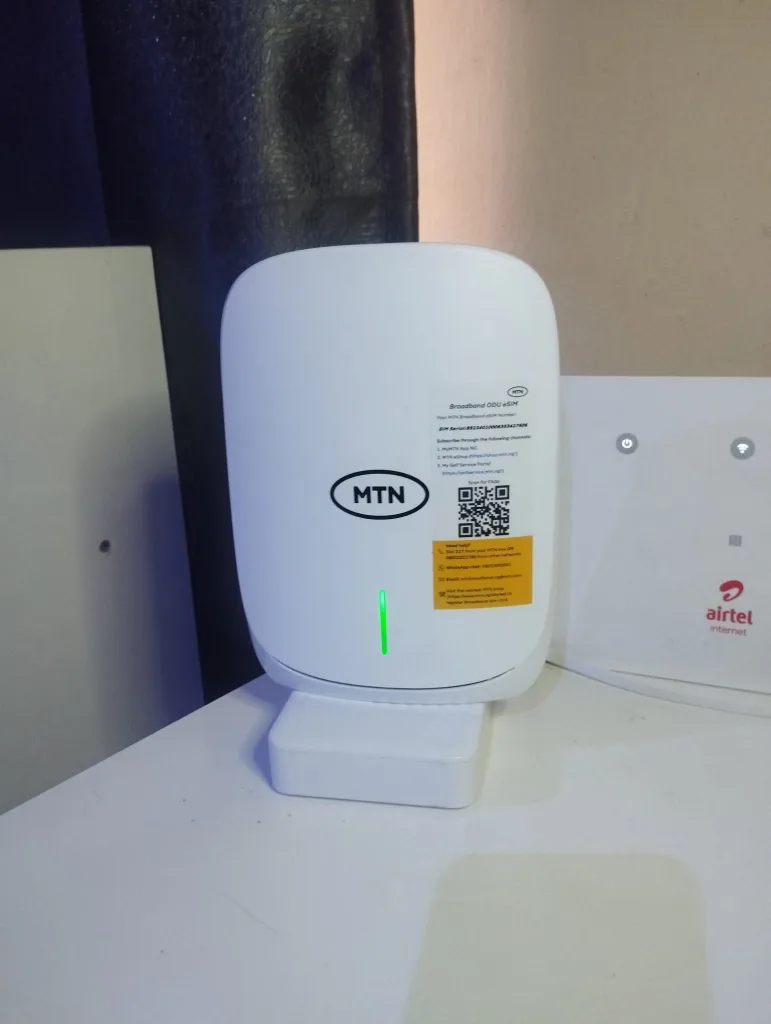
- MTN 5G ODU (ZLT X17M): Runs on a traditional ownership model. The buyer pays a higher fee upfront to purchase the hardware outright, and once bought, the device belongs entirely to the customer, who then tops up data packages independently going forward.
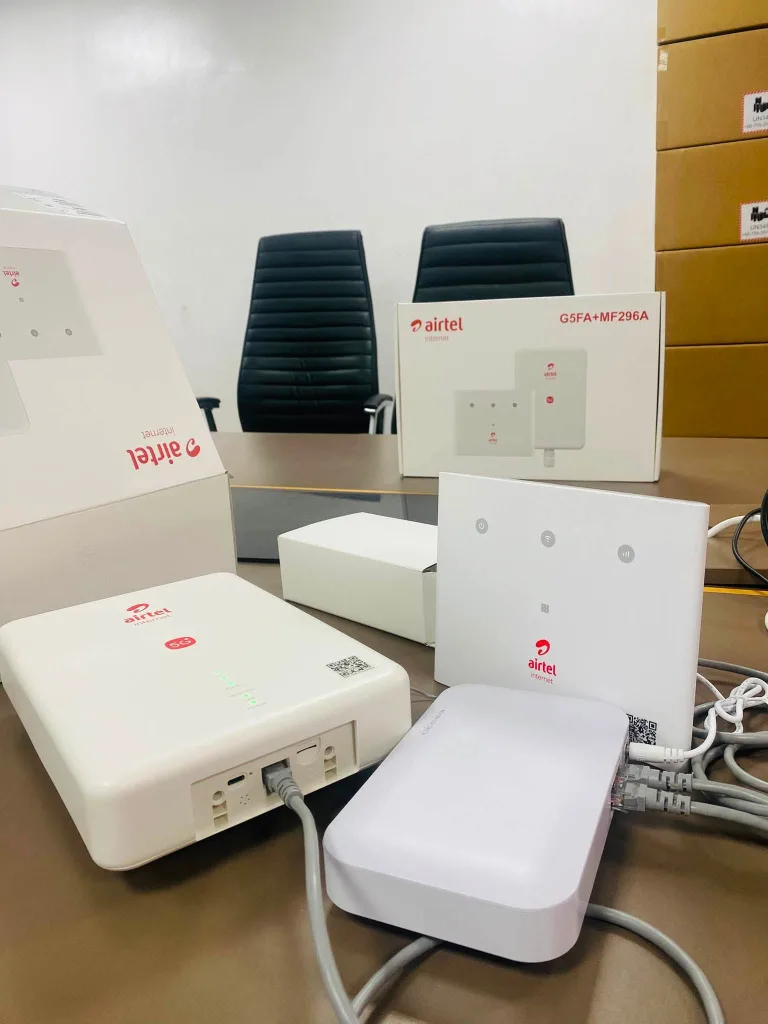
- Airtel 5G ODU (SmartConnect): Runs on a service contract model. Airtel supplies the outdoor unit and standard installation, but the equipment remains Airtel property throughout, and the company can retrieve it if the line stays inactive for three consecutive months.
Entry Cost and Purchase Details
- MTN Setup: The upfront price sits between ₦80,000 and ₦90,000, covering the hardware purchase alone, though distributors sometimes bundle it with starter data. The customer owns the hardware fully from day one, with no ongoing contract tied to the equipment itself.
- Airtel Setup: The promotional activation fee sits at ₦25,000, which covers the first full month of the Unlimited 50 Mbps subscription, hardware delivery, and standard technical setup. Buyers should note that third party vendors selling the same unit outside Airtel’s onboarding campaign, without a service contract attached, often price the standalone hardware between ₦55,000 and ₦65,000 instead.
Data Plan Comparison
The recurring monthly plans make up the most direct point of competition between the two networks, and both line up closely on pricing for their main speed tiers.
- 50 Mbps Tier: Airtel charges ₦25,000 monthly for its Unlimited 50 Mbps plan, while MTN charges ₦30,000 for the same 50 Mbps tier, making Airtel the cheaper option at this speed..
- 100 Mbps Tier: Both networks charge ₦45,000 for their standard 100 Mbps unlimited monthly plan, keeping pricing even at the higher speed tier as well.
Fair Usage Policy
- MTN’s Approach: MTN states clearly that its Gold, at 50 Mbps, and Diamond, at 100 Mbps, packages carry defined data ceilings. The Diamond plan, for example, runs at full speed until the user crosses an 800GB usage marker, at which point the connection drops to a flat 5 Mbps for the remainder of the cycle.
- Airtel’s Approach: Airtel ODU plans offer unlimited browsing without a hard data ceiling that completely cuts off connection access. Instead, each tier includes a Fair Usage Policy set at 1TB or 1.5TB. Crossing that threshold during a billing month allows Airtel to lower speeds for the remaining period to maintain overall network performance.
Alternative Capped Data Options
- MTN Flexibility: MTN lets users skip the unlimited speed tiers entirely and buy standard capped allocations instead, including 30GB for ₦9,000, 60GB for ₦14,500, or 120GB for ₦24,000, an option that suits lighter users who want stable outdoor signal without paying for a heavier monthly package.
- Airtel’s Long Duration Focus: Airtel steers heavier users toward multi month commitments over small, frequent top ups, offering 90 day and 180 day versions of its Unlimited 50 and Unlimited 100 packages to help offices lower their administrative overhead across the year.
Connection capacity on both outdoor units generally covers 32 to 64 simultaneously connected devices, with the exact number depending on the specific indoor access point bundled alongside the outdoor receiver. Also, subscription pricing across both networks can shift over time due to inflation and promotional cycles.
MTN ODU vs Airtel ODU
Airtel ODU takes the clear win on upfront budget, since paying ₦25,000 for a full month of 50 Mbps service plus a full outdoor installation removes the steep barrier that comes with buying hardware outright. MTN wins for anyone who prefers to avoid contractual obligations tied to the hardware itself, since owning the device outright means the receiver can sit unused for months without anyone showing up to reclaim it, and usage can be scaled down to smaller, cheaper data packages whenever demand drops without touching the ownership of the unit at all.
Neither answer is universally correct, and it really comes down to what you care about more: keeping upfront costs low or having total control over the equipment.
On top of that, none of the price structures matter if the signal itself is unstable where you live. Before spending a single naira on an outdoor router, check which provider has better 5G coverage right in your specific neighborhood. Test both networks on a 5G phone or ask neighbors which line holds a steady speed throughout the day. Buying into a cheaper package won’t mean much if the tower near your house struggles to push a solid connection.