

The legal status of Starlink across Africa is highly fluid. Several countries are in active negotiations with SpaceX, others have issued cease-and-desist orders while working through licensing and security frameworks, and a handful have moved from banned to fully approved within the past year. The list of African countries where Starlink is banned is longer than most people expect. This post covers the current picture as of April 2026, based on verified regulatory actions and official government positions.
Countries Where Starlink is Actively Banned or Blocked
These are countries where governments have gone beyond simply withholding a license. They are actively enforcing bans through border seizures, police action, or formal regulatory orders.
South Africa
South Africa remains the most high-profile case on the continent. Using Starlink via a roaming kit is a direct violation of the Electronic Communications Act. The core issue is an ownership requirement: South African law mandates 30% ownership by historically disadvantaged groups, a threshold Starlink has not met. Authorities have been conducting inspections to identify and seize unauthorized satellite dishes, and enforcement is active.
Namibia
On March 23, 2026, the Communications Regulatory Authority of Namibia (CRAN) officially published its decision in the Government Gazette, formally denying Starlink’s application for both a telecommunications service license and a radio spectrum license. CRAN found that Starlink met only 3 of the 6 mandatory statutory criteria, with failures on local ownership, national security grounds, and compliance history. A cease-and-desist order is in force, and authorities are actively confiscating equipment from existing users.
Cameroon
Cameroon maintains a strict ban with active border enforcement. Customs officials have specific orders to seize Starlink hardware at all entry points into the country. The government has cited national security concerns and unfair competition with state-owned telecommunications providers as the basis for its position.
Senegal
Senegal has taken enforcement beyond customs. The government has previously arrested individuals for the illegal provision of Starlink services and for selling kits without a license. The ban remains in force as of April 2026.
Ivory Coast (Côte d’Ivoire)
The marketing and sale of Starlink devices are strictly prohibited in Ivory Coast. The ban covers commercial activity around the hardware, making it illegal to sell or market the service within the country.
Burkina Faso
Starlink is unauthorized and prohibited by the national telecommunications regulator. No license has been granted and no formal application process is publicly underway.
Mali
The Malian government has declared Starlink illegal to sell or operate within the country, citing a lack of regulatory oversight as the primary reason for its position.
Countries Where Starlink Operates in a Gray Market
In these countries, Starlink does not hold an official operating license. Using the Global Roaming feature is technically against local law in most cases, though the level of enforcement is generally lower than in the countries listed above.
Ethiopia
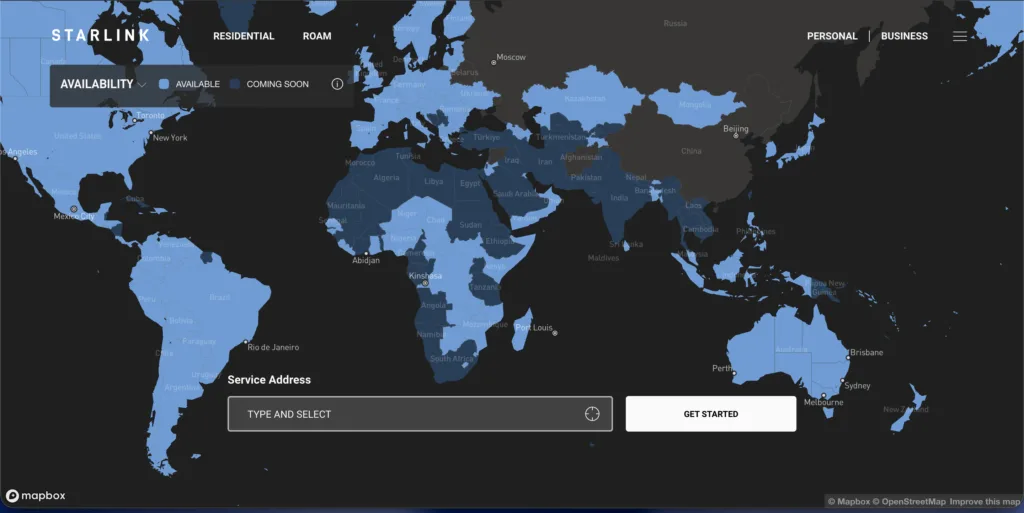
Ethiopia remains in the “Coming Soon” phase on Starlink’s official availability map. No operating license has been granted, and the service is not officially available to Ethiopian subscribers.
Algeria, Morocco, and Tunisia
All three North African countries maintain strict controls over satellite communications equipment. Starlink remains unauthorized across the region, and the regulatory environment around satellite hardware is tightly managed in each of these markets.
Sudan
Starlink has been used by humanitarian aid organizations operating in conflict zones within Sudan, but the service remains officially unlicensed by the Sudanese state. Service availability is subject to throttling or geofencing at the request of authorities.
Countries That Were Previously Banned but Are Now Licensed
It is worth noting that this list is not static. Several African countries that previously banned or restricted Starlink have since moved toward full approval. The following countries have seen Starlink receive official operating licenses after previously being on restricted lists:
The Democratic Republic of Congo (DRC) officially reversed its initial restrictions and granted Starlink an operating license through the Congolese Postal and Telecommunications Regulatory Authority (ARPTC). Starlink is now legally authorized in the country, enabling both standard broadband and direct-to-cell collaborations with Airtel Africa.
Starlink was officially granted an operating license in the Central African Republic (CAR), removing it from the banned list entirely. Zimbabwe, Botswana, Ghana, and Liberia have all seen similar outcomes, with Starlink transitioning from banned or unauthorized status to fully licensed within the past year in each of those markets.
This movement in both directions is a reminder that the regulatory picture can shift quickly. A country that blocks the service today may approve it within months, and vice versa.
Legal Risks for Users Considering a Roaming Kit
If you are in one of the countries listed above and considering using Starlink through a roaming kit purchased elsewhere, there are three specific risks to be aware of.
Confiscation: Customs agents in countries like Cameroon and South Africa are actively scanning for Starlink’s signature satellite dish hardware during luggage and cargo inspections. Equipment can be seized at the border before it even reaches the user.
Service cutoffs: Starlink has a documented history of complying with government requests to geofence their service at the national level. If a local regulator demands a shutdown, hardware that was functioning can stop connecting entirely, with no guarantee of a refund or resolution.
Fines: Several regulators across the continent, including those in Namibia, have issued formal warnings that operating unlicensed radio equipment carries financial penalties. The severity of those fines varies by country, but the legal exposure is real.
The regulatory situation across Africa changes frequently, sometimes within weeks. The most reliable way to check current technical availability in any country is Starlink’s official availability map.
This list will be updated as new regulatory decisions are published.