
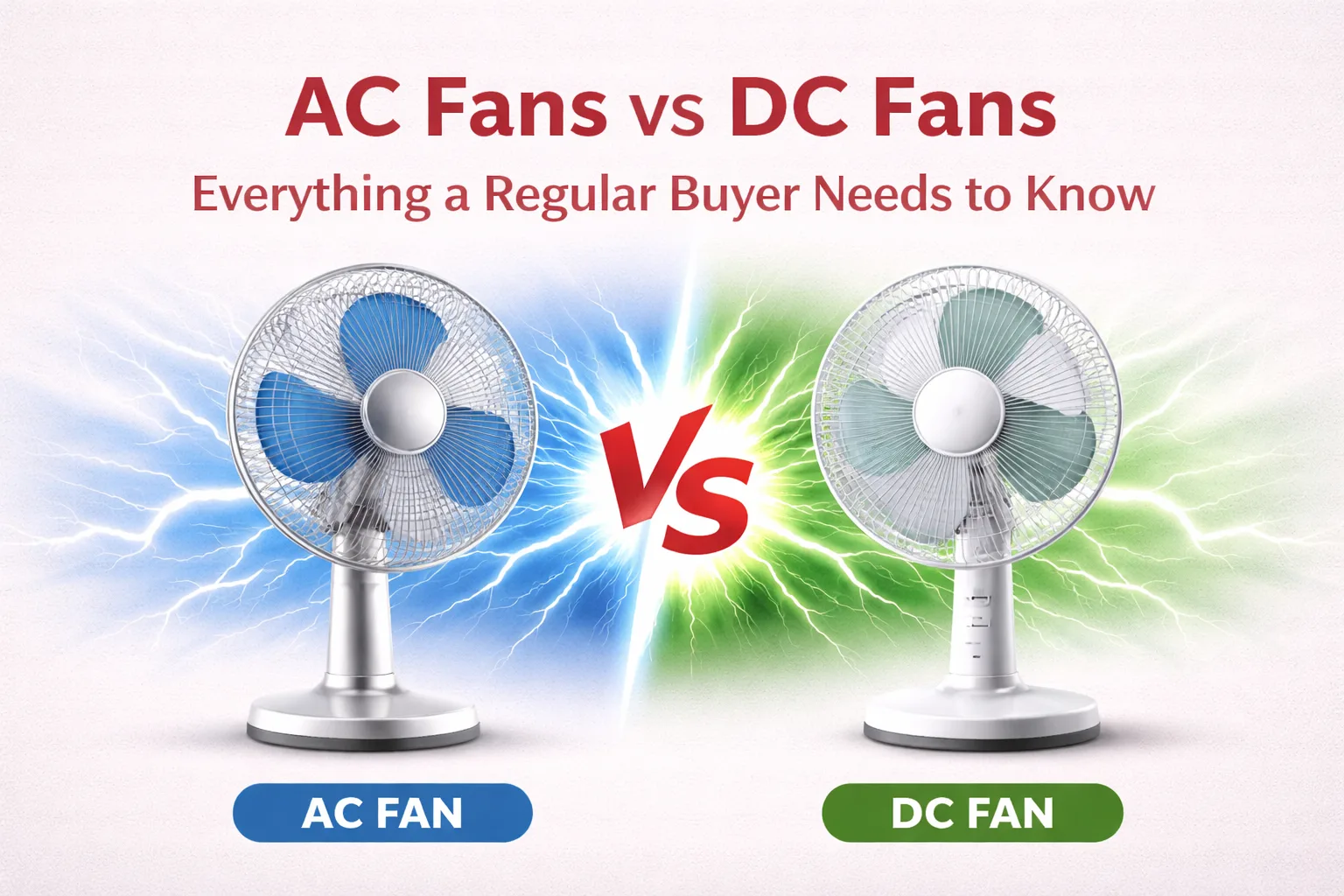

Walk into any electronics store today and you will find two types of fans sitting side by side with very different price tags. If you have ever wondered what actually justifies the gap, this piece is for you. AC fans and DC fans are powered differently, and that difference affects everything from your electricity bill to how well you sleep at night. Here is a full breakdown of what separates them and which one makes more sense for your situation.
Energy Efficiency
This is where the gap between the two is most obvious.
DC fans are the gold standard for efficiency. They use permanent magnets to create a magnetic field, which means they consume up to 70% less energy than AC models. On the lowest setting, a DC fan can draw as little as 3 to 5 watts, which is less than a single LED light bulb.
AC fans work differently. They rely on the frequency of your wall outlet to spin the motor. They are still far cheaper to run than an air conditioner, but they are significantly less efficient than DC motors, pulling between 60 and 100 watts on a high setting.
If your electricity bill is already a concern, that difference adds up quickly over weeks and months of daily use.
Sound and Noise Levels
DC fans have a clear advantage here. The brushless motor design removes the mechanical hum that older fans are known for, making DC fans virtually silent. This is why they are the preferred choice for bedrooms and nurseries where noise is a problem.
AC fans are generally more audible. Even high-end AC models produce a faint electrical buzz, and that hum tends to get worse at lower speeds or as the motor gets older. The noise does not bother everyone, but if you are a light sleeper it is worth factoring in before you buy.
How They Start Up and Handle Your Power Source
This section is more important than most buyers realise, especially if you are not always on the grid.
AC fans are rugged and built to last, but a poor quality regulator is often the reason your fan produces that irritating electrical hum at night. Beyond the noise, AC fans also start with a heavy electrical jerk. That sudden pull of power can trip a sensitive solar inverter or cause a small generator to struggle and dim the lights momentarily when the fan kicks on.
DC fans handle this differently. When you turn on a DC fan, it starts smoothly and gradually. There is no heavy jerk on startup, which means it is far less likely to overload a battery system or trip a breaker. If you are running on solar, an inverter, or a small generator, the DC fan’s smooth startup and low watt draw make it the more practical option for your setup.
Motor Lifespan and Reliability
Both fan types are built to last, but they have different weak points.
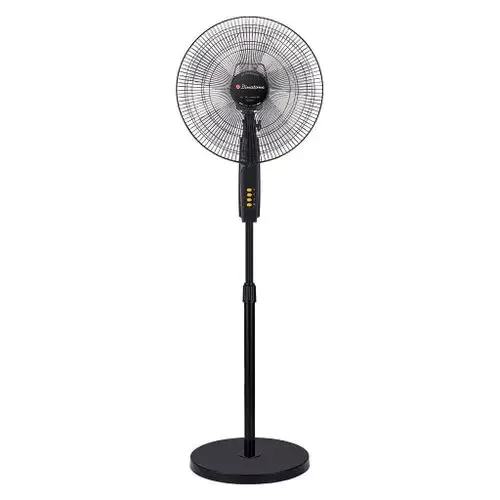
AC fans are built on older, simpler technology. That simplicity is actually an advantage in certain conditions. Because there are fewer electronic components involved, AC fans handle power fluctuations well and tend to be more durable in harsh environments like semi-outdoor patios, workshops, or any space where the conditions are less controlled.
DC fans generate less heat during operation, which is good for the motor itself over time. However, they rely on electronic control boards to function. Those boards are more sensitive to power surges than the straightforward wiring inside an AC fan. In areas with unstable electricity supply, a sudden spike can damage the DC fan’s electronics in a way it would not damage a basic AC motor.
This does not make DC fans unreliable. It just means they benefit more from a stabilised power source or a surge protector.
Price
AC fans win on upfront cost. They are cheaper to produce and have been around long enough that the market is saturated with affordable options. If your budget is tight and you need a fan today, an AC fan gets the job done without asking much of your wallet.
DC fans cost more at the point of purchase. The technology inside them is more advanced, and that is reflected in the price. The argument for spending more upfront is that the energy savings over time offset the initial cost, but that calculation depends on how often you use the fan and what you are paying for electricity.
Can a Fan Be Both AC and DC?
This question comes up often, and the short answer is no. A motor is built specifically to handle one type of current and cannot be both at once. However, there are fans designed to accept both types of power sources, and understanding how they work is useful before you buy.
The AC/DC Hybrid Fan
These fans are common in regions with frequent power outages. The motor inside is technically a DC motor, but the fan comes with two additional components that make it work with your wall socket. The first is a power transformer, which converts the AC power from your wall outlet into DC power that the motor can use. The second is a battery port, which connects to either a built-in rechargeable battery or an external 12V battery.
In practical terms, when there is grid power available the fan runs off the wall socket and charges the battery at the same time. When the power goes out, it switches to battery power automatically. This is why these fans are sometimes called rechargeable fans.
Why They Are Not True Hybrids
The fan does not run on both AC and DC simultaneously. It runs on DC power at all times. The transformer is simply there to convert whatever comes from the wall into the DC current the motor actually uses.
This distinction also explains why you cannot mix and match. An AC motor relies on the 50Hz or 60Hz pulse of the grid to spin. A DC motor uses permanent magnets and electronics to spin. Feeding AC power directly into a DC motor will damage the circuit board. Feeding DC power from a battery directly into an AC motor will not move it at all.
Inverter Fans
Some high-end standing fans are marketed as AC/DC because they use inverter technology. These fans plug into a standard AC wall socket, but the first thing the electronics inside do is convert that power into DC. This is done because DC motors are easier to control precisely, run more quietly, and use significantly less electricity. The fan still plugs into the wall like any other fan, but the motor inside is running on converted DC power.
To keep it simple: if you want a fan that works during a blackout, look for a rechargeable fan. That is a DC fan with a built-in battery system, and it is the closest thing to a true AC/DC fan that you will find on the market today.
So Which One Should You Buy?
The honest answer is that it depends on your situation.
If you rely heavily on solar, an inverter, or a small generator, the DC fan is the better choice. Its low watt consumption and smooth startup make it easier on your power system, and the near-silent operation is a real quality of life improvement if you use the fan in a bedroom. The higher upfront cost is easier to justify when you are watching your units closely.
If you want something straightforward and affordable for a shop, a parlour, or any space where your electricity supply is relatively stable, the AC fan is still a solid and proven option. It is simple, easy to repair, widely available, and it does exactly what a fan is supposed to do without any complexity.
Neither fan is the wrong choice. The right one is the one that fits how you actually live and what you are powering it with.