
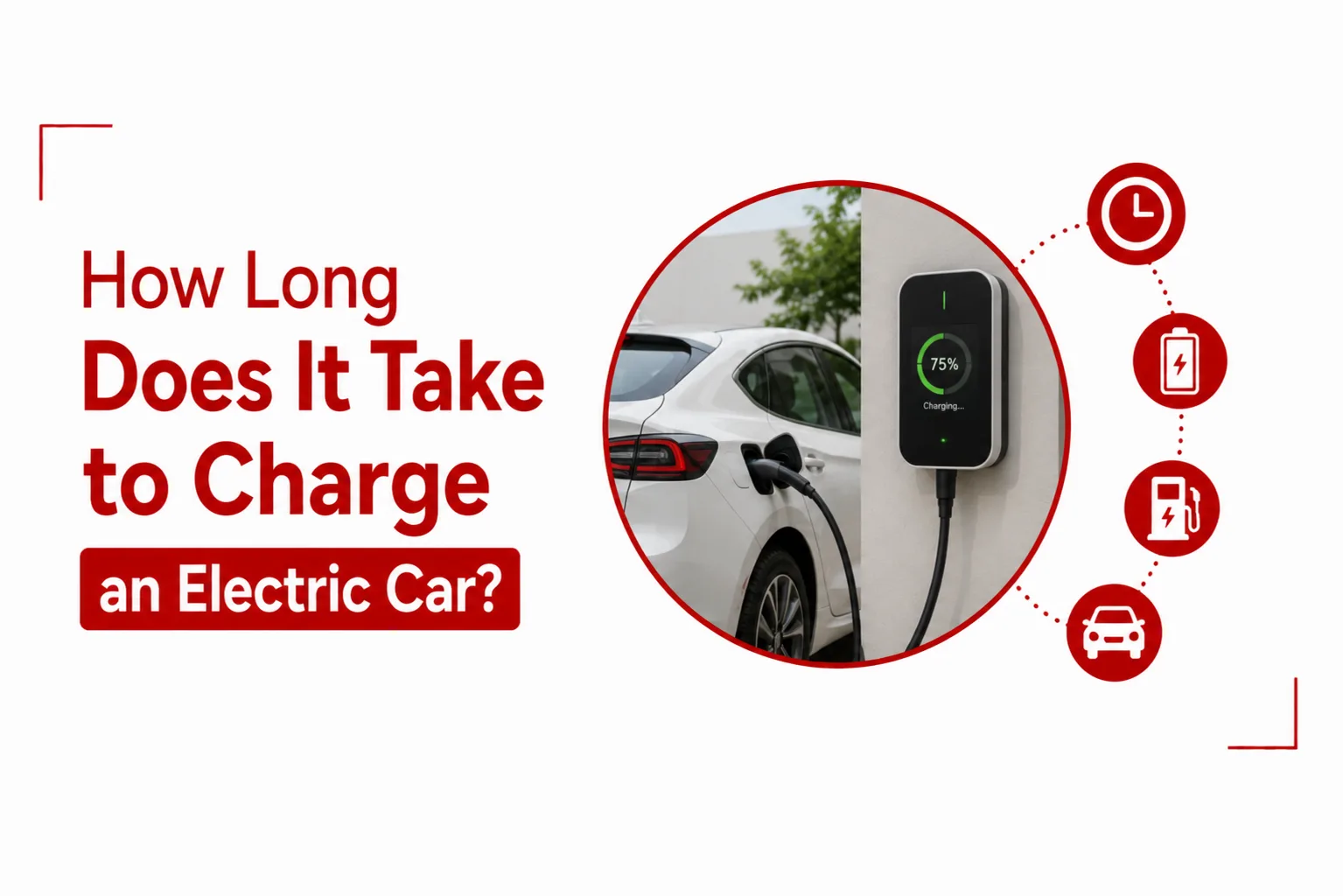

When people think about switching to an electric car, charging time is a top question every single time. It makes sense. Fueling at a station takes minutes, so learning a new rhythm takes a little adjustment.
Charging time depends on your car’s battery size, the type of charger you’re using, how empty the battery is, and even the weather. A Tesla might charge differently than a Nissan Leaf. A home charger works differently than a public fast charger. Understanding these variables helps you plan charging into your routine instead of feeling constantly anxious about running out of power.
Most electric car owners rarely think about charging once they understand how it works. You charge at home overnight like you charge your phone, and you wake up to a full battery every morning. Long trips require planning for fast charging stops, but daily driving becomes easier than constantly visiting petrol stations. Let’s break down exactly how long charging takes in different situations so you know what to expect.
Quick Links
How Long Does It Take to Charge an Electric Car at Home?
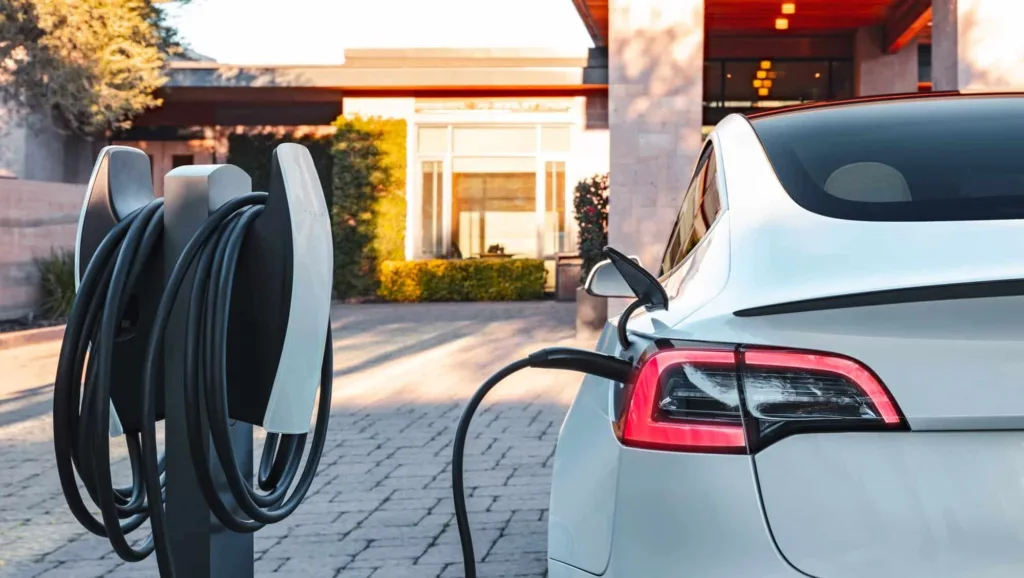
Home charging is how most electric car owners power their vehicles. You park in your garage or driveway, plug in overnight, and wake up with a full battery. This is the slowest charging method but also the most convenient because it happens while you sleep.
Using a standard household outlet, what’s called Level 1 charging, is painfully slow. This gives you about 3 to 8 kilometers of range per hour of charging. If your battery is completely empty and holds enough charge for 300 kilometers of driving, you’d need roughly 40 to 50 hours to fully charge. That’s nearly two full days. This method only makes sense if you drive very little daily, maybe 30 to 50 kilometers, and can leave the car plugged in for long periods.
Level 2 home chargers are much better. These require professional installation and use 240-volt power, similar to what electric stoves or dryers use. Level 2 chargers add about 20 to 40 kilometers of range per hour. That same 300-kilometer battery charges fully in roughly 8 to 12 hours, perfect for overnight charging. Most people install Level 2 chargers at home if they own electric cars. The installation costs between $500 to $2,000 depending on your home’s electrical setup and how far the charger is from your electrical panel. It’s a one-time expense that makes daily charging effortless.
The actual time is determined by your car’s battery capacity. A small electric car with a 40 kWh battery charges faster than a large SUV with a 100 kWh battery. A Nissan Leaf with a 40 kWh battery might fully charge in 6 hours on a Level 2 charger, while a Tesla Model X with a 100 kWh battery takes 12 hours.
How Fast Are Public Fast Chargers?
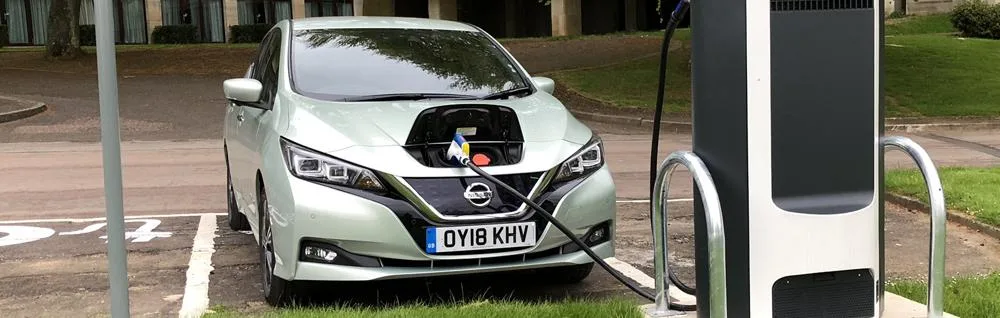
Public fast chargers, also called DC fast chargers or Level 3 chargers, are what you use on road trips or when you need a quick charge away from home. These are dramatically faster than home charging but also more expensive to use. Fast chargers can add 150 to 300 kilometers of range in just 20 to 30 minutes. Some ultra-fast chargers add even more, giving you 80% battery capacity in 15 to 25 minutes. This is the closest experience to filling up at a petrol station, though still slower.
Here’s an important detail: fast chargers don’t maintain maximum speed throughout the entire charging session. They charge quickly from 0% to about 80%, then slow down significantly for the final 20%. This protects the battery from damage. Charging from 80% to 100% can take as long as charging from 0% to 80%. That’s why experienced electric car owners rarely charge to 100% at fast chargers. They charge to 80%, which takes maybe 25 minutes, then continue driving. Charging that last 20% takes another 25 to 40 minutes, and it’s not worth the time unless you absolutely need maximum range.
Fast charging also costs more than home charging. While home electricity might cost the equivalent of $2 to $5 to fully charge your car, fast charging stations often charge $10 to $20 for the same amount of energy. It’s convenient but expensive, so it’s best reserved for road trips rather than daily use.
Does Battery Size Affect Charging Time?
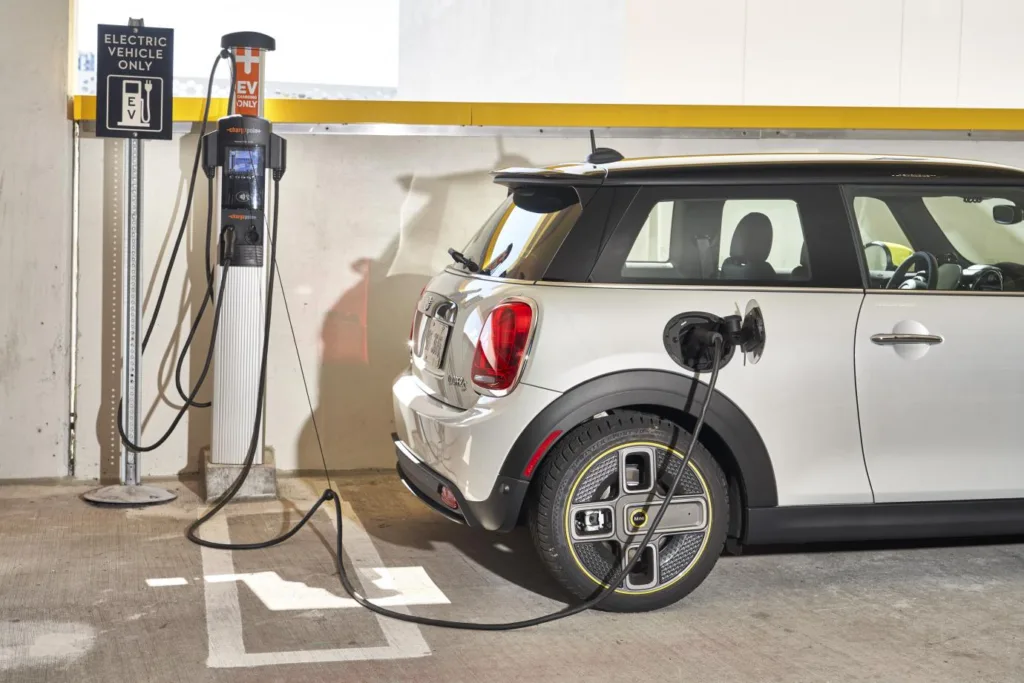
Absolutely. Battery size is measured in kilowatt-hours (kWh), similar to how petrol tanks are measured in liters. A bigger battery holds more energy and takes longer to charge, just like a bigger tank takes longer to fill. A small electric car like the Mini Electric has a 32 kWh battery. On a Level 2 home charger, this charges fully in about 4 to 5 hours. On a fast charger, you can add significant range in 15 to 20 minutes.
A mid-size car like the Chevrolet Bolt has a 65 kWh battery. Level 2 charging takes 8 to 10 hours. Fast charging to 80% takes about 30 to 40 minutes. Large vehicles like the Ford F-150 Lightning or Rivian R1T have batteries over 130 kWh. Level 2 charging takes 12 to 16 hours for a full charge. Fast charging to 80% takes 45 minutes to an hour.
The pattern is clear: bigger batteries equal longer charging times, but they also give you longer driving range between charges. It’s a trade-off. You charge less frequently but spend more time when you do charge.
Why Does Charging Slow Down in Cold Weather
Temperature affects battery performance significantly. In cold weather, electric car batteries charge slower and hold less charge. The chemistry inside batteries works less efficiently when it’s cold. In freezing temperatures, charging times can increase by 20% to 40%. A charge that normally takes 30 minutes might take 45 minutes when it’s very cold. Your driving range also decreases because the battery can’t deliver power as efficiently, and the heater uses significant energy.
Modern electric cars have battery heating systems that warm the battery before and during charging. If you precondition your battery while still plugged in at home, using the car’s app to warm it up before you start driving, you’ll get better charging speeds and range. The battery heater uses electricity from the charger rather than draining the battery itself.
Hot weather also affects charging but less dramatically. Extreme heat can cause charging to slow down to protect the battery from damage, but the effect is generally smaller than cold weather impact.
Also Read: How to Negotiate Car Price as a First-Time Buyer
Can I Damage My Battery By Charging Too Fast?
This is a common worry, and it’s somewhat valid. Fast charging regularly does put more stress on batteries than slow charging. The heat generated during fast charging and the high current flow contribute to faster battery degradation over time.
However, modern electric cars have sophisticated battery management systems that protect against damage. The car controls charging speed, monitors temperature, and adjusts everything to keep the battery safe. You won’t damage your battery by using fast chargers when you need them.
That said, if you have a choice, slower charging is gentler on the battery. Charging at home overnight on Level 2 is better for long-term battery health than daily fast charging. Most manufacturers recommend using fast charging for road trips and special situations, not as your primary charging method.
Battery degradation happens regardless of how you charge. All batteries lose capacity over time. Most electric car batteries are designed to retain about 70% to 80% of their original capacity after 8 to 10 years of normal use. Good charging habits, like keeping the battery between 20% and 80% most of the time rather than always charging to 100%, help maximize battery life.
How Do I Plan Charging For a Long Road Trip?
Road trips in electric cars require more planning than petrol cars, but apps and built-in navigation systems make it manageable. Your car’s navigation or apps like PlugShare show charging stations along your route with real-time availability. Plan to stop every 200 to 300 kilometers for charging, depending on your car’s range. Each charging stop takes 20 to 40 minutes, which is a good time to stretch, use the restroom, and grab food anyway.
Don’t charge to 100% at each stop. Charge to 80%, which is much faster, then continue to the next charging station. You’re rarely driving until completely empty anyway; you’re usually arriving at chargers with 10% to 20% remaining. Check charging networks before traveling. Some cars work with specific charging networks, and you might need accounts or apps set up beforehand. Tesla Superchargers are Tesla-exclusive in many regions, while other networks like Electrify America or Ionity serve multiple brands.
Have backup charging locations identified. If your planned charging station is occupied or broken, knowing the next closest option prevents anxiety. Most charging apps show real-time station status.
Does Charging Time Make Electric Cars Impractical?
For many people, no. The vast majority of driving is daily commuting and local errands, covering maybe 50 to 80 kilometers per day. Charging at home overnight easily covers this, and you never visit a petrol station again. Road trips require adjusting your mindset. Instead of a five-minute petrol stop, you take 30-minute breaks at chargers. Some people find this annoying, others appreciate the forced breaks during long drives. It depends on your travel style and priorities.
If you frequently drive 500+ kilometers daily, or you don’t have home charging available, electric cars become less convenient. People in apartments without charging access struggle unless their workplace offers charging. For average drivers with home charging, the convenience of waking up to a full battery every morning outweighs the occasional 30-minute charging stop on road trips. Charging times continue improving too. New battery technologies and faster chargers are coming. What takes 30 minutes now might take 10 to 15 minutes in a few years. The infrastructure is expanding rapidly, making electric cars increasingly practical for more people.