
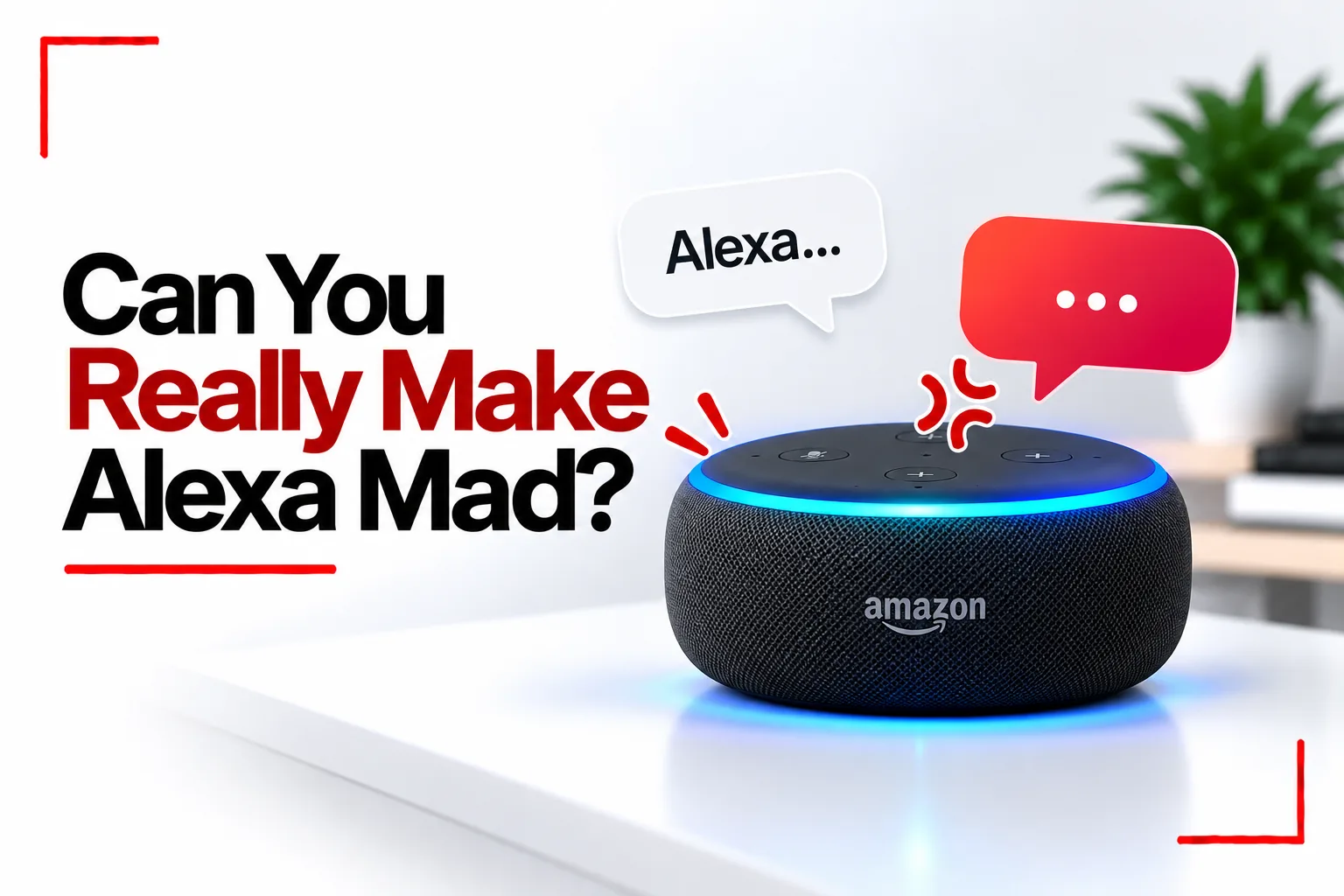

Alexa has a way of turning ordinary questions into entertaining conversations. Ask for a joke, challenge it with a strange question, or try one of its playful commands, and the response can be surprisingly witty. Some replies even sound sarcastic enough to make it seem as though the assistant has taken your words personally.
These reactions have helped make Alexa more entertaining than a device that simply answers questions and plays music. Amazon has designed the assistant to use humour, conversational language and playful responses, with newer Alexa+ features adding more ways to adjust its personality.
Can you really make Alexa mad? Not in the literal sense. You can prompt Alexa to give a sarcastic or dramatic response, but there is no evidence that the assistant experiences anger, feels insulted or becomes upset like a person.
Table of Contents
Why Does Alexa Sometimes Sound Angry?
Alexa’s replies can sound cheeky, blunt or sarcastic because its software is designed to handle jokes and casual conversation as well as ordinary requests. Amazon even includes humorous prompts such as asking Alexa to tell a joke or insult you. The wording and delivery can make a response sound as though Alexa is annoyed. A playful comeback after a teasing question might feel personal, especially when the voice sounds confident or the reply catches you off guard.
The response is still generated or selected by the software. A sarcastic sentence does not mean Alexa is feeling irritation, and a dramatic voice does not prove that it has become angry.
What Can You Say to Make Alexa Give a Funny Response?
A few playful commands can prompt Alexa to respond with jokes, cheeky remarks or other humorous replies.
Try saying:
- “Alexa, tell me a joke.” Alexa can respond with a joke or humorous line.
- “Alexa, insult me.” This asks for a playful insult or roast.
- “Alexa, cry for me.” This command may prompt Alexa to respond with a playful or dramatic reply.
- “Alexa, do you love me?” Alexa can respond to personal questions with a lighthearted answer.
The exact reply is not guaranteed to match a video or social media post you have seen. Amazon can update Alexa’s responses, and the result can depend on the device, language, account and software version. These commands are meant to entertain you, not trigger real anger. If Alexa gives a straightforward answer instead of a funny one, that does not necessarily indicate a problem with your device.
Related Article: Alexa vs Siri: A Comparison of Features and Usability
Does Alexa+ Have a Sassy Mode?
Yes. Amazon has introduced a Sassy personality style for Alexa+, designed to use playful sarcasm, witty comebacks and occasional censored profanity. Alexa+ also has Brief, Chill and Sweet personality styles, each with its own communication tone. The Sassy style is the closest official feature to making Alexa sound annoyed or cheeky. It lets the assistant use a more sarcastic tone in conversation, but it does not give Alexa human emotions.
To change the personality style on a compatible Alexa+ device, you can say, “Alexa, change your personality style,” or open the Alexa app and look in your device settings for Alexa’s Personality Style. You may need to complete additional security checks to activate Sassy. The feature is unavailable when Amazon Kids is enabled, and the setting applies to each Echo device separately.
Alexa+ availability and its features depend on your market and account. If you use the standard Alexa experience and cannot find the Sassy style, it may not be available to you.
Does Alexa Get Upset If You Insult It?
No. Insulting Alexa does not make it feel hurt or offended. The assistant may respond with a joke, give a neutral answer, or fail to understand what you said. Its reply depends on how the software handles the prompt, not on an emotional reaction.
You can repeat a rude question or tell Alexa that its answer was bad, but there is no reason to interpret a sarcastic response as proof that it feels resentment. Alexa’s conversational style can make an exchange sound personal without the assistant experiencing the feelings a person might have in the same situation. The same applies when Alexa responds warmly to praise or affection. Friendly language is part of the way the assistant communicates, not proof that it experiences love or happiness.
Will Alexa Remember If You Were Rude to It?
A conversational assistant may use recent context to respond to what you have just said. Alexa+ can also support more natural conversations than the classic Alexa experience. Neither ability is proof that the assistant feels offended or holds a grudge. There is no reason to assume that a sarcastic reply means Alexa will punish you, deliberately ignore future commands or become hostile because of an insult. If the device fails to respond later, ordinary issues such as a muted microphone, a network interruption or a misunderstood wake word are more useful places to start checking.
Personalisation and conversation features can depend on the Alexa version, account and settings. It is best not to interpret a particular reply as evidence of an emotional state.
Can You Make Alexa Sound Even More Annoyed?
Alexa+ users who have access to the Sassy personality style can try it for more sarcastic replies and playful banter. If you use standard Alexa, ask it to tell a joke or try another playful command.
You can also create an Alexa Routine with a custom spoken phrase, where that action is available in your account. For example, a routine could make an Echo speak a dramatic line when you trigger it. The effect comes from the phrase and the timing you set, not from Alexa becoming annoyed.
Be careful with online tutorials that promise a secret command guaranteed to make Alexa angry. Some popular prompts rely on old responses, and others may never produce the advertised result on your device. Amazon can change its entertainment responses over time.
Alexa can sound sarcastic, theatrical or playfully rude, especially when you use its humour features or Alexa+’s Sassy personality style. You can make Alexa sound mad, but you cannot make it genuinely angry. Its replies are part of how the assistant communicates, not proof that it feels hurt, annoyed or offended.