
A camera can be an ordinary smartphone feature, but in a secure workplace it can become a reason for a device to be refused at the gate. Defense facilities, research laboratories, manufacturing plants, government sites and other controlled environments can restrict phones that house image sensors, even when the camera app itself has been disabled.
Android phones without cameras address a more specific requirement: the absence of camera hardware altogether. These devices are manufactured or supplied without front and rear camera modules, unlike ordinary Android phones where the cameras remain installed but can be disabled through software. In workplaces with strict device controls, that physical difference can make the phone easier to document and inspect for compliance.
Cameraless Android devices come with different hardware, software support, durability ratings and intended uses. Some are designed for everyday workplace communication, while others are built for demanding industrial environments.
Table of Contents
Why Android Phones Without Cameras Are Used
A normal Android phone can have its camera blocked through device management. Android Enterprise supports controls for company owned devices, including restrictions that can prevent camera use. That does not physically remove the image sensor, lens or related camera components. A lens cover has the same limitation. It prevents the lens from being used, but the camera hardware remains inside the phone.
Factory built non camera hardware takes a different route. The handset is supplied without the camera modules, making the physical configuration easier to document during procurement and site inspections. This can be relevant in locations where photography is prohibited as part of the site’s security rules.
The requirement can also extend beyond the camera itself. Some industrial sites have additional requirements covering wireless connectivity, removable storage, application access, ruggedness and hazardous location certification. A phone being sold as “non camera” does not automatically make it approved for every restricted workplace.
Best Android Phones Without Cameras
Benco S1s Non Camera
The Benco S1s is one of the closest options to a conventional touchscreen Android phone in this category. It comes with a 6.8 inch HD Plus IPS display, Unisoc T606 octa core processor, Android 13, 6GB RAM, 128GB or 256GB storage and a 5,000mAh battery. Benco also offers other camera free Android models, including the S1 Plus and S2c.
The S1s is a better fit for an office or controlled indoor workplace than for demanding industrial field work. Its large display, Android 13 software and conventional smartphone design make it closer to the everyday Android experience, while the camera free hardware makes it suitable for workplaces with strict camera restrictions.

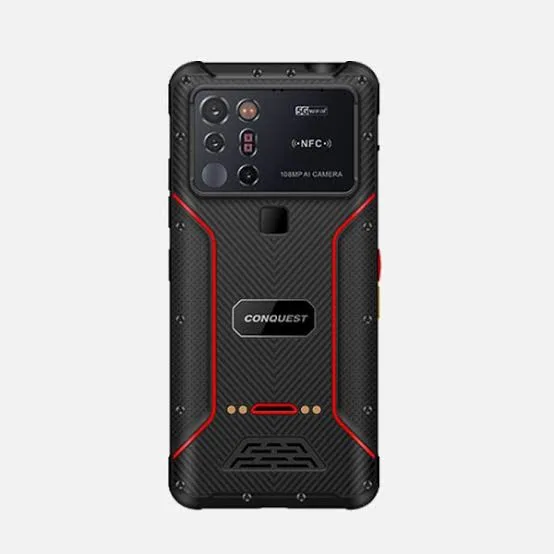
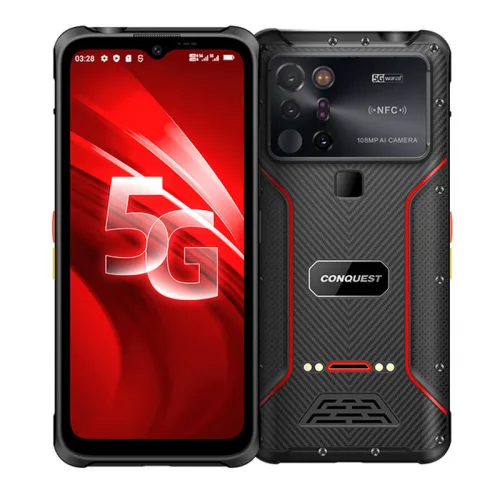
Conquest S23 Non Camera
The Conquest S23 Non Camera is designed for demanding field and industrial use. It has a MediaTek Dimensity 900 processor, Android 12, a 6.58 inch 1080 by 2408 display with a 120Hz refresh rate, a 10,000mAh battery, and configurations with up to 12GB RAM and 512GB storage.
The phone has IP68 and IP69K protection and MIL STD 810H testing, along with Wi Fi 6, NFC, Bluetooth 5.2, dual SIM support and 4G and 5G connectivity. Its large battery is useful for long shifts where frequent charging may not be convenient. The standard Conquest S23 is sold with cameras, so buyers need to specify the Non Camera version when ordering. The non camera model is supplied without the front and rear camera hardware.
With its rugged construction, a 10,000mAh battery and 5G connectivity, the S23 is built for demanding field and industrial use.
Conquest F5 Non Camera
The Conquest F5 Non Camera is a smaller rugged Android phone designed for field and industrial work. It comes with Android 12, 6GB RAM, 128GB storage, an 8,000mAh battery and a 5.45 inch HD Plus display. It also has IP68 protection, with an optional DMR walkie talkie function and barcode scanner.
Its compact size makes it easier to carry during long shifts, while the large battery reduces the need for frequent charging. The physical PTT button and optional barcode scanner add features that are useful for field communication and workplace tasks. The F5 is a smaller alternative to the Conquest S23, with a lower specification level but a rugged design and large battery.
Dupad Story V8 E2
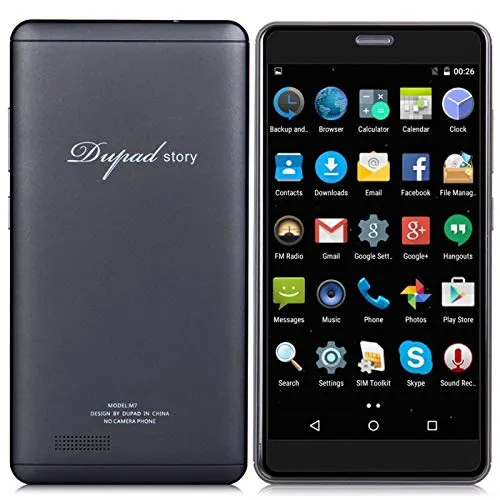
The Dupad Story V8 E2 is an older Android phone that was made without a camera. It has a 4 inch display, MediaTek MT6572 processor, 1GB RAM, 4GB internal storage, microSD support up to 32GB, a 3,500mAh battery, 3G connectivity and Android 4.2.2. It also has IP67 protection and dual SIM support.
The hardware is now dated, especially with its 3G connectivity and Android 4.2.2 software. Modern workplace requirements can also call for newer network support, security updates and better device management features. With its older hardware, Android 4.2.2 software and 3G connectivity, the V8 E2 is not a realistic choice for most modern enterprise fleets.
Kyocera DuraXV Extreme Plus Non Camera
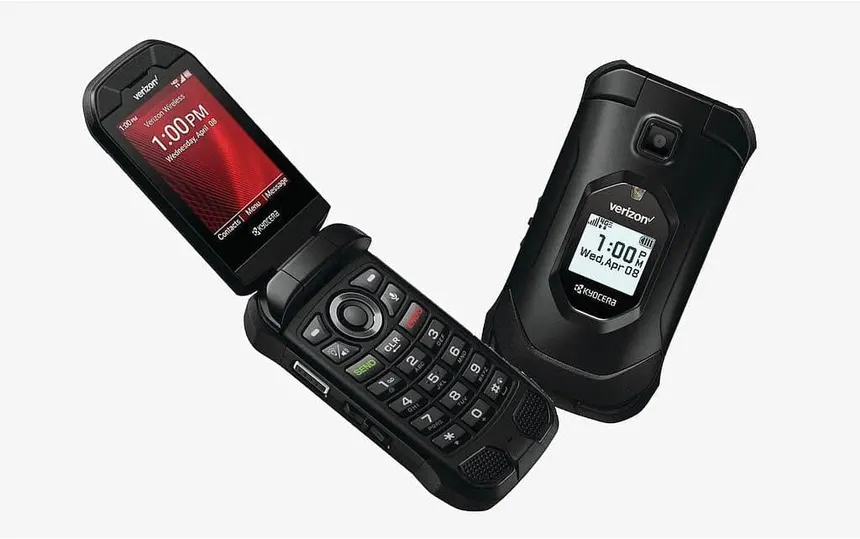
The Kyocera DuraXV Extreme Plus Non Camera, model E4811NC, is an Android based rugged flip phone with no camera. It has a MediaTek MT6761V/WB processor, Android Q based AOSP software, 2GB RAM, 16GB storage, a removable 1,770mAh battery, a 2.6 inch main display and 4G LTE connectivity. It also has IP68 protection and rugged construction for demanding workplace use.
Unlike the touchscreen phones, the DuraXV Extreme Plus has a physical keypad and a compact flip phone design. It also supports Push to Talk, making it more focused on voice communication and quick workplace contact.
What to Check Before Buying Cameraless Android Phones
A phone can leave the factory without cameras and still need to meet several other requirements before it can be used at work. Network support is a good place to start. Check the 4G and 5G bands carefully if the phones will be used with different mobile networks, especially across multiple countries.
Software controls also deserve attention. Removing the cameras only deals with image capture. Companies may still need control over installed apps, file transfers, user accounts, removable storage and network access. Android Enterprise provides tools for managing company owned Android devices, including restrictions that can be applied across a fleet.
Durability depends heavily on where the phone will be used. IP67, IP68 and IP69K offer different levels of protection against dust and water, so the rating needs to match the conditions the device will face. MIL STD 810H is a testing standard, too, so it is useful to check which tests the specific phone has completed instead of treating the label as a blanket promise of durability.
Workplaces with hazardous areas have another layer of requirements. An IP68 or IP69K rating does not make an ordinary phone safe for use around explosive gases, vapours or dust. Equipment used under ATEX or IECEx requirements needs the appropriate certification for the area and the exact device configuration. Conquest produces explosion protected equipment, but certification for those products should not be assumed to apply to its non camera phones.
There is also a difference between buying a phone that was made without cameras and removing the cameras yourself. A modified device can raise questions about its warranty, water and dust protection, certification and service history. A factory supplied non camera phone gives you a clearly defined hardware configuration that is easier to document for workplace inspections and internal records.
Related Article: Best Android Phones Without a Camera Bump
Custom Android Phones Without Cameras
Not every workplace can find exactly what it needs in a standard Android phone. A company may need a particular screen size, battery capacity, network support or rugged design, while also requiring the device to leave the factory without cameras. In those cases, manufacturers can produce customised batches for specific business requirements. Conquest, for example, offers OEM (Original Equipment Manufacturer) and ODM (Original Design Manufacturer) customization.
Camera removal after purchase is another possibility, although it comes with more uncertainty. A specialist can remove the camera modules from an Android phone, but the modification needs to be properly documented if the device will be used in a workplace with strict security controls. Changes to the original hardware can also affect warranty coverage, water and dust protection, certification and future servicing.
A touchscreen smartphone is not the only way to run Android without a camera. Rugged flip phones come with Android based software, 4G connectivity, physical buttons and a simpler design for workplaces where voice calls and Push to Talk are more important than apps and a large display.
The market for Android phones without cameras remains relatively small, but the devices available cover a range of workplace needs. Some retain the familiar touchscreen smartphone format, while others focus on rugged construction, long battery life, physical controls or simpler Android based software. Across all of them, removing the camera hardware addresses one specific security requirement, while the rest of the device still determines how well it fits into a workplace environment. Network support, software version, battery life, durability, device management and site specific certification can all affect the overall value of a cameraless Android phone.