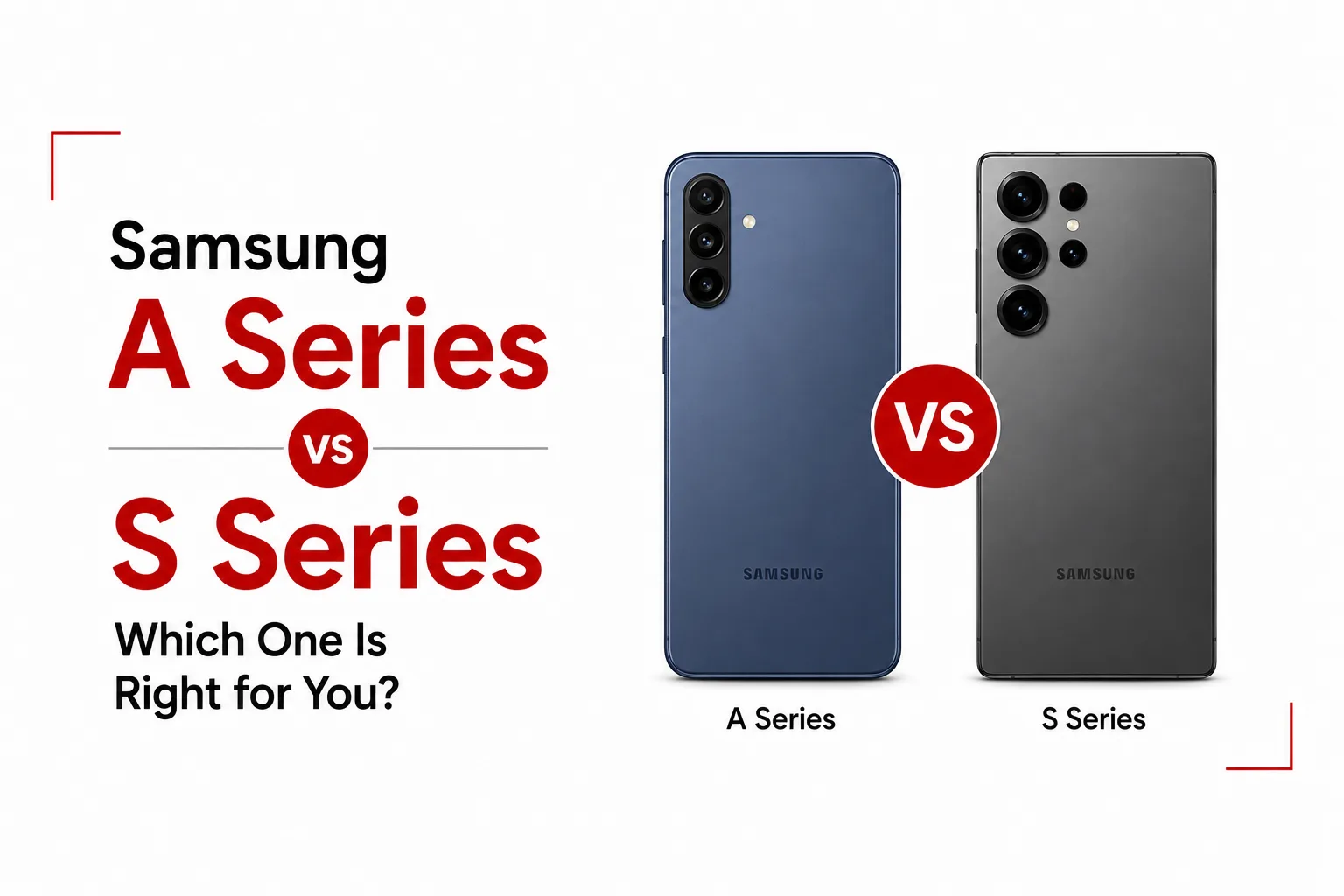

Samsung makes more smartphone models than almost any other brand on the planet, and for most buyers, the choice eventually comes down to two families: the Galaxy A Series and the Galaxy S Series. One is built around value and accessibility. The other is built around pushing the limits of what a smartphone can do. Both are good phones. But they are built for very different people, and buying the wrong one is an easy mistake to make when the marketing language on both sides sounds equally impressive.
This article breaks down every meaningful difference between the Samsung A Series and the S Series, from build materials and camera hardware to software support and price, so you can make the right call before spending your money.
What Each Series Is Built For
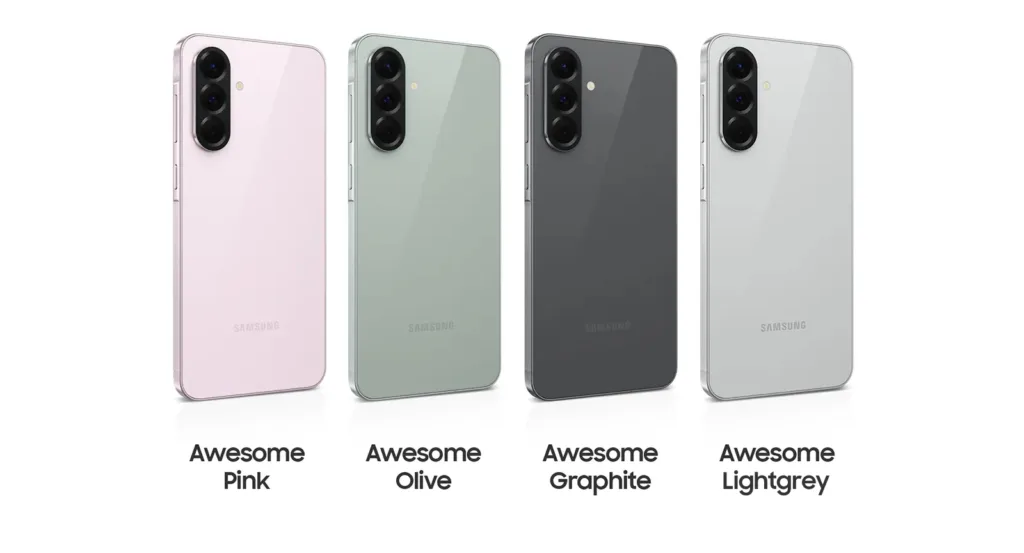
Galaxy A Series
The A Series is built to bring essential smartphone features down to prices that more people can afford. Its target audience is students, everyday users, budget-conscious buyers, and businesses purchasing devices in bulk for their teams. The focus is on delivering reliable daily performance, large batteries, and smooth screens without the premium price tag attached to flagship hardware.
Software support on the A Series runs for two to three years on lower-end models, with mid-tier models like the A5x range receiving up to four or five years of security updates.
Galaxy S Series
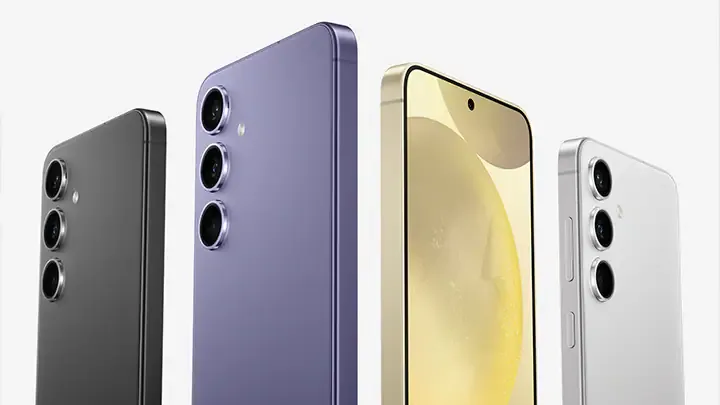
The S Series is Samsung’s flagship line, updated every year in the first quarter. It is built for tech enthusiasts, power users, mobile gamers, and creative professionals who want the best hardware Samsung produces. Every new S Series launch is essentially Samsung showing the industry what it is currently capable of engineering.
Software support here is in a different class entirely. Current S Series flagships receive seven full years of Android OS updates and security patches, which means a phone bought today stays supported well into the next decade.
Build Quality and Materials
This is one of the most immediately noticeable differences between the two families.
The A Series is built mostly with plastic backs and frames. Some mid-tier models introduce aluminum edges, but premium scratch protection is absent across the range. The phones feel functional and hold up to daily use, but they do not have the weight or finish of a premium device.
The S Series uses armor aluminum or titanium frames depending on the model, paired with the latest versions of Gorilla Glass on both the front and back. This combination absorbs drops and resists scratches at a level the A Series simply does not match.
Display Technology
Both series use AMOLED panels, but the gap between them is more significant than the shared technology suggests.
The A Series uses flat Super AMOLED displays with slightly thicker borders around the glass. These screens support a smooth 120Hz refresh rate, which makes scrolling and animations feel fluid. The limitation is outdoor visibility. A Series displays do not get bright enough to read comfortably in direct sunlight.
The S Series uses Dynamic AMOLED 2X panels with near-borderless edges. These screens include adaptive refresh rate technology that automatically scales between 1Hz and 120Hz depending on what is on screen, which saves battery during static content without sacrificing smoothness during scrolling or gaming. Outdoor brightness on S Series devices is significantly higher, making them readable in conditions where A Series screens wash out.
Processors and Everyday Performance
The A Series runs on mid-range chips from Exynos, MediaTek, or Snapdragon depending on the model. For daily social media, messaging, video streaming, and casual use, these processors perform well and keep the experience smooth. Where they pull back is under sustained pressure. Heavy gaming sessions and intensive multitasking can slow these chips down noticeably.
The S Series runs on top-of-the-line Snapdragon 8 Gen series processors, delivering peak speed across every task. App switching is instant, gaming runs at maximum settings, and the phone handles demanding workloads without thermal throttling affecting performance.
Camera Hardware
Camera specs on paper can be misleading, and the A Series is a good example of why. Many A Series models advertise high megapixel counts, but the physical sensors behind those numbers are small. Image stabilization is basic, and zooming past two times is entirely digital, which produces noticeably blurry results at distance.
The S Series uses large sensors with advanced optical image stabilization and dedicated telephoto zoom lenses. This combination produces sharp, detailed photos from a distance and supports professional-grade 8K video recording. The difference in output quality is not subtle, especially in low light or when zooming in on a subject.
Galaxy AI
Galaxy AI is one of the biggest dividing lines between the A and S Series right now, and it goes beyond a simple feature checklist.
On the S Series, Galaxy AI is fully integrated into the system. Features include real-time voice translation during live phone calls, Circle to Search, Note Assist, advanced generative photo editing, and AI sketch-to-image conversions. These tools run on-device, which means they work without an internet connection and respond in real time.
On the A Series, Galaxy AI access is heavily restricted. Mid-tier models get basic cloud-based tools like Circle to Search, but they lack the processing power needed for on-device AI translation or complex photo editing. The experience is a scaled-back version of what the S Series delivers, and the gap is meaningful for anyone who bought into the AI angle specifically.
Battery and Charging
Battery life is one area where the A Series holds its own confidently. Most A Series models carry a 5000mAh cell that lasts a full day of normal use without trouble. The limitation is charging speed, which maxes out at 25W wired. Wireless charging is absent across the entire A Series range.
The S Series carries batteries ranging from 4000mAh to 5000mAh depending on the model. Wired charging goes up to 45W, wireless charging runs at 15W, and reverse wireless charging lets you place compatible accessories or earbuds on the back of the phone to top them up. The overall charging ecosystem on the S Series is more complete.
Water and Dust Resistance
Water resistance on the A Series is inconsistent. Mid-tier models offer basic splash protection that handles light rain or a quick drop in shallow water. Lower models carry no water resistance rating at all.
The S Series applies a uniform, high-grade water resistance rating across every model in the lineup, covering full submersion in deeper water. It is a standard feature, not a tier-dependent bonus.
Price
The A Series spans from roughly $150 to $500, which translates to around ₦180,000 to ₦600,000 locally depending on the model tier. The S Series starts at $800 for base models and climbs past $1,300 for the Ultra configuration with maximum storage, putting it between ₦1,200,000 and over ₦2,200,000 in the local market.
Which One Should You Buy?
Buy the Galaxy A Series if you want a reliable phone for daily communication, social media, and video streaming without a large upfront cost. The A Series also makes sense if long battery life is a priority and you have no interest in mobile gaming, wireless charging, or professional zoom photography.
Buy the Galaxy S Series if you want a device that stays fast and fully supported for five to seven years. The S Series is the right call for anyone who uses their phone for content creation, needs optical zoom for photography, or wants access to the full Galaxy AI toolkit including wireless charging and Samsung DeX desktop multitasking.
The Samsung A Series and S Series are not competing for the same buyer. Once you are clear on how you actually use your phone and what you are willing to spend, the right choice between them becomes obvious.