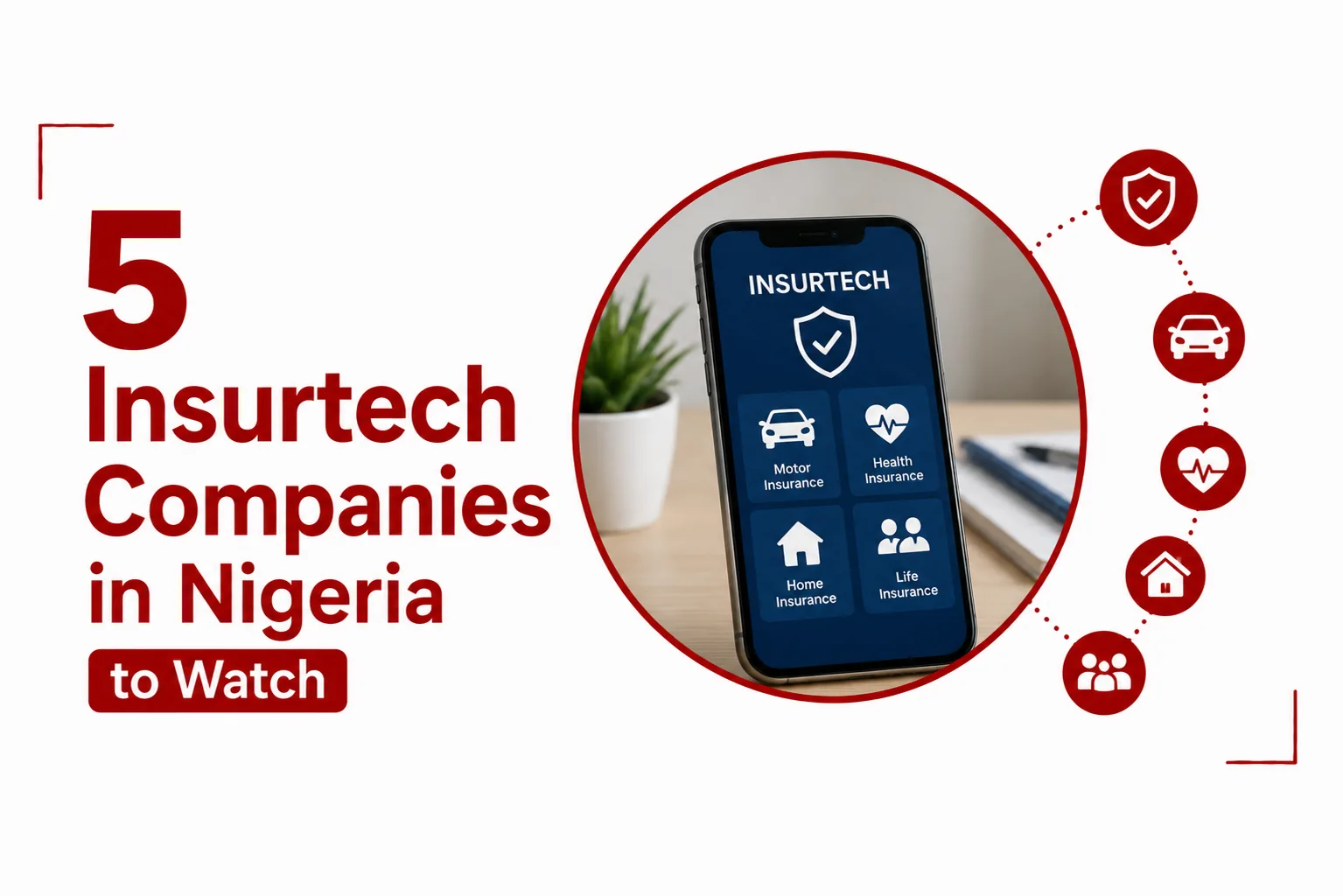

Insurance in Nigeria is becoming increasingly digital, with technology changing how people discover, purchase, manage, and use insurance products. Among the Insurtech Companies in Nigeria leading this shift are businesses using technology to make insurance more accessible, convenient, and relevant to everyday life.
Nigeria has a long history with traditional insurance, but the customer experience is changing quickly. People now expect to buy services from their phones, make payments instantly, receive updates in real time, and resolve problems without endless paperwork. That shift has created room for a new generation of insurance technology businesses.
The companies on this list stand out for different reasons. Some are bringing affordable insurance directly to individuals. Others are building the technology that lets fintechs, e-commerce businesses, logistics companies, and other digital platforms offer insurance to their customers.
Here are five Nigerian insurtech companies worth watching.
1. Casava
Casava is taking a direct approach to making insurance easier to access. The company operates as a licensed life and general microinsurance business in Nigeria under the supervision of the National Insurance Commission. Its products include health insurance, health cash, business coverage, and credit life insurance.
What makes Casava particularly interesting is its focus on affordability and simple recurring payments. Instead of presenting insurance as a complicated annual financial product, Casava has built an experience that feels closer to the subscription services Nigerians already understand.
Its wider ambition is clear: make insurance accessible for people who may not have traditionally considered themselves insurance customers. That positioning gives Casava an important place in Nigeria’s growing digital insurance market.

2. MyCover.ai
MyCover.ai is tackling insurance from a different direction. Instead of trying to become the insurance brand that consumers interact with every day, MyCover.ai provides the technology that allows other businesses to offer insurance.
Its open insurance infrastructure connects businesses with multiple insurance providers and products through APIs and software development kits. A fintech app, e-commerce platform, lending company, logistics business, or other digital service can integrate insurance into its existing customer journey.
You could buy a phone online and see device protection at checkout, take a digital loan with credit life cover included in the transaction, or book a service through an app and get relevant protection without visiting an insurance office. That is the opportunity MyCover.ai is pursuing.
The platform also provides tools for policy management, renewals, claims submission, tracking, and resolution. One important distinction is that MyCover.ai is not itself an insurance company. It works with insurance companies to create and distribute embedded insurance products through its technology infrastructure.
3. ETAP
ETAP is making motor insurance more data driven. The company uses smartphone based telematics to assess driving behaviour, including factors such as speed, acceleration, braking, and cornering. Drivers can earn Safe Driving Points for good driving and exchange rewards for items such as shopping vouchers and other experiences.
The concept is simple. If you drive safely, you should have the opportunity to benefit from safer behaviour. ETAP also gives customers flexible payment options, including daily, weekly, monthly, quarterly, and annual plans. Its app allows drivers to purchase cover digitally and submit claims from their phones.
The company has also partnered with AIICO Insurance to distribute car insurance in Nigeria. The partnership combines AIICO’s insurance product with ETAP’s technology driven distribution model. AIICO has reported that ETAP can process claims in as little as three minutes.
That is significant because motor insurance has often been associated with slow paperwork and frustrating claims experiences. ETAP is trying to change that perception by turning insurance into a digital experience built around the driver’s actual behaviour.
4. Octamile
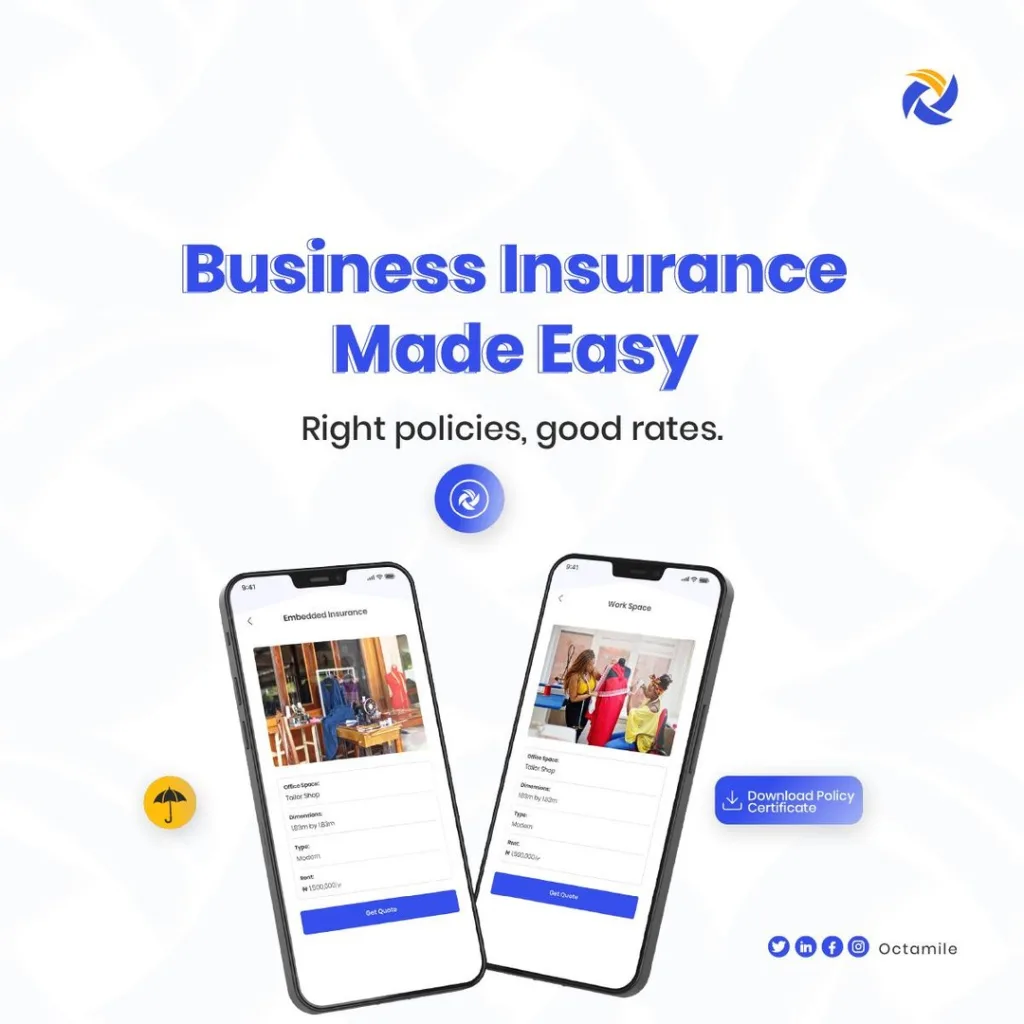
Octamile is building another important layer of Nigeria’s digital insurance ecosystem. Its technology helps insurers and digital businesses manage insurance distribution, onboarding, claims, risk assessment, and payments. Its embedded insurance APIs allow non insurance companies to add products such as motor, health, life, gadget, agricultural, and credit life insurance to their existing services.
Its claims technology is especially interesting. Octamile’s automated claims platform handles processes including claim submission, document processing, fraud detection, decision making, remote inspection, and payout. The company has worked with insurers to digitise motor claims, with its technology supporting payouts for qualifying claims.
Octamile is also expanding its infrastructure beyond individual insurance purchases. Its technology can support fintech companies, logistics businesses, marketplaces, mobility companies, lenders, and other digital platforms.
5. Reliance Health
Reliance Health sits at the intersection of insurance, healthcare, and technology. The company provides health plans for individuals, employees, and businesses while using technology to make healthcare access easier. Its Reliance Care app gives members access to virtual doctor consultations, healthcare information, and medication services.
Its model goes beyond a digital insurance card. Members can access doctors through telemedicine, receive prescriptions, use partner healthcare providers, and access medication delivery. Corporate health plans also include hospital care, emergency services, laboratory services, and other healthcare benefits.
This integrated approach is particularly relevant in Nigeria, where the relationship between insurance and actual healthcare access can be complicated. Reliance Health has also built a sizable business around employer healthcare. Its platform serves businesses and people across multiple markets, with Nigeria remaining one of its major markets.
What is driving the growth of insurtech in Nigeria?
The growth of Nigerian insurtech is not happening in isolation. Several forces are pushing the sector forward.
Digital distribution is changing how insurance is sold
People are increasingly comfortable buying financial products through mobile apps. That creates an opportunity for insurance to appear inside platforms that customers already use. MyCover.ai and Octamile are good examples. Their technology allows insurance to become part of a fintech, e-commerce, lending, logistics, or mobility experience.
Claims technology is improving the customer experience
Claims are one of the most important moments in an insurance relationship. Automation, artificial intelligence, digital documentation, remote inspections, and fraud detection can reduce the time and administrative effort involved in processing claims.
Regulation is making room for innovation
Nigeria’s insurance regulator has created a regulatory sandbox framework that gives insurance institutions and other businesses an environment for testing innovative products, services, business models, and distribution channels under defined conditions.
Nigeria’s newer insurance legislation also places attention on developing a viable, competitive, and innovative insurance industry while protecting policyholders and other stakeholders. For technology companies, this creates a clearer path for innovation while keeping consumer protection at the centre of the system.
Related Article: The Fintech Era is Evolving, and Insurtech is Stealing the Spotlight
For many Nigerians, insurance has long been associated with complicated policies, lengthy paperwork, unclear terms, and uncertainty about getting claims paid when they are needed. That perception has contributed to relatively low insurance penetration and has made it harder for many people to see insurance as an everyday financial product.
The problem is not simply a lack of awareness. Insurance can also feel disconnected from the way people live and spend today. A customer may be comfortable managing money, shopping, booking transport, accessing healthcare, and paying bills through a smartphone, while insurance still feels like a separate and outdated process. Insurtech is starting to change that experience. The bigger opportunity for Nigeria’s insurance industry is not simply getting more people to buy policies. It is making insurance feel relevant to everyday life.
Nigerians may increasingly encounter insurance at the point where they actually need protection, instead of having to make a separate effort to find it. That shift could gradually change how insurance is perceived, particularly among younger consumers who expect financial services to be simple, fast, and accessible from their phones. For an industry that has struggled with trust, accessibility, and low participation, that change in perception could be just as important as the technology itself.