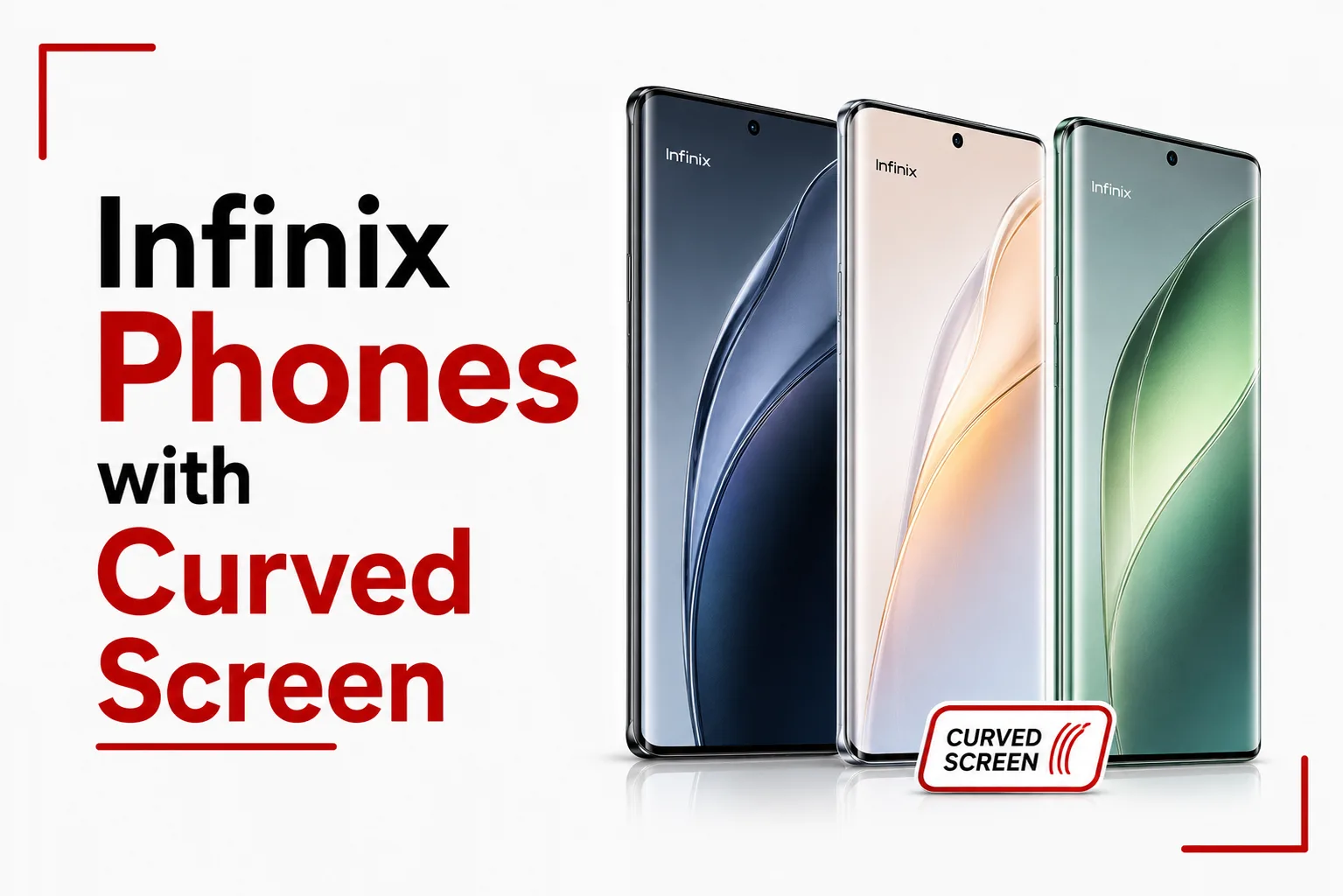

Infinix phones with curved screens now reach across three separate product families, giving buyers a choice between a premium flagship curve and a budget friendly one depending on what they want to spend. This curved screen list covers every current model built with an actual bent panel instead of a flat display with rounded corners, a distinction worth knowing since the two get confused often in casual reviews.
People gravitate toward a curved display for reasons that go beyond looks alone, since the bend at the edges makes a large screen feel narrower in the hand, reduces the visible bezel, and gives video and games a sense of wrapping slightly around the sides instead of stopping flat at the edge. That combination of a more comfortable grip and a fuller viewing experience is why the curve has held on as a premium feature long after flat panels caught up on brightness and color, and it explains why Infinix keeps pushing the design further down its lineup. Below is a breakdown of Infinix models currently built with a curved screen.
Quick Links
Infinix Zero Series
The Zero line sits at the premium tier of Infinix’s lineup, and it often pairs its most heavily curved screens with the brand’s best camera systems.
- Infinix Zero 40 5G and Zero 40 4G: Both come with a 6.78 inch curved AMOLED display, and while the 5G variant supports a 144Hz refresh rate, the 4G variant runs at 120Hz instead.
- Infinix Zero 30 5G: Features a 6.78 inch curved AMOLED screen with a 144Hz refresh rate alongside a 50MP front camera built for detailed selfies and video calls.
- Infinix Zero Ultra: An older premium model that still holds up well today, built around a 6.8 inch heavily curved 120Hz AMOLED display, a 200MP main camera, and 180W fast charging.
Infinix Note Series
The Note series balances solid performance with productivity features, and it leans on moderately curved displays instead of the sharper curve found on the Zero line.
- Infinix Note Edge: Features a 6.78 inch 3D curved 1.5K AMOLED display, running on a MediaTek Dimensity 7100 chipset paired with a 6,500mAh battery for all day use.
- Infinix Note 40 Pro Plus 5G and Note 40 Pro 5G: Both offer a 6.78 inch curved FHD+ 120Hz AMOLED screen alongside the MagKit magnetic wireless charging system that snaps onto compatible pads.
- Infinix Note 40 Pro 4G: Retains the same 6.78 inch curved FHD+ 120Hz AMOLED display as the 5G versions, swapping in a Helio G99 processor to keep the price down.
Infinix Hot Series
These devices target the budget conscious segment, and the newer entries in the family bring a thin, curved design down to a much lower price point than buyers might expect.
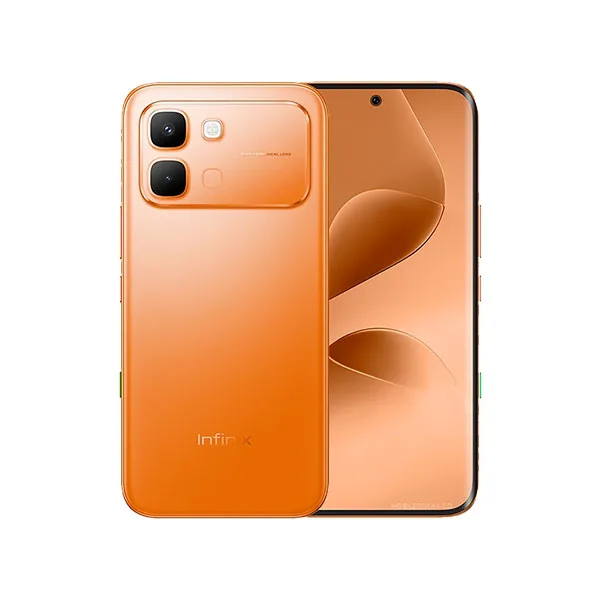
- Infinix Hot 60 Pro Plus: Officially recognized for its slim profile, this model integrates a 6.78 inch 144Hz curved AMOLED display into a body built for comfortable one handed use.
- Infinix Hot 50 Pro Plus: Houses a 6.78 inch curved AMOLED display with a 120Hz refresh rate inside a compact 6.8mm chassis that keeps the phone light in daily carry.
Why the Curve Shows Up Across So Many Price Tiers
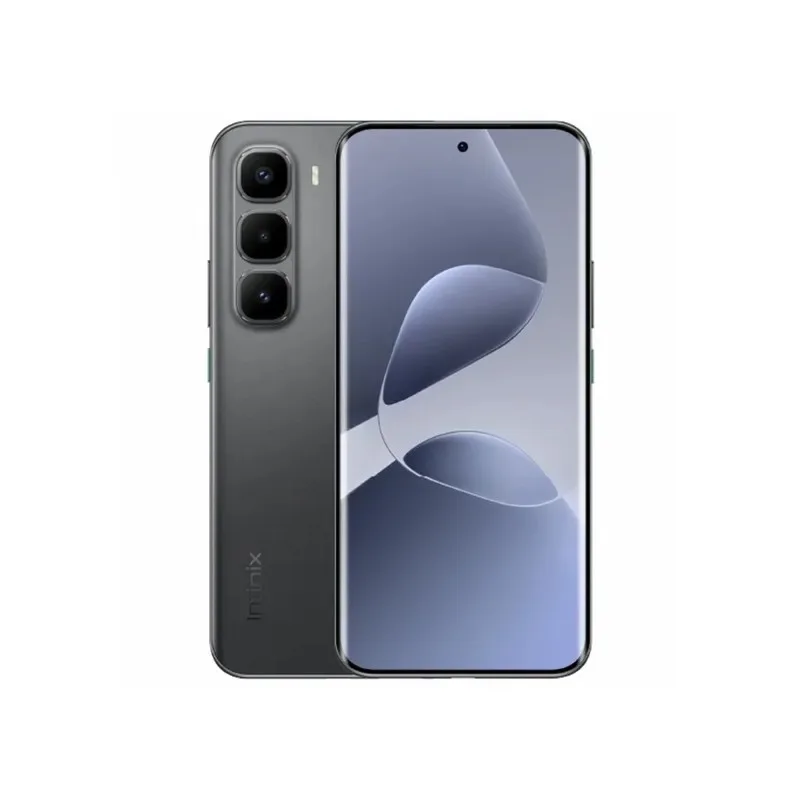
A curved AMOLED panel used to be reserved for a brand’s most expensive device, largely because bending the panel and sealing the edges added cost to manufacturing, and only flagship margins could absorb that extra spend. Infinix has clearly worked to bring that manufacturing cost down over the past couple of generations, since the curve now shows up on the Hot 60 Pro Plus, a budget model, using much the same panel style found on the far pricier Zero Ultra.
The visual effect stays fairly consistent across the lineup too, with content appearing to wrap gently around the edges of the screen and bezels reading thinner than they would on a flat panel of the same size, which helps even the cheaper models in this list feel more premium in the hand than their price tag suggests.
The refresh rate paired with each curved display tends to track with the phone’s price tier more closely than the curve itself does. Budget and mid range models mostly settle at 120Hz, which still feels smooth for everyday scrolling and video, while the higher end Zero 40 5G and Zero 30 5G push all the way to 144Hz, a number that counts for more with gamers and anyone who cares about fast motion clarity than it does for a typical daily user.
Buyers deciding between two curved models on this list should weigh that refresh rate gap alongside the more obvious differences in camera hardware and charging speed, since a curved screen alone will not tell the full story of how a phone performs day to day.
Photography and video focused buyers should look toward the Zero series, since its camera systems and higher refresh rate screens are built with that workflow in mind. People who want a curved display without spending flagship money can head straight to the Note series, which keeps the visual experience close to the Zero line while trimming the price through a less powerful chipset. And anyone shopping on a tight budget no longer has to give up the curved screen entirely, since the Hot series now brings that same design language down to its most affordable phones, closing a gap that once separated cheap Infinix devices from the brand’s more expensive offerings by a wide margin.