
Buying a POCO phone in Nigeria can give you access to hardware that is usually associated with more expensive phones. POCO has built its reputation around fast processors, large batteries, high refresh rate displays and gaming focused features, while keeping prices below many competing devices with similar specifications. That makes the brand particularly interesting for Nigerian buyers who want high performance without moving straight into premium phone prices.
POCO phone prices in Nigeria now range from roughly ₦115,000 for entry level C Series models to around ₦1.3 million for the newest high end F Series options, depending on the model, memory configuration, seller and stock source. Current Nigerian listings include affordable models such as the POCO C71 and C85, mid range options such as the POCO M7, performance focused phones such as the POCO X7 Pro and X8 Pro, and high end models such as the POCO F8 Pro and F8 Ultra.
That spread makes the POCO range easier to understand when you separate the C, M, X and F families. The C Series targets basic everyday use, the M Series moves into more capable daily phones, the X Series focuses heavily on performance and gaming, while the F Series pushes into high end hardware.
Table of Contents
POCO Phone Prices in Nigeria
Prices can vary considerably between official retail stock, online marketplaces, computer village sellers and imported units. A discounted listing can also sit well below the usual asking price for the same model.
| POCO model | Price range | Main specifications |
|---|---|---|
| POCO C71 | ₦115,000 to ₦180,000 | 3GB to 4GB RAM, up to 128GB, 4G |
| POCO C85 | ₦165,000 to ₦235,000 | 6GB to 8GB RAM, up to 256GB, 6,000mAh |
| POCO C81 Pro | Around ₦170,000 to ₦190,000 | 4GB RAM, 128GB, 4G |
| POCO M7 | ₦210,000 to ₦325,000 | 6GB to 8GB RAM, up to 256GB, 7,000mAh |
| POCO X6 Pro | Around ₦670,000 for 12GB/512GB | Dimensity 8300 Ultra, 120Hz AMOLED, 67W |
| POCO X7 Pro | Around ₦600,000 and above | Performance focused 5G hardware |
| POCO X8 Pro | Around ₦580,000 to ₦690,000 | Dimensity 8500 Ultra, 1.5K 120Hz AMOLED, 100W |
| POCO F8 Pro | Around ₦900,000 | Snapdragon 8 Elite, 120Hz AMOLED, 100W |
| POCO F8 Ultra | Up to around ₦1.3 million | High end Snapdragon platform, 16GB/512GB option |
These figures are market snapshots, not fixed national prices. For example, current listings put the POCO C71 below ₦180,000 in several configurations, while the C85 starts around ₦168,000. The M7 appears from roughly ₦214,000 for the 6GB/128GB version, while 8GB/256GB listings can reach above ₦285,000.
The POCO X6 Pro remains available at around ₦670,000 for the 12GB/512GB version in current Nigerian listings. Newer X8 Pro models appear from around ₦580,000, while the F8 Pro and F8 Ultra move into the high end of the Nigerian market.
POCO C Series: Budget Phones for Everyday Use
The C Series is the entry point into POCO phones. These models are designed for buyers who mainly need calls, WhatsApp, social media, browsing, video streaming and other everyday applications. Current options include the POCO C71, POCO C85 and POCO C81 Pro. Older models such as the C61, C65, C51 and C55 can also appear through remaining stock and independent sellers.
POCO C71
The POCO C71 is one of the lower priced options in the current Nigerian range. Listings place some 3GB/64GB versions around ₦117,000 to ₦150,000, while 4GB/128GB versions can cost more depending on the seller. Its large 6.88-inch display and 4G connectivity handle basic smartphone tasks well. It is a better fit for someone who wants a large screen for messaging, YouTube and social media without spending heavily.
POCO C85
The C85 sits higher in the budget range and offers more memory and storage than the cheapest C Series phones. Current listings show 6GB/128GB versions around ₦169,000, while 8GB/256GB versions can sit around ₦209,000 to ₦235,000. The phone has a 6,000mAh battery and a large 6.9 inch display. That makes it more suitable for long daily use than an entry level phone with a smaller battery.
Older C Series Models
The POCO C65, C55 and C51 can still appear in Nigerian shops and online listings, particularly where sellers have older imported stock. The C65, for example, uses a MediaTek Helio G85 processor and comes in configurations including 6GB/128GB and 8GB/256GB. Its 6.74 inch display supports up to a 90Hz refresh rate.
These older models can make sense when the price is substantially lower than a newer C Series phone. Check the battery condition and software support carefully when buying older stock.
POCO M Series: Mid Range Phones for Daily Use
The M Series sits between the basic C Series and the performance focused X Series. The current range includes the POCO M7, while older models such as the M6, M6 Pro, M5 and M5s can still be found in Nigeria.
POCO M7
The POCO M7 is one of the more relevant current choices for buyers who want a large battery and more memory without moving into X Series pricing. Current listings show the 6GB/128GB model around ₦214,000 to ₦240,000, while the 8GB/256GB version can range from around ₦260,000 to above ₦300,000 depending on the seller.
The phone has a 7,000mAh battery, 4G connectivity and configurations reaching 8GB RAM and 256GB storage. For social media, streaming, navigation, mobile banking and general work, the M7 gives you a larger hardware package than the cheapest C Series models.
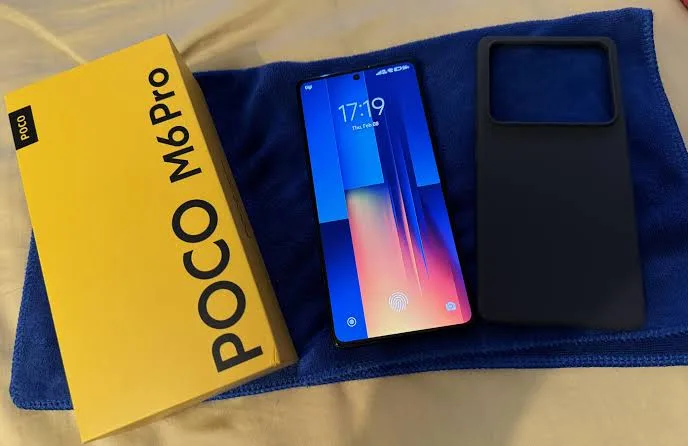
POCO M6 Pro
The M6 Pro remains relevant as older stock, particularly for buyers interested in an AMOLED display. It uses a MediaTek Helio G99 Ultra processor and has a 6.67 inch Full HD+ AMOLED display with a refresh rate of up to 120Hz. Memory options include 8GB/256GB and 12GB/512GB, with support for expandable storage.
The M6 Pro also supports 67W charging, making it more appealing to users who spend long periods on their phones. Because it is an older generation model, compare its current price with newer M and X Series phones before buying.
POCO X Series: Performance Focused Phones
The X Series is where POCO’s performance identity becomes much more obvious. These phones target mobile gamers, heavy app users and buyers who care about processor speed, display quality and fast charging.
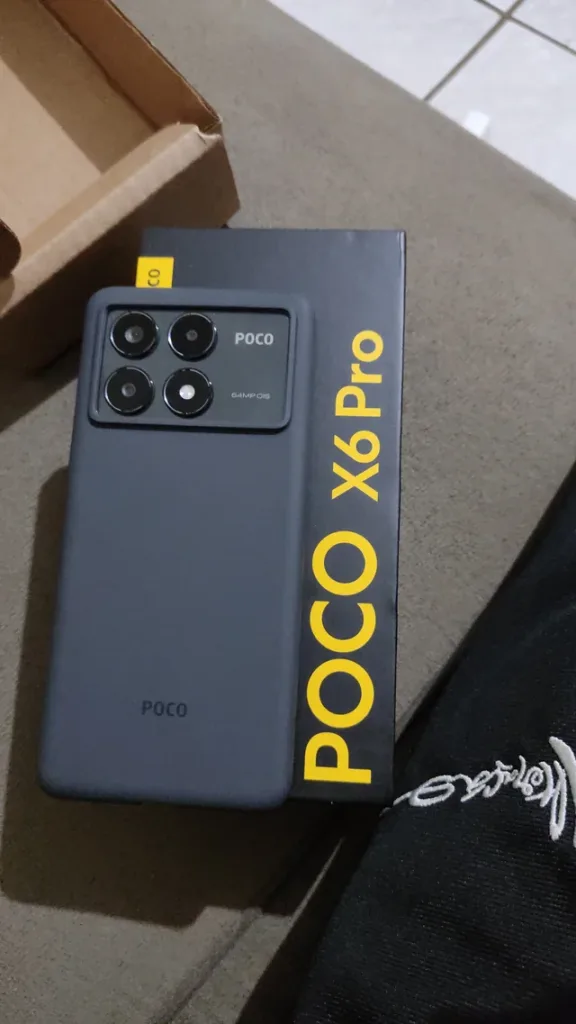
POCO X6 Pro
The X6 Pro remains a capable performance phone despite being an older generation model. Its Dimensity 8300 Ultra processor is paired with LPDDR5X memory and UFS 4.0 storage. The phone also has a 6.67 inch 1.5K AMOLED display with a 120Hz refresh rate and a 5,000mAh battery with 67W charging. The 12GB/512GB version currently appears around ₦670,000 in Nigeria.
POCO X7 Pro
The X7 Pro is a newer generation performance phone and is positioned above the X6 Pro in the current POCO range. It is aimed at users who want high frame rates in games, a fast AMOLED display and 5G connectivity without moving to the F Series. Listings currently place the X7 Pro around the ₦600,000 range and above, depending on the storage configuration and seller.
POCO X8 Pro
The X8 Pro is one of the newest performance models in the Nigerian POCO range. It uses the Dimensity 8500 Ultra platform and combines it with a 1.5K 120Hz AMOLED display. The phone also has a 6,500mAh silicon carbon battery and 100W HyperCharge.
Current listings put the 8GB/256GB version around ₦580,000 to ₦600,000, while 12GB/512GB versions can reach roughly ₦690,000. The X8 Pro also carries an IP68 rating, giving it a higher level of dust and water resistance than several older POCO performance models.
POCO F Series: High End Performance
The F Series is aimed at buyers who want near flagship level performance without moving to the most expensive phones from Samsung, Apple and other premium brands. Current models include the POCO F7 family and the newer F8 series, while the F6 and F5 remain relevant as older models.
POCO F8 Pro
The F8 Pro provides a major step up in hardware. It uses Qualcomm’s Snapdragon 8 Elite platform, paired with 12GB RAM and either 256GB or 512GB storage. The 6.59 inch AMOLED display supports a 120Hz refresh rate, while the 6,210mAh battery supports 100W HyperCharge.
The camera setup also moves beyond the basic hardware found on cheaper POCO phones. It includes a 50MP main camera with optical image stabilisation, a 50MP telephoto camera and an 8MP ultra wide camera. Current listings put the F8 Pro around ₦900,000, although the final price can vary by seller and storage configuration.
POCO F8 Ultra
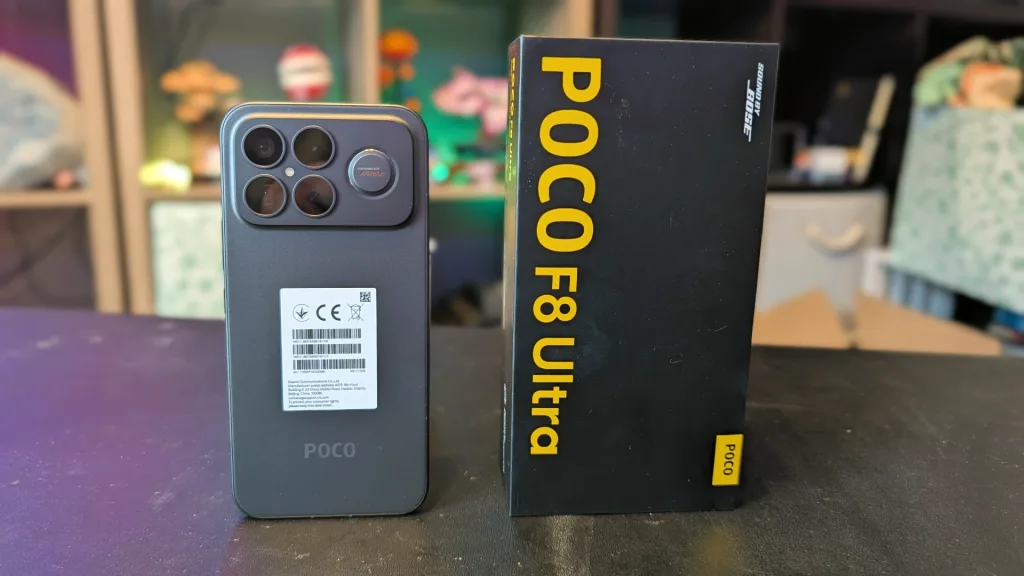
The F8 Ultra sits at the top of the current POCO range. Listings show a 16GB/512GB configuration at around ₦1.3 million. This is not a budget phone, but it shows how far POCO’s range now extends. The F Series has moved beyond simply offering inexpensive gaming hardware and now competes in the high end performance segment.
What Makes POCO Phone Prices in Nigeria Change?
POCO prices can change quickly in Nigeria, and the model name is only one part of the final price.
Exchange Rates
Most POCO phones sold in Nigeria depend on imported stock, so movements in the naira against major currencies can affect retail pricing. A phone that costs ₦600,000 today may not have the same price several months later, even when the manufacturer has not changed its international price.
RAM and Storage
The same POCO phone can have several prices because different configurations carry different amounts of RAM and storage. An 8GB/256GB version will generally cost more than a 6GB/128GB version of the same model. Before comparing two listings, check the exact memory configuration. Comparing only the model name can give you a misleading idea of the price difference.
Related Article: POCO Phones With 12GB RAM
Official and Imported Stock
You may see a large gap between two Nigerian listings for the same phone. One seller may have locally distributed stock with a warranty, while another may be selling an imported unit. Imported phones can cost less, but you should check the warranty, network compatibility, charger type and software region before paying.
Seller Markups
Prices can also differ between online stores, independent retailers and computer village sellers. A lower price is not automatically a better deal. Check the condition of the phone, warranty coverage, accessories and IMEI before completing the purchase.
How to Check if a POCO Phone Is Authentic
A cheap listing deserves a few minutes of checking before you hand over your money.
Check the IMEI
Dial *#06# to display the phone’s IMEI number. Compare the number shown on the phone with the packaging and purchase documentation. Any inconsistency should be investigated before you buy.
Check the Model and Memory
Open the phone settings and confirm the exact model, RAM and storage configuration. A listing for 8GB/256GB should not turn into a 6GB/128GB phone after payment.
Inspect the Box
Check the packaging, seals, serial information and accessories. For imported devices, also check the charger and confirm that it is suitable for use in Nigeria.
Test the Network
Insert your SIM and test calls and mobile data before completing a purchase. This is especially important with imported phones because regional versions can have different network band support.
Test the Hardware
Check the display, cameras, speakers, microphone, fingerprint reader, charging port and buttons. For a used device, also check battery health and look for signs of previous repairs.
POCO HyperOS and Gaming Features to Check
POCO phones run Xiaomi’s HyperOS software, although the exact version depends on the model and release date. The software includes gaming features through Game Turbo on supported devices. Some performance models also include hardware features designed for extended gaming sessions, such as liquid cooling and bypass charging.
Bypass charging can be useful during long gaming sessions because supported POCO phones can draw power directly toward the system while reducing the amount of charging activity applied to the battery. Battery protection features also help manage charging behaviour, although the exact options depend on the model and software version.
When comparing POCO phones, do not look only at processor names. Display refresh rate, cooling, storage speed, battery capacity and charging speed can all affect how the phone feels during demanding use.
Which POCO Series Should You Buy?
Your budget and the way you use your phone should guide the series you consider.
Under ₦150,000
Look at the C Series. The POCO C71 can fit this range in some configurations and promotions. It is suited to calls, WhatsApp, social media, browsing and other basic tasks.
₦150,000 to ₦300,000
This is where the C85 and M7 become more interesting. You can get more RAM, more storage and larger batteries than the cheapest C Series phones. The M7 in particular reaches 8GB RAM, 256GB storage and a 7,000mAh battery in its higher configuration.
₦300,000 to ₦700,000
The M7 remains an option at the lower end, while the X6 Pro, X7 Pro and X8 Pro move into performance focused territory. The X8 Pro is especially notable for its Dimensity 8500 Ultra processor, 1.5K 120Hz AMOLED display, 6,500mAh battery and 100W charging.
Above ₦700,000
The F Series becomes relevant. The F8 Pro brings Snapdragon 8 Elite performance, 12GB RAM, up to 512GB storage, a 120Hz AMOLED display and 100W charging. The F8 Ultra pushes the range further with higher memory and storage configurations.
POCO gives Nigerian buyers numerous options, from inexpensive C Series phones to high end F Series models. The current market starts around the ₦115,000 range for some entry level C Series listings and extends beyond ₦1 million for the newest F Series phones.
For basic use, a C Series phone can keep your spending low. The M Series adds more storage, battery capacity and everyday performance, while the X Series is built for people who spend more time gaming or using demanding applications. The F Series sits at the high end for buyers who want top tier processing power.
Before buying, compare the exact RAM and storage configuration, check the seller and warranty, test the phone’s network connection and verify the IMEI. Most importantly, compare the current price against newer models in the same range. POCO releases new phones regularly, and an older model only makes sense when its lower price matches its age.